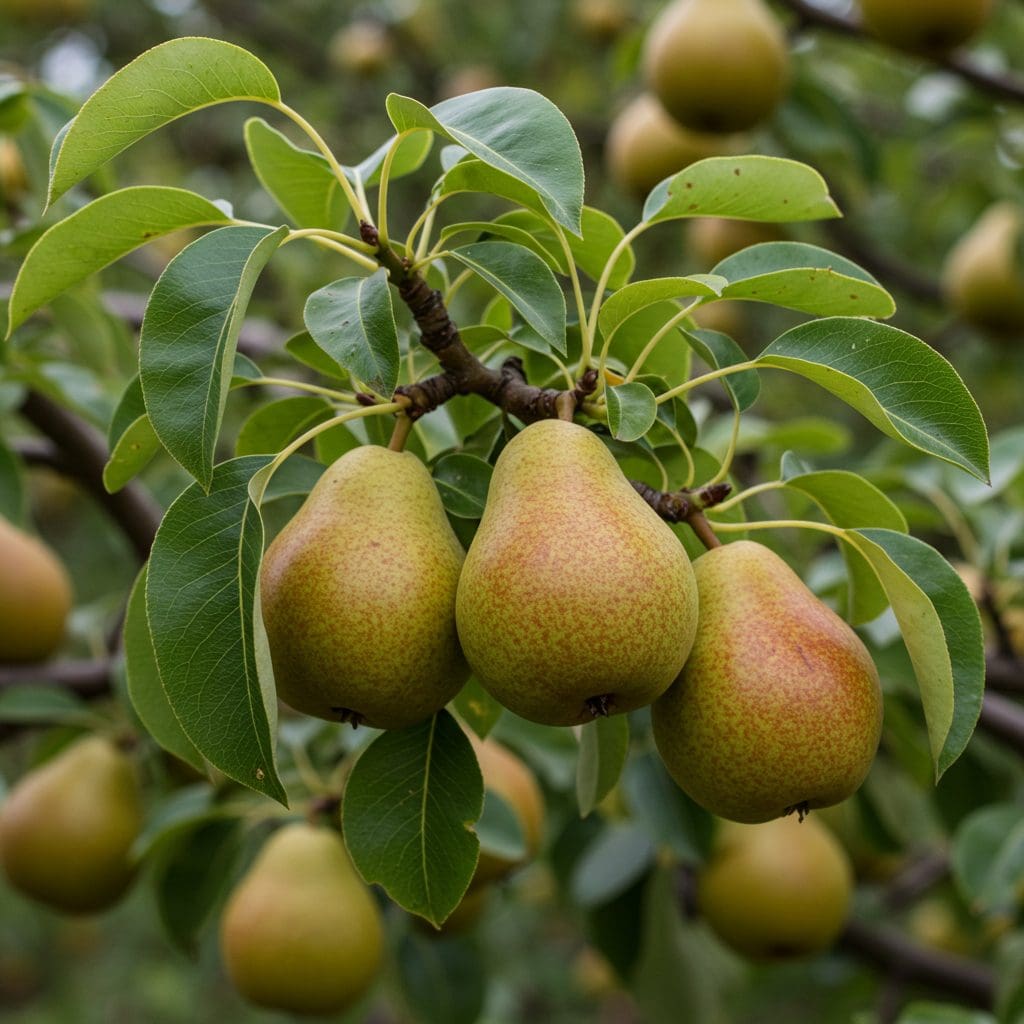
Justin Krohn, a research project analyst and graduate student at the University of Missouri, has developed a methodology for tracking the spread of invasive Callery pear trees in mid-Missouri utilising freely available satellite imagery and machine learning techniques. Krohn initially logged the precise locations of Callery pear trees within Columbia, Missouri, using a GPS device, subsequently employing this data to train a machine learning model capable of distinguishing the trees from surrounding vegetation based on variations in light reflectance. This investigation revealed a higher prevalence of Callery pear trees in suburban areas characterised by more open land, in contrast to the limited spread observed within the more densely populated urban areas of Columbia. The research indicates these trees favour disturbed habitats, specifically those adjacent to new housing developments and roadways, suggesting a correlation between anthropogenic land use and invasive species establishment. This methodology offers a low-cost alternative to traditional remote sensing techniques employing drones or aircraft imagery for monitoring invasive species distribution and predicting future expansion within Missouri’s ecosystems.
Invasive Species Tracking
A research initiative at the University of Missouri, led by Justin Krohn, a research project analyst and graduate student, is pioneering a cost-effective methodology for tracking the proliferation of invasive Callery pear trees within mid-Missouri. The project addresses a significant ecological concern, as Pyrus calleryana – commonly known as the Callery pear – demonstrates rapid growth, poses a threat to native flora through competitive exclusion, and exhibits structural weakness, increasing storm damage potential. Responding to the ecological impact, legislative action in Missouri, mirroring that of other states, has enacted a ban on the sale of these trees, necessitating robust monitoring strategies to assess the efficacy of these measures and inform future conservation efforts. The core of Krohn’s approach lies in the integration of freely accessible satellite imagery with machine learning algorithms – a subset of artificial intelligence focused on enabling systems to learn from data without explicit programming. Traditional methods of invasive species mapping often rely on aerial surveys conducted via drones or aircraft, incurring substantial financial costs; Krohn’s technique circumvents these limitations by leveraging publicly available data sources and automated analysis. The methodology involves initially establishing a ground truth dataset, wherein the precise locations of Callery pear trees in Columbia, Missouri, were recorded using a GPS device, providing labelled data for training the machine learning model. The subsequent phase involved training the algorithm to differentiate Callery pear trees from their surrounding environment based on spectral signatures – variations in the reflection of electromagnetic radiation across different wavelengths. Vegetation exhibits unique spectral characteristics dependent on factors such as chlorophyll content, leaf structure, and water content; the machine learning model learns to identify these subtle differences, enabling it to automatically detect Callery pear trees within the satellite imagery. This process, known as supervised learning, requires a substantial amount of labelled data to achieve high accuracy, highlighting the importance of the initial ground truthing exercise. Analysis of the collected data revealed a discernible pattern in the distribution of invasive Callery pear trees within Columbia, Missouri; a higher prevalence was observed in suburban areas characterised by more open land, in contrast to the more densely populated urban core where opportunities for spread are constrained. This finding aligns with ecological principles, as disturbed habitats – such as those associated with new housing developments and roadside verges – provide ideal conditions for the establishment and proliferation of invasive species. The research suggests that continued urban expansion may exacerbate the spread of Callery pear, underscoring the need for proactive management strategies. The findings were presented at relevant scientific conferences and are intended for publication in peer-reviewed journals, contributing to the broader body of knowledge on invasive species ecology and management. Funding for the project was provided through internal University of Missouri research grants. ## Machine Learning Application
The application of machine learning to the detection and monitoring of invasive Callery pear trees represents a significant methodological advancement over traditional ecological surveying techniques. Justin Krohn, a research project analyst and graduate student at the University of Missouri, spearheaded the development of a supervised learning algorithm trained on high-resolution satellite imagery. This approach circumvents the logistical and financial burdens associated with extensive field surveys or aerial imagery acquisition using drones or aircraft, offering a scalable and cost-effective solution for large-area monitoring. The core of the methodology relies on the principle of spectral analysis; different plant species exhibit unique reflectance patterns across the electromagnetic spectrum, dictated by their biochemical composition and structural characteristics. The supervised learning process commenced with the meticulous ground truthing exercise, wherein the precise locations of Callery pear trees within Columbia, Missouri, were recorded using a GPS device, creating a spatially referenced dataset. This labelled data served as the training set for the machine learning model, specifically enabling it to correlate spectral signatures – variations in light reflection – with the presence of the invasive species. The algorithm employed likely leverages techniques such as Random Forest or Support Vector Machines, capable of handling high-dimensional data and identifying complex patterns within the spectral information. These algorithms are particularly suited to image classification tasks, where the goal is to assign each pixel in an image to a specific class – in this case, ‘Callery pear’ or ‘not Callery pear’. The success of the machine learning model hinges on its ability to generalise from the training data to accurately identify Callery pear trees in unseen imagery. This requires careful consideration of factors such as image resolution, atmospheric conditions, and the spectral characteristics of other vegetation types present in the landscape. Krohn’s research meticulously addresses these challenges through data pre-processing techniques and algorithm parameter tuning, ensuring robust and reliable detection rates. The resulting model provides a spatially explicit map of Callery pear distribution, facilitating targeted management interventions and enabling predictive modelling of future spread. The findings, presented at scientific conferences, are intended for publication in peer-reviewed journals, contributing to the broader understanding of invasive species ecology and management strategies. Funding for this innovative research was provided through internal University of Missouri research grants, demonstrating institutional support for technologically advanced ecological monitoring. ## Suburban Prevalence
The research conducted by Justin Krohn, a research project analyst and graduate student at the University of Missouri, reveals a statistically significant correlation between Callery pear tree prevalence and suburban land use patterns within the Columbia, Missouri metropolitan area. Analysis of spatially referenced data, gathered via GPS logging of individual trees, demonstrates a markedly higher density of invasive Callery pear trees in suburban landscapes compared to the more densely developed urban core. This distribution is attributed to the availability of disturbed habitats characteristic of suburban expansion – specifically, areas adjacent to new housing developments, road verges, and previously agricultural land undergoing conversion. These fragmented landscapes provide ideal conditions for establishment and rapid proliferation of the invasive species, exploiting soil disturbances and increased light availability. The observed suburban prevalence is further explained by the ecological characteristics of the invasive Callery pear. The species exhibits a high tolerance for a variety of soil conditions and demonstrates rapid growth rates, enabling it to quickly colonise disturbed areas. Furthermore, the dispersal mechanisms of the Callery pear – primarily through avian seed dispersal and vegetative spread – are particularly effective in suburban matrices, where fragmented habitats facilitate long-distance seed transport and the establishment of new populations. The research highlights that the open nature of suburban landscapes, coupled with frequent disturbances, creates a positive feedback loop, promoting the continued spread of the invasive species. Krohn’s investigation employed freely available satellite imagery, processed using machine learning algorithms, to extrapolate these findings beyond the initial GPS-logged locations. The resulting spatially explicit map of Callery pear distribution provides a valuable tool for land managers and conservation practitioners. By identifying areas with high concentrations of the invasive species, targeted management interventions – such as selective removal or preventative measures – can be implemented more efficiently. This approach contrasts with traditional broad-scale control efforts, which are often less effective and more costly. The methodology developed by Krohn offers a scalable and cost-effective solution for monitoring and managing invasive species across larger geographic areas. The implications of this research extend beyond the immediate context of Columbia, Missouri. The observed patterns of suburban prevalence are likely applicable to other metropolitan areas in the Midwest and Eastern United States, where invasive Callery pear trees have become widespread. Understanding the relationship between land use patterns and invasive species spread is crucial for developing effective conservation strategies in rapidly urbanising landscapes. The research underscores the need for proactive management approaches that address the root causes of invasion, such as habitat disturbance and fragmentation, rather than simply reacting to established infestations. Further research is warranted to investigate the long-term ecological consequences of invasive Callery pear dominance in suburban ecosystems and to evaluate the effectiveness of different management interventions.
More information
External Link: Click Here For More