

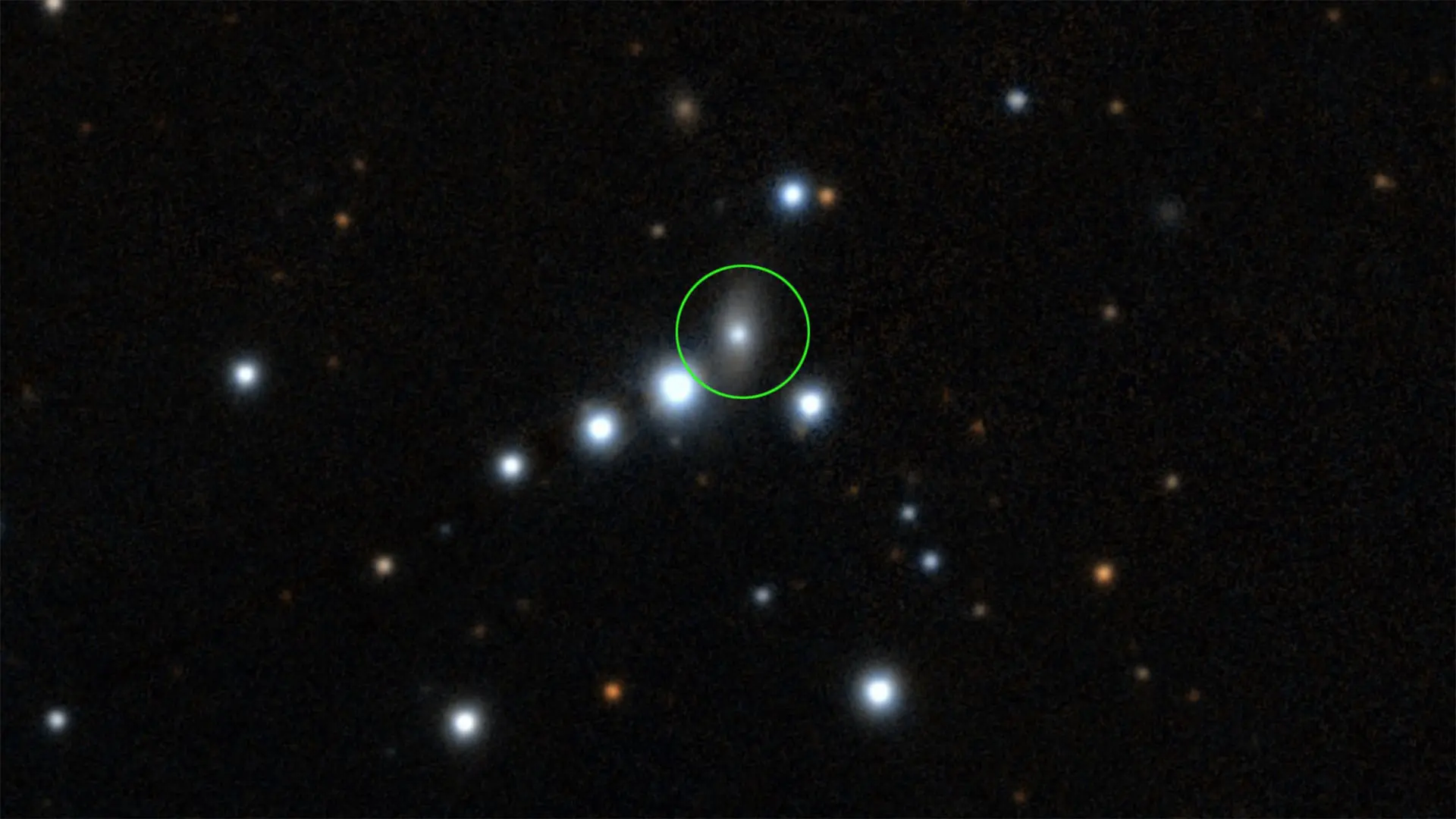
A team of researchers led by Eileen Meyer at the University of Maryland Baltimore County has made a groundbreaking discovery about black holes. The team was studying a galaxy called 1ES 1927+654 when they noticed a sudden and dramatic increase in radio activity. This event was so rare that it allowed the team to make new observations using radio telescopes around the world. Onic Shuvo, a postdoctoral fellow working with Meyer, played a key role in analyzing the data and requesting new observations.
The discovery challenges existing models of black hole activity and provides new insights into how these massive objects produce jets of energy. The team used advanced technologies including radio telescopes to make their observations and are now working to understand the implications of their findings. Meyer and her team are excited to continue studying this phenomenon and refining their understanding of black holes.
The black hole was found to be producing a massive jet of energy, which is a rare and poorly understood phenomenon. The team used a combination of radio and X-ray observations to study the jet and its interaction with the surrounding galaxy.
One of the key findings of the study is that the jet is relatively small compared to other known jets in the universe, but it is still an important discovery because it provides insights into the formation and evolution of black holes and their host galaxies.
The team’s research also suggests that the jet may have been triggered by a tidal disruption event, in which a star or cloud of gas gets too close to the black hole and is torn apart, releasing a large amount of energy. However, more research is needed to confirm this hypothesis.
The study has significant implications for our understanding of black holes and their role in the universe. As Professor Meyer notes, “We still do not understand how black holes and their host galaxies interact with each other and co-evolve in cosmic time.” This discovery provides a rare opportunity to study the interaction between a supermassive black hole and its host galaxy in real-time.
The research was made possible by the use of “time-domain astronomy,” which involves rapid follow-up observations of celestial events as they occur. This approach requires quick thinking and fast action, as the team had to rapidly analyze incoming data and request new observations in order to capture the fleeting event.
Overall, the discovery is an exciting development in the field of astrophysics, and it has the potential to shed new light on some of the biggest mysteries of the universe. As Professor Meyer says, “There’s a lot of theoretical work to be done to understand what we’ve seen, but the good thing is that we have a massive amount of data… We’re going to keep following this source, and it’s going to continue to be exciting.”
External Link: Click Here For More


