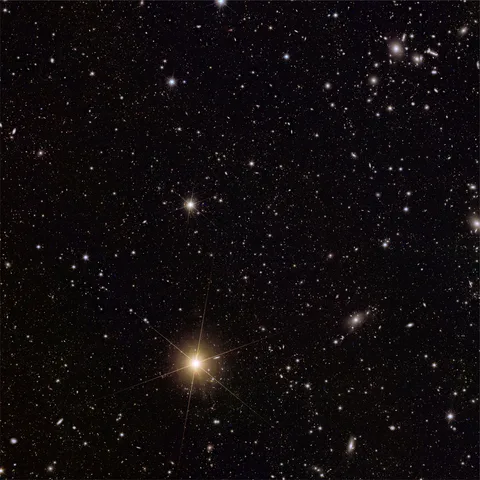
The European Space Agency (ESA) and the Euclid Consortium have released the first images from the Euclid space telescope, which aims to study the universe’s evolution and its components, dark energy and dark matter. The University of Massachusetts Amherst’s astronomy department is leading this effort. The telescope’s images are four times sharper than those from ground-based telescopes and cover large sky patches. John Weaver, a postdoctoral researcher at UMass Amherst, is using Euclid to study galaxies that have surprisingly large numbers of stars. The images reveal new physical properties of the universe.
Unveiling the Universe: The Euclid Space Telescope’s First Images
The European Space Agency (ESA) and the Euclid Consortium, a collaboration of 2,000 researchers from 300 institutions in 15 countries, recently released the first images from the Euclid space telescope. Launched in July 2023, Euclid’s mission is to map the hidden web-like foundations of the cosmos, explore the evolution of the Universe, and study its most mysterious components: dark energy and dark matter. The astronomy department at the University of Massachusetts Amherst is contributing significantly to this effort.
The Euclid Telescope: A New Perspective on the Cosmos
Euclid’s wide field-of-view allows astronomers to capture images of extended objects, such as the Abell 2390 galaxy cluster, in a single shot. This capability eliminates the need for multiple images and their subsequent stitching together. John Weaver, a postdoctoral researcher in astronomy at UMass Amherst, is using Euclid to study galaxies that defy current understanding. These galaxies, surprisingly abundant in stars, are much brighter than expected, raising questions about their origins and evolution.
Looking Back in Time: The Light from Distant Galaxies
The light from these galaxies has taken approximately 13 billion years to reach us, allowing astronomers to observe these galaxies as they were shortly after their formation. This ability to look back in time provides a unique opportunity to study both old supermassive galaxies that have ceased forming stars and distant young galaxies that are still actively forming stars. This simultaneous observation of ancient and young galaxies raises intriguing questions about the evolution of these celestial bodies.
Unprecedented Results: Euclid’s Unique Observing Capabilities
The images obtained by Euclid are at least four times sharper than those taken by ground-based telescopes. They cover large patches of sky, looking far into the distant universe using both visible and infrared light. These images are not just visually stunning; they reveal new physical properties of the universe, thanks to Euclid’s unique observing capabilities. In just a single day, Euclid produced an entire set of Early Release Observations, revealing over 11 million objects in visible light and 5 million more in infrared light.
Exploring Galaxy Clusters: Abell 2390 and Abell 2764
Weaver and his colleagues focused on two galaxy clusters, Abell 2390 and Abell 2764. Euclid’s image of galaxy cluster Abell 2390 reveals more than 50,000 galaxies and shows a beautiful display of gravitational lensing. This phenomenon, where the light traveling to us from distant galaxies is bent and distorted by gravity, is a key technique for exploring the dark universe. Euclid scientists are also studying how the masses and numbers of galaxy clusters on the sky have changed over time, revealing more about the history and evolution of the universe.
The image of the galaxy cluster Abell 2764, which comprises hundreds of galaxies within a vast halo of dark matter, allows scientists to ascertain the radius of the cluster and see its outskirts with faraway galaxies still in frame. Euclid’s observations of Abell 2764 are also allowing scientists to further explore galaxies in the distant cosmic dark ages.
External Link: Click Here For More