

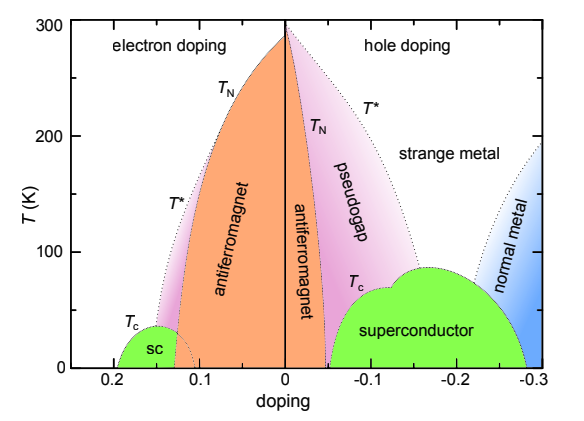
The behaviour of electrons in solid materials dictates many of their properties, from electrical conductivity to magnetism. Understanding the complex interactions between these particles remains a central challenge in condensed matter physics. Recent advances utilising ultracold atoms trapped in precisely controlled lattices of light offer a novel approach to simulating and observing these quantum phenomena. Waseem Bakr, Zengli Ba, and Max Prichard, alongside their colleagues, present a comprehensive review, titled ‘Microscopy of Ultracold Fermions in Optical Lattices’, detailing progress in this field. Their work focuses on experiments employing ‘gas microscopes’ – instruments capable of resolving individual atoms – to investigate the Fermi-Hubbard model, a fundamental description of interacting electrons in a lattice, and explore its manifestations in these engineered quantum systems. The review encompasses observations of charge and spin correlations, imaging of polaronic quasiparticles – composite particles formed from electrons and lattice vibrations – and investigations into dynamical properties via transport and spectroscopy.
Quantum simulation represents a burgeoning field addressing materials whose behaviour defies traditional computational analysis. Research into strongly correlated quantum materials currently dominates condensed matter physics, fuelled by the desire to understand and engineer materials exhibiting novel properties. These materials, encompassing high-temperature superconductors and quantum spin liquids, pose significant challenges to conventional computational methods due to the complex interplay of many particles, necessitating innovative modelling approaches. Quantum simulation offers a promising route, utilising controlled quantum systems to model these intractable materials and providing insights previously inaccessible through theoretical calculations.
Ultracold gases provide a particularly versatile platform for quantum simulation, offering a high degree of control over the fundamental parameters governing particle interactions. Unlike traditional solid-state systems, the microscopic Hamiltonians describing these gases are well understood, facilitating direct comparison with theoretical predictions and validating model accuracy. This control is achieved through techniques such as optical lattices, which confine atoms and modulate their kinetic energy, and Feshbach resonances, which tune the strength of interatomic interactions, enabling the creation of tailored quantum systems.
The Fermi-Hubbard model, introduced in the 1960s, serves
The Fermi-Hubbard model, introduced in the 1960s, serves as a cornerstone for understanding electron behaviour in solids and has become a paradigmatic model in the field. Originally intended to explain magnetism in transition metals, it gained prominence following the discovery of high-temperature superconductivity, with Anderson proposing it as a minimal model to capture the essential physics driving this phenomenon. The model describes electrons hopping between lattice sites and interacting with each other, providing a framework for investigating phenomena like magnetism, superconductivity, and metal-insulator transitions, and guiding the development of new materials.
Recent advances in quantum gas microscopy enable site-resolved imaging of these ultracold atomic systems, providing unprecedented access to their microscopic properties and allowing researchers to directly observe the arrangement of atoms. This technique allows direct observation of charge and spin correlations, measurement of their interactions, and tracking of their dynamics with single-site resolution, facilitating the study of charge and spin correlations, polaronic quasiparticles, and non-equilibrium dynamics within the Fermi-Hubbard model. Consequently, it provides a powerful tool for validating theoretical predictions and gaining a deeper understanding of the underlying physics.
Current research extends beyond the standard square lattice, exploring Hubbard systems with modified geometries and long-range interactions, aiming to uncover new phases of matter and expand the model’s scope. These investigations potentially reveal novel quantum phenomena and expand its applicability to a wider range of materials, opening up new avenues for materials design. Furthermore, innovative cooling protocols are being developed to reach ultralow temperatures, enabling comparisons with highly accurate numerical simulations in regimes previously inaccessible, and pushing the boundaries of both experiment and theory.
Recent advances demonstrate the capacity to directly observe and characterise charge and spin correlations within the Fermi-Hubbard model, through site-resolved measurements enabled by gas microscope experiments. These experiments provide unprecedented access to the microscopic properties of interacting fermionic systems, validating and extending theoretical predictions concerning phenomena such as Mott insulators and the emergence of polaronic quasiparticles.
Investigations into the dynamical properties of the Fermi-Hubbard
Investigations into the dynamical properties of the Fermi-Hubbard model, through techniques like transport measurements and spectroscopy, refine our understanding of how interactions influence particle movement and excitation, providing crucial insights into the mechanisms governing electron transport. These studies are crucial for connecting theoretical models to observable quantities and for assessing the potential of ultracold atom systems to simulate complex materials, paving the way for the development of new quantum technologies.
Current research actively expands the scope of the standard square-lattice Hubbard model, investigating systems with novel lattice geometries and long-range interactions, and discovering and stabilising previously unknown phases of matter. These explorations aim to uncover new quantum states and understand the influence of lattice structure on material properties, opening up new avenues for materials design. Crucially, researchers implement entropy distribution protocols to cool these systems to ultralow temperatures, pushing the boundaries of experimental control and enabling comparisons with advanced numerical simulations.
The increasing sophistication of both experimental and theoretical approaches promises to further illuminate the intricate interplay between quantum mechanics, many-body interactions, and emergent phenomena. Future work will likely focus on extending these techniques to explore more complex models and geometries, including those relevant to high-temperature superconductivity and topological materials, pushing the boundaries of our understanding of quantum materials. Developing methods to precisely control and manipulate individual atoms within the lattice will be crucial for realising quantum simulations of unprecedented accuracy and complexity, unlocking the full potential of quantum simulation. Additionally, integrating these systems with other quantum technologies, such as superconducting circuits, could unlock new possibilities for quantum information processing and materials discovery.
🗞 Microscopy of Ultracold Fermions in Optical Lattices
🧠 DOI: https://doi.org/10.48550/arXiv.2507.04042


