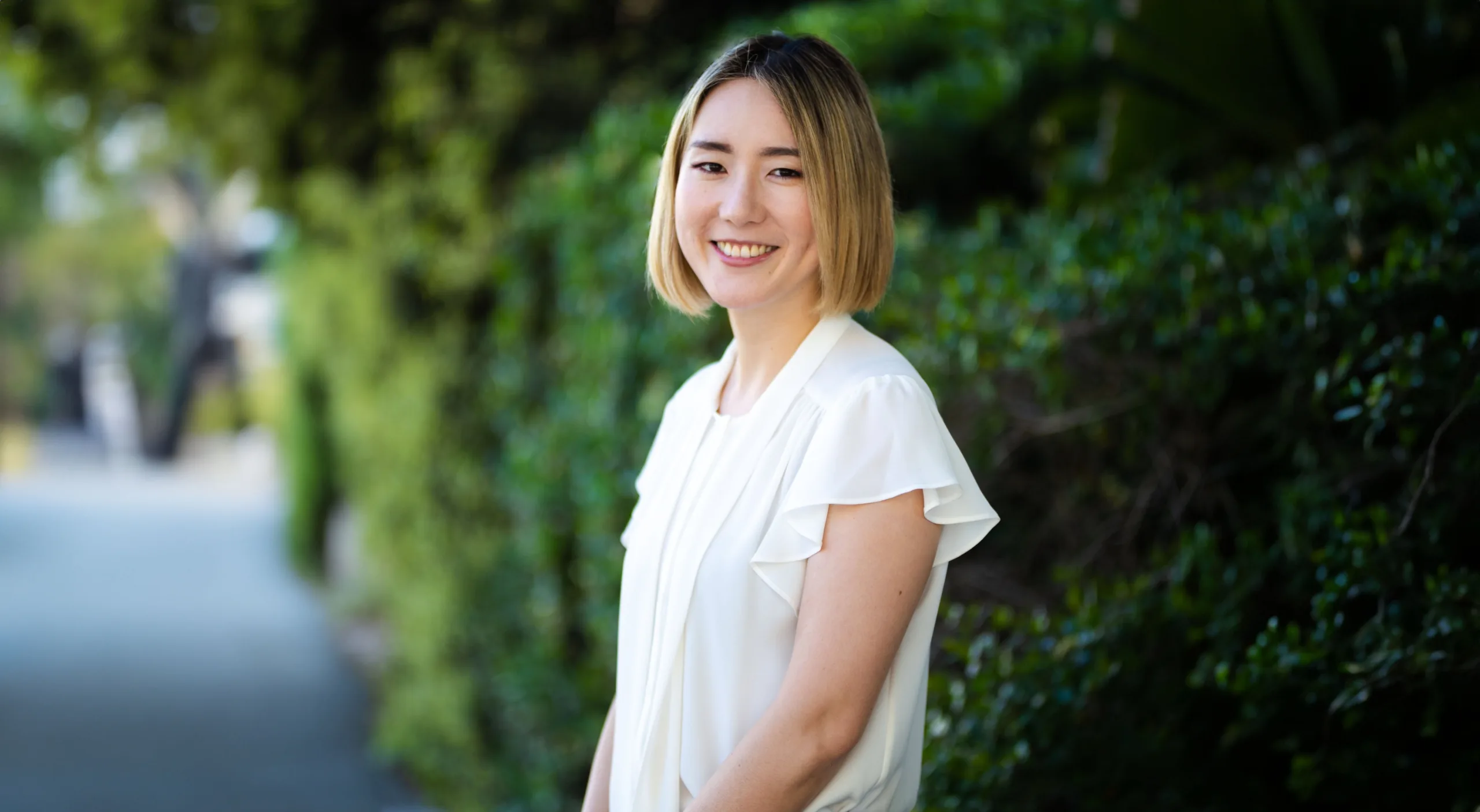
UC Santa Barbara assistant professor Haewon Jeong has been awarded a $558,000 grant from the National Science Foundation to research ways to reduce bias in artificial intelligence (AI). Jeong’s work focuses on the data preparation process, where she believes much of the bias in AI originates. She proposes a three-step process to address missing values, encode data, and balance data to ensure fairness. The ultimate goal of Jeong’s project is to create a software library for fairness-aware data preparation that can be used by any data scientist or AI developer.
The Problem of Bias in Machine Learning Models
Machine learning (ML) models have the potential to revolutionize various sectors, including healthcare, finance, and criminal justice. However, these models are not without their flaws. One significant issue is the potential for bias, which can lead to unfair or inaccurate predictions. Bias in ML models can occur when the data used to train algorithms systematically disadvantages a particular group of people. For instance, a model that relies on historical data reflecting systematic social and economic inequities could result in mortgage applications being rejected more often for women than for men, or skin cancer being detected more frequently in white patients than in Black patients.
Bias in ML models is not a new problem, but it is one that has been largely overlooked in the data collection process. This was the discovery of Haewon Jeong, an assistant professor in UC Santa Barbara’s Electrical and Computer Engineering (ECE) Department, during her postdoctoral fellowship at Harvard University. Jeong found that while much research focused on developing better training algorithms to eliminate bias, few considered the bias that occurred during data collection.
The Role of Data Imputation in Bias
Data imputation, the process of substituting missing entries with new values, is a common practice in data collection. However, Jeong found that this process could inadvertently introduce bias. She was surprised to find that no one had studied the fairness aspect of imputation before, despite missing data being a prevalent problem in the real world. This realization led Jeong to focus on how various steps in the data-preparation pipeline could introduce bias or fairness.
Jeong’s approach to mitigating bias in ML models is to focus on cleaning the data before it is used to train algorithms. She argues that by focusing on cleaning the bad data, we could reduce the bias from the start. This approach has earned her an Early CAREER Award from the National Science Foundation (NSF), a prestigious honor for junior faculty.
A Three-Step Process for Mitigating Bias
Jeong’s project, “From Dirty Data to Fair Prediction: Data Preparation Framework for End-to-End Equitable Machine Learning,” targets the data-preparation pipeline as a strategic opportunity for eliminating unwanted bias. She proposes a three-step process to insert fairness when addressing missing values, encoding data, and balancing data.
The first step involves handling missing data. Jeong’s prior work showed that the two main options for dealing with missing data, excluding entries that contain missing data or filling in the missing data with an estimate, both significantly increased bias. In her current project, Jeong aims to investigate more efficient ways to perform data imputation while considering fairness.
The second step is data encoding, which involves changing raw data into a numerical format that an algorithm can read and interpret. Jeong plans to use her training in information theory to develop a fairer algorithm for data encoding that preserves useful information and suppresses information related to bias.
The third step involves balancing data to ensure that a ML dataset represents the real-world population from which it is drawn. Jeong’s research has shown that having an uneven number of observations among different groups significantly impacts an ML model’s predictive performance and fairness. She plans to explore what causes these counterintuitive results and establish guidelines for data scientists on the optimal demographic mixture to use.
The Real-World Implications of Fair Data Preparation
Jeong’s three-pronged approach to addressing real-world dataset issues aims to create guidelines and best practices in data preparation for equitable and fair ML. Given the increasing use of ML and AI in nearly every sector of society, her work has significant real-world implications. Jeong believes that removing unwanted bias and inserting ethical objectives into the data-preparation pipeline could make AI embody and promote essential societal values, like fairness and diversity, rather than perpetuating stereotypes.
The end goal of Jeong’s project is to develop a software library that any data scientist or AI developer can use for fairness-aware data preparation. The library would include her group’s fair-imputation methods, bias-flow measurement toolkit, and algorithms.
Encouraging Diversity in AI Research
In addition to her research, Jeong is also committed to promoting diversity in the field of AI. She plans to design and host the “Girls’ AI Bootcamp,” a program aimed at engaging female high school students and introducing them to the exciting possibilities within computer science and AI. Jeong hopes that this initiative will not only pique the interest of female students but also instill self-confidence in them, encouraging them to become leading innovators in the fields of AI and computer science.
External Link: Click Here For More