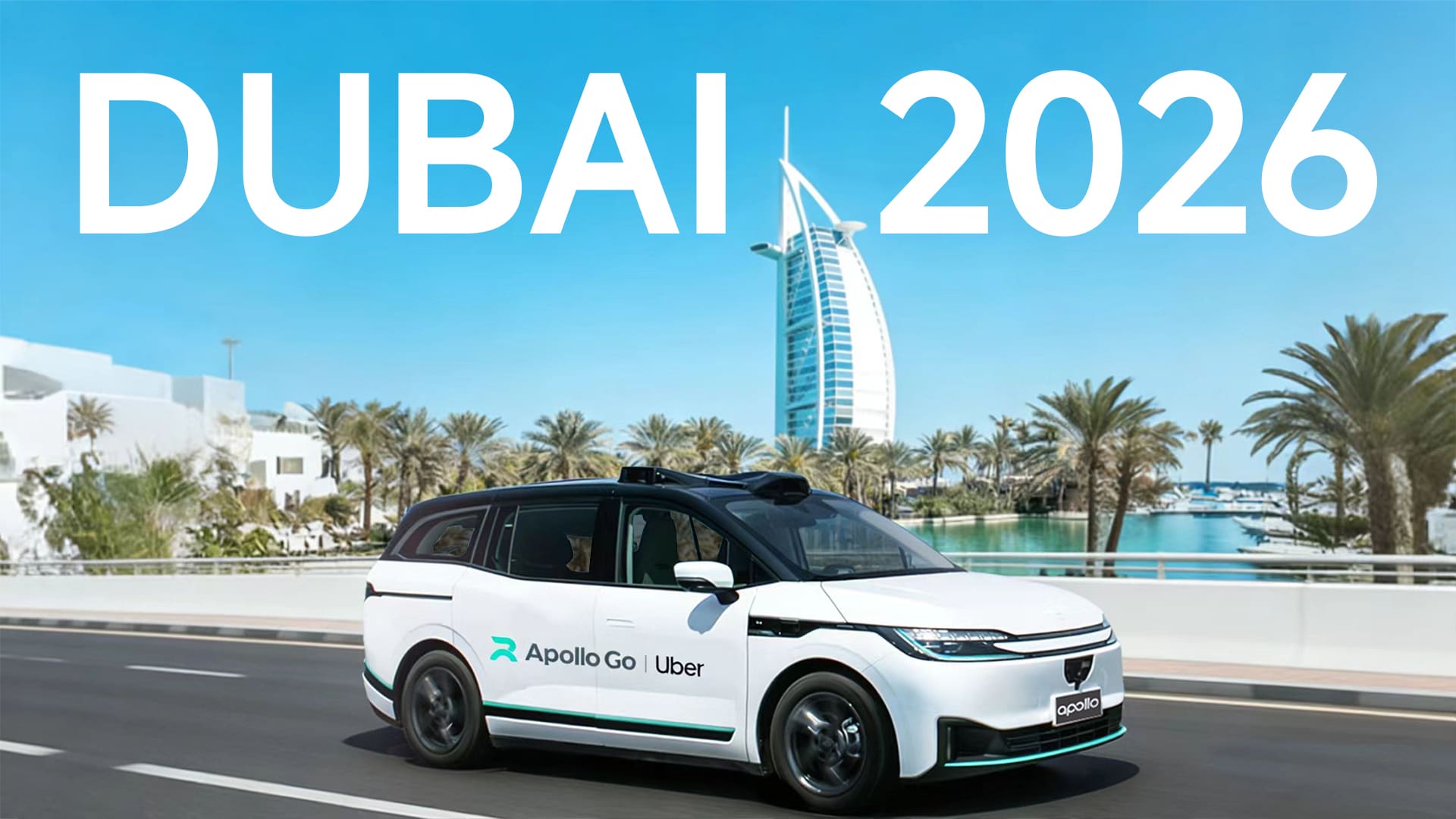
Dubai is poised to become a major hub for autonomous transportation as Baidu and Uber expand their global partnership to bring self-driving ride-hailing to the city. Launching within the month, the Apollo Go service will integrate directly into the Uber app, initially serving the Jumeirah area with fully autonomous vehicles available through Uber Comfort, UberX, or a dedicated “Autonomous” option. This collaboration directly supports Dubai’s ambitious goal of achieving 25% autonomous trips by 2030. “Bringing Apollo Go to Dubai via the Uber platform marks a pivotal step in our mission to provide safe, efficient, and accessible autonomous mobility worldwide,” said Nan Yang, Vice President of Baidu and General Manager of Overseas Business Unit, Intelligent Driving Group. With over 240 million autonomous kilometers logged globally, Apollo Go is rapidly scaling its reach, and Uber aims to expand consumer access to this technology worldwide.
Baidu & Uber Launch Apollo Go in Dubai via RTA Partnership
Over 140 million kilometers of fully driverless operation underpin a new expansion of autonomous ride-hailing, as Baidu and Uber bring their Apollo Go service to Dubai in partnership with the Roads and Transport Authority (RTA). Fleet management will be overseen by New Horizon, a third-party operator, as the companies gather operational data for wider city deployment. This move directly supports Dubai’s objective of achieving 25% autonomous transportation trips by 2030, building on Apollo Go’s existing presence in 22 cities and recent expansion plans for London. Uber’s Sarfraz Maredia added, “We’re excited to partner with Baidu as we continue to grow our autonomous footprint across Dubai.” Apollo Go has already surpassed 250,000 weekly rides, completing over 17 million trips as of October 31, 2025.
Apollo Go Logs 240 Million Autonomous Kilometers Globally
Baidu’s Apollo Go autonomous ride-hailing service is rapidly expanding its operational scope, now boasting over 240 million autonomous kilometers driven globally, with a significant portion – exceeding 140 million kilometers – achieved without human intervention. This milestone demonstrates substantial progress in real-world autonomous vehicle testing and deployment, currently spanning 22 cities worldwide. Recent data indicates Apollo Go is completing over 250,000 rides weekly, having facilitated more than 17 million cumulative rides as of October 31, 2025. The company’s strategic partnership with Uber is central to this growth, evidenced by the recent inauguration of Apollo Go Park in Dubai, serving as its first overseas operations and management hub. Passengers booking Uber Comfort or UberX, or specifically selecting “Autonomous” within the app, will gain access to the fully driverless vehicles initially operating in the Jumeirah area.
Bringing Apollo Go to Dubai via the Uber platform marks a pivotal step in our mission to provide safe, efficient, and accessible autonomous mobility worldwide.
Nan Yang, Vice President of Baidu and General Manager of Overseas Business Unit, Intelligent Driving Group