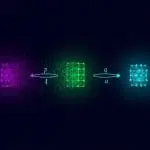
Twisted bilayer graphene, a material celebrated for its unusual electronic properties, continues to reveal surprising behaviour, and researchers are now exploring how manipulating its structure further enhances these effects. Jannes van Poppelen and Annica M. Black-Schaffer, both from Uppsala University, along with their colleagues, investigate the combined influence of twisting and buckling in bilayer graphene, a structural deformation that introduces ripples into the material. Their work demonstrates that while initial buckling enhances the formation of ‘flat bands’, a key characteristic linked to exotic electronic behaviour, excessive buckling ultimately diminishes this effect, due to changes in how electrons move within the material and the emergence of energy gaps. This research reveals a complex interplay between twisting and buckling, showing that while they can both contribute to flat bands, they operate through competing mechanisms, and importantly, buckled twisted bilayer graphene can still achieve a comparable degree of band flatness to its pristine counterpart over a broad range of twist angles.
Periodically buckled monolayer graphene offers a tunable route to achieving flat bands. This research investigates the combined influence of twist and buckling on the electronic band structure of bilayer graphene, focusing on understanding how these parameters interact to modify electronic properties and generate flat bands, and determining the conditions for their emergence and characterising their resulting properties. This work contributes to the broader field of moiré physics and offers potential pathways for designing new electronic materials with tailored characteristics.
The research demonstrates that introducing periodic buckling into large-angle twisted bilayer graphene initially enhances band flattening compared to monolayer graphene. However, sufficiently strong buckling increases band dispersion due to interlayer coupling and the opening of a gap at the Dirac point. This occurs because interlayer coupling reduces in-plane kinetic energy, while symmetry breaking generates a gap. The findings reveal that buckling-induced band flattening competes with twist-induced band flattening; buckling breaks symmetry and creates sublattice polarization, while twisting prefers to preserve it. This prevents buckling from completely suppressing the flat bands created by twisting.
Moiré Patterns, Strain, and Graphene Properties
Research on twisted bilayer graphene (TBG) and related two-dimensional materials extensively details the effects of strain, buckling, and moiré patterns on their electronic properties. The research explores the unique electronic properties arising from the moiré pattern created when two graphene layers are rotated relative to each other, including the emergence of flat bands, correlated insulating states, and superconductivity. A major focus is investigating how applying strain, or allowing buckling, affects the electronic structure of TBG and other 2D materials, often to tune flat bands, induce new phases, or modify existing properties. The moiré pattern itself is a fundamental driver of many of the interesting phenomena observed, creating a periodic potential that dramatically alters the electronic band structure.
The flat bands in TBG promote strong electron-electron interactions, leading to correlated insulating states, superconductivity, and other exotic phases. Researchers are also investigating heterostrain, applying different strains to different layers in a heterostructure to engineer specific properties. Many studies focus on atomic relaxation, how atoms rearrange to minimize energy, which affects the moiré pattern and electronic structure. The research combines theoretical modelling and analytical solutions with experimental techniques, including Raman spectroscopy, scanning tunneling microscopy, and transport measurements.
Specific areas of investigation include engineering flat bands, the role of strain and buckling in modifying the band structure, the emergence of van Hove singularities, and the effect of atomic relaxation on the moiré pattern. Researchers are exploring the origin of Mott insulating behaviour and the mechanisms of superconductivity in TBG, as well as the influence of strain and buckling on the stability of correlated states. Studies are focused on using strain to tune electronic properties, applying heterostrain to create new functionalities, and understanding the effect of strain gradients.
Buckling Enhances and Modifies Band Flatness
This research demonstrates how introducing periodic buckling into magic-angle twisted bilayer graphene influences its electronic structure across a range of twist angles. The team discovered that while buckling initially enhances band flattening, very strong buckling can conversely increase band dispersion due to interlayer coupling and the opening of a gap at the Dirac point. This effect arises from a competition between buckling, which breaks symmetry and creates sublattice polarization, and twisting, which prefers to preserve symmetry. Despite this competition, the findings reveal that buckled bilayer graphene can achieve comparable band flatness to pristine magic-angle twisted bilayer graphene, and even surpass it over a wide range of twist angles. Importantly, buckling significantly enhances the robustness of flat bands against twist-angle disorder, potentially maintaining high flatness even with variations in twist angle. The research establishes buckled bilayer graphene as a versatile platform for investigating strongly correlated electronic phenomena, with the potential for increased low-energy density of states.
🗞 Buckling and flat bands in twisted bilayer graphene
🧠 ArXiv: https://arxiv.org/abs/2510.13471