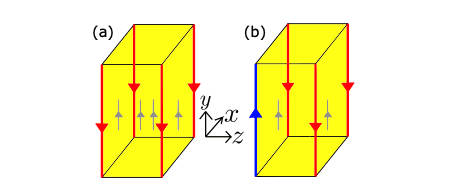
Research demonstrates the creation of tunable antichiral hinge states within a three-dimensional higher-order topological insulator, connecting Dirac points via surface currents. Employing a coupled cavity array and electro-optic modulators, scientists achieve controlled band dispersion and propagation velocity, simplifying experimental realisation and enabling novel topological transport phenomena.
The behaviour of electrons at material interfaces is increasingly understood through the lens of topology, a branch of mathematics concerned with properties preserved under continuous deformations. Recent investigations into two-dimensional topological systems have expanded the concept of edge states, traditionally understood as chiral – propagating in one direction – to include antichiral configurations where propagation occurs in the same direction along parallel edges. Researchers now demonstrate that similar antichiral states can emerge in three-dimensional materials, specifically in higher-order topological insulators and semimetals, where these states reside on hinges – the intersection of surfaces.
This work, detailed in a paper by Xian-Hao Wei, Xi-Wang Luo, Mu Yang, Yu-Wei Liao, Jin-Shi Xu, Guang-Can Guo, and Zheng-Wei Zhou, all from the Laboratory of Quantum Information at the University of Science and Technology of China, explores the possibility of tuning these antichiral hinge states. Their research, entitled “Tunable Antichiral Hinge State in Photonic Synthetic Dimensions”, proposes a method for controlling the propagation direction and velocity of these states using specifically designed tunnelings within a photonic system, and validates this through modelling of a one-dimensional coupled cavity array incorporating synthetic dimensions represented by the photonic orbital angular momentum and frequency.
Contemporary research in topological photonics demonstrates the emergence of antichiral hinge states within three-dimensional higher-order topological insulators and semimetals. These states connect surface or bulk Dirac points, exhibiting tunable band dispersion and propagation velocity, controlled independently for each hinge through precisely designed tunnelings. A Dirac point, in this context, represents a specific point in momentum space where the energy bands of a material cross, often associated with unique electronic or photonic properties.
Researchers propose a practical realisation of these concepts utilising a one-dimensional coupled cavity array, augmented by synthetic dimensions representing photonic orbital angular momentum and frequency. Orbital angular momentum (OAM) describes the twisting of light, imparting a helical phase front, while frequency refers to the rate of oscillation of the electromagnetic wave. These serve as artificial dimensions, enabling unprecedented control over light propagation. Scientists implement both longitudinal and transversal electro-optic modulators to generate the necessary tunable tunnelings along these synthetic dimensions, streamlining experimental procedures and simplifying setups by removing the need for beam splitting and auxiliary cavities. Photonic transmission spectra confirm the existence and tunability of these antichiral hinge states, validating the theoretical framework and experimental design.
The field extends beyond two-dimensional topological photonics, now incorporating antichiral configurations propagating in the same direction along parallel edges, opening new possibilities for waveguiding and topological protection. Scientists consistently focus on degenerate optical cavities, which provide the necessary conditions – high quality factors (characterising the resonance strength) and mode degeneracy (multiple modes having the same frequency) – to realise and manipulate light within these synthetic dimensions. Investigations reveal the potential for robust waveguiding and creation of topologically protected edge and corner states, offering resilience against defects and perturbations.
The integration of synthetic dimensions extends beyond static topological states, with scientists exploring dissipative photonics and the creation of topological lasers. This intersection of disciplines allows investigation of non-equilibrium phenomena and development of active photonic devices with enhanced functionalities. Furthermore, alternative approaches to optical routing, such as utilising high-efficiency composite acoustic diffraction, demonstrate a broadening of techniques employed within the field.
Leading research groups, notably those led by Guang-Can Guo and Shanhui Fan, consistently contribute to advancements in this area, driving innovation and shaping the current landscape of topological photonics. Their work, alongside contributions from Ze-Di Cheng and Yuxiang Zhao, highlights a collaborative effort pushing the boundaries of scientific knowledge.
Future work will likely focus on refining the control and scalability of these synthetic dimensional systems, addressing current limitations and unlocking new possibilities. Expanding beyond current 1D and 2D implementations to fully three-dimensional structures presents a significant challenge, but promises even greater control over light propagation and topological properties. Furthermore, exploring the integration of these photonic systems with other platforms, such as quantum computing architectures, could unlock entirely new functionalities and applications.
The development of more efficient and compact devices, alongside the investigation of novel materials with enhanced optical properties, will also be crucial for translating these research findings into practical technologies. Scientists actively pursue these advancements, aiming to bridge the gap between fundamental research and real-world applications, paving the way for a new era of advanced photonic devices and applications.
Researchers now demonstrate robust and tunable antichiral hinge state transport, offering a pathway towards novel topological phenomena and their potential application in photonic devices. They skillfully control both the direction and velocity of light propagation through these engineered states, representing a significant step towards creating more efficient and versatile optical technologies. The integration of synthetic dimensions provides a powerful tool for manipulating light and exploring new frontiers in topological photonics.
👉 More information
🗞 Tunable Antichiral Hinge State in Photonic Synthetic Dimensions
🧠 DOI: https://doi.org/10.48550/arXiv.2506.17643