Artificial intelligence and human intuition continue to blur; a revolutionary algorithm dubbed Torque Clustering has emerged, poised to significantly enhance the autonomous learning capabilities of AI systems, allowing them to uncover complex patterns in vast datasets without human intervention.
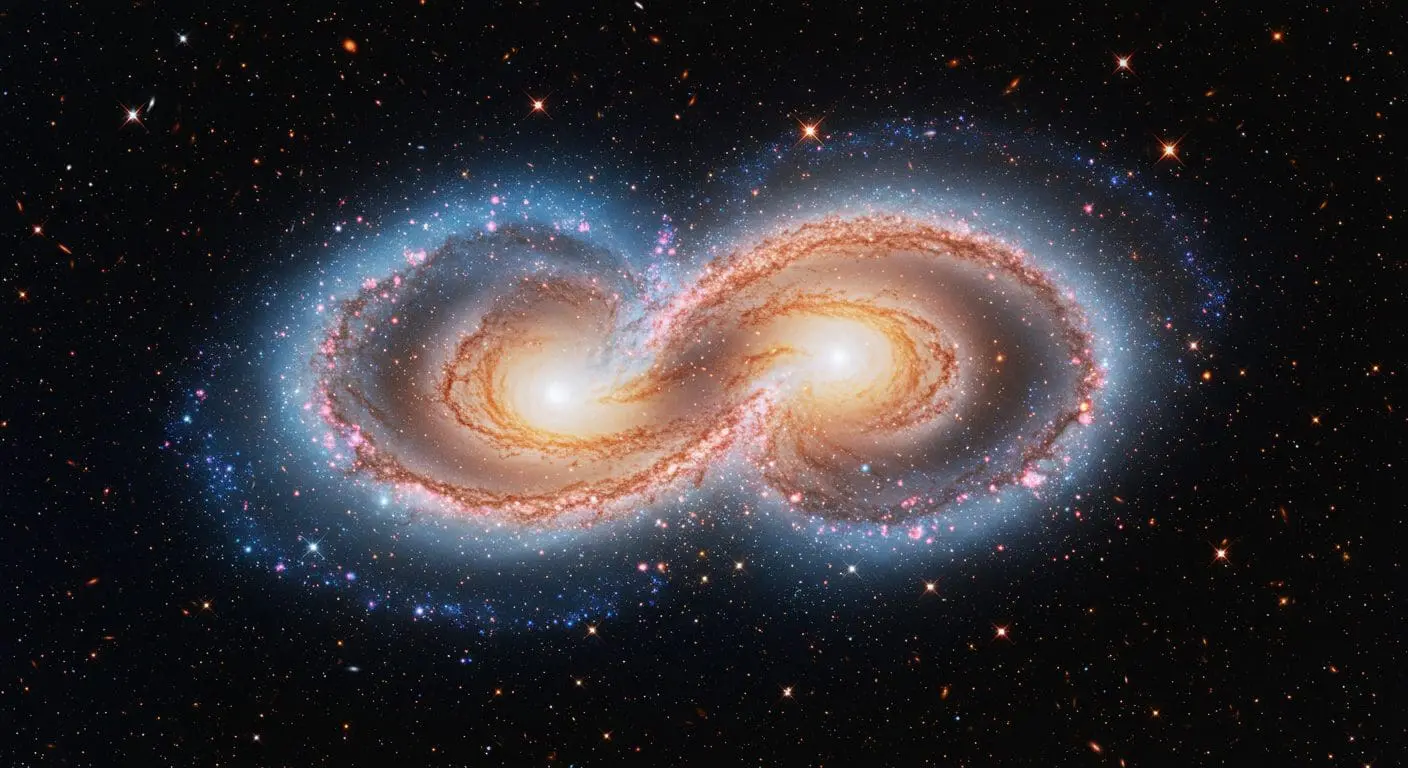
Inspired by the gravitational interactions that occur when galaxies merge, this innovative method leverages the physical concept of torque to identify clusters autonomously, adapting seamlessly to diverse data types and outperforming traditional unsupervised learning methods.
With its potential to redefine the landscape of unsupervised learning, Torque Clustering could pave the way for genuinely autonomous AI, supporting advancements in fields such as biology, chemistry, astronomy, psychology, finance, and medicine and potentially redefining the future of artificial intelligence, particularly in robotics and autonomous systems.
Torque Clustering
The realm of artificial intelligence (AI) is on the cusp of a revolution, with the development of a novel algorithm that significantly enhances how AI systems can independently learn and uncover patterns in data. Dubbed Torque Clustering, this innovative method is inspired by the gravitational interactions observed when galaxies merge, marking a substantial leap towards achieving natural intelligence in machines. This article delves into the intricacies of Torque Clustering, its potential to redefine the landscape of unsupervised learning, and the profound implications it holds for various fields, from biology and chemistry to astronomy, psychology, finance, and medicine.
Current AI technologies predominantly rely on supervised learning, a method where an AI system is trained using large amounts of data that have been labelled by humans. This approach has several limitations. Labelling data is time-consuming and costly and often impractical for complex or large-scale tasks. The need for unsupervised learning methods that can uncover inherent structures and patterns within datasets without the need for pre-labelled data has become increasingly evident.
Unsupervised learning aims to mimic how animals learn in nature, through observation, exploration, and interaction with their environment, all without explicit instructions. This approach is fundamental in developing truly autonomous AI systems that can operate independently, discovering new insights such as disease patterns, fraud detection, or understanding behavior across various disciplines.
The Torque Clustering algorithm stands out for its foundation in the physical concept of torque, enabling it to identify clusters autonomously and adapt seamlessly to diverse data types. This method is fully autonomous, parameter-free, and boasts exceptional computational efficiency, making it capable of processing large datasets. Rigorous testing on over 1,000 diverse datasets has yielded an average adjusted mutual information (AMI) score of 97.7%, significantly outperforming other state-of-the-art methods which achieve scores in the 80% range.
Inspired by the torque balance observed in gravitational interactions when galaxies merge, Torque Clustering is based on two natural properties of the universe: mass and distance. This connection to physics lends a fundamental layer of scientific significance to the method, underscoring its potential impact on the development of general artificial intelligence, particularly in areas such as robotics and autonomous systems.
The implications of Torque Clustering are far-reaching. Supporting the development of truly autonomous AI could pave the way for significant advancements in fields requiring optimised movement, control, and decision-making. The open-source code being made available to researchers is set to accelerate developments in unsupervised learning, potentially leading to breakthroughs that could rival the impact of last year’s Nobel Prize in physics, which was awarded for foundational discoveries enabling supervised machine learning with artificial neural networks.
External Link: Click Here For More