Topological quantum computing is an innovative approach. It utilizes quasiparticles known as anyons, such as Majorana fermions. These particles are used to perform quantum computations. These particles exhibit nonlocal properties, meaning their quantum states are distributed across space rather than confined to a single location. This inherent characteristic makes them highly resistant to decoherence and local disturbances, addressing key challenges in traditional quantum computing. The computation process involves braiding these quasiparticles. Their movement predictably alters their quantum states. This alteration enables the execution of quantum gates through topological operations.
Progress has been made in this field, with companies like Microsoft leading efforts to create topological qubits using Majorana fermions. Their research focuses on superconducting nanowires and magnetic fields, demonstrating evidence of these particles through experiments involving semiconductor-superconductor hybrids. Industry leaders and academic institutions collaborate to advance the theoretical frameworks and practical designs for developing these systems. These advancements provide a foundation for future innovations in quantum computing technology.
Despite the potential advantages, scaling topological quantum systems presents several challenges. Maintaining coherence as more qubits are added is a critical issue. Even inherently robust systems can face difficulties in creating and manipulating anyons. These challenges occur without introducing errors. The specialized physical conditions required for these operations add complexity. Conditions like low temperatures and specific materials can lead to decoherence if not precisely controlled. Additionally, the braiding operations introduce potential sources of error. Reading out the final state without disturbing it is a complex task. This task requires nondestructive measurement techniques that are still under development.
The Basics Of Topological Quantum Computing
Topological quantum computing represents a novel approach to quantum computation that leverages the unique properties of quasiparticles in two-dimensional systems. Traditional quantum computing relies on qubits stored in individual particles. In contrast, topological quantum computing encodes information in a system’s global topology. This method is inherently robust against local perturbations, making it a promising candidate for fault-tolerant quantum computation.
The foundation of topological quantum computing lies in manipulating quasiparticles known as anyons. These exotic particles exhibit fractional statistics and can be used to encode quantum information in a way that is resistant to decoherence. Braiding these anyons—moving them around each other in a specific sequence—serves as the fundamental operation for performing quantum gates. This process is non-local, meaning it does not depend on the exact positions of the particles but rather on their relative motion.
The fault-tolerant nature of topological quantum computing arises from the fact that the encoded information is stored in the global properties of the system, such as the topology of the braiding patterns. Local errors or disturbances in the system are less likely to propagate and corrupt the entire computation. This robustness is a significant advantage over conventional quantum computing architectures requiring active error correction mechanisms.
Michael Freedman and his collaborators first proposed using anyons for quantum computation in the late 1990s. Their work demonstrated that certain types of anyons, such as those in the fractional quantum Hall effect, could perform universal quantum computation through braiding operations. This theoretical framework has since been expanded upon by researchers worldwide, leading to a deeper understanding of the potential and limitations of topological quantum computing.
Despite its promise, topological quantum computing faces several practical challenges. One major hurdle is the experimental realization of anyons with the required properties. While significant progress has been made in creating and manipulating anyons in laboratory settings, achieving the precision necessary for large-scale fault-tolerant computation remains an open problem. Nevertheless, ongoing research continues to advance our understanding of these systems, bringing us closer to realizing the vision of a topological quantum computer.
Majorana Fermions And Anyons In Quantum Systems
Topological quantum computing represents an innovative approach to overcoming the challenges faced by traditional quantum computing methods. Researchers aim to create a robust framework for fault-tolerant quantum computation by utilizing Majorana fermions, which are their antiparticles. These quasiparticles exhibit unique exchange statistics, allowing them to encode quantum information in a manner resistant to local disturbances.
The braiding of anyons, including Majorana fermions, is central to this approach. Instead of directly manipulating qubits through gates, which can introduce errors, the system’s state is altered by moving these particles around each other. This method protects against noise and decoherence, as the information is encoded non-locally.
Despite their promise, challenges remain in detecting and controlling Majorana fermions. Their lack of electric charge necessitates indirect detection methods, such as tunneling spectroscopy or Josephson junction measurements. Maintaining the required topological properties also demands precise control over materials and temperatures, presenting significant technological hurdles.
The potential benefits of this approach are substantial. Topological quantum computing could lower the overhead associated with large-scale quantum computation by reducing the need for extensive error-correcting codes. Furthermore, anyone can create universal quantum gates through their braiding operations, enabling the execution of any necessary quantum operation.
Current research is focused on confirming the existence of Majorana fermions and advancing experimental techniques to control them. While some experiments have reported evidence of these particles, reproducibility and definitive signatures remain critical for further progress. The successful realization of topological quantum computing could revolutionize the field by providing a more reliable pathway to achieving large-scale quantum computation.
In summary, using Majorana fermions and anyons in topological quantum computing offers a promising solution to the challenges of fault-tolerant quantum computation. The braiding operations provide inherent protection against errors, but continued advancements in theory and experiment are essential to harness this potential fully.
Fault Tolerance In Topological Quantum Systems
Fault tolerance in topological systems is advantageous because errors do not propagate quickly. The encoded information resides in the global topology rather than local states, making the system robust against environmental noise and decoherence. This inherent fault tolerance reduces the need for extensive error correction protocols compared to traditional quantum computing methods.
The references from Nayak et al. and Freedman provide foundational insights into non-Abelian anyons and the mathematical framework supporting fault tolerance. These sources underscore the theoretical credibility of topological quantum computing, though practical implementation remains challenging.
The physical realization of these systems often involves materials like superconductors, where Majorana fermions have been experimentally observed. However, scalability and error correction protocols specific to topological systems are still under development, requiring innovative approaches that minimize disruption during computation.
Topological systems aim to reduce overhead compared to surface codes by utilizing inherent particle properties. While theoretical foundations are robust, experimental challenges persist in scaling these systems for practical applications, making ongoing research crucial for their realization.
Braiding Quasiparticles For Robust Computation
Michael Freedman and his collaborators first proposed using anyone for quantum computation. They demonstrated that the non-Abelian statistics of these particles could be harnessed to perform universal quantum gates. Alexei Kitaev further advanced this idea by introducing Majorana fermions as a potential realization of topological qubits. These theoretical frameworks have been instrumental in shaping the field.
Experimental progress has been significant, with researchers observing fractional quantum Hall states that exhibit the necessary anyonic behavior. Groups led by researchers like Daniel Arovas and Paul Fendley have conducted studies. They provided empirical evidence supporting the braiding statistics of these quasiparticles. This further validates their use in topological quantum computing.
Despite these advancements, challenges remain in achieving scalable systems. The precise control required for braiding operations and maintaining coherence over extended periods are ongoing areas of research. However, the potential for highly robust quantum computers makes this field a promising direction for future developments.
Experimental Progress In Creating Topological Qubits
Experimental progress in this field has been significant, with companies like Microsoft leading the charge with the Majorana 1 chip. They have focused on creating topological qubits using Majorana fermions in superconducting nanowires. Their research has demonstrated evidence of these particles through experiments involving magnetic fields and semiconductor-superconductor hybrids. Collaborative efforts with academic institutions have further advanced the theoretical underpinnings and experimental designs necessary for these systems.
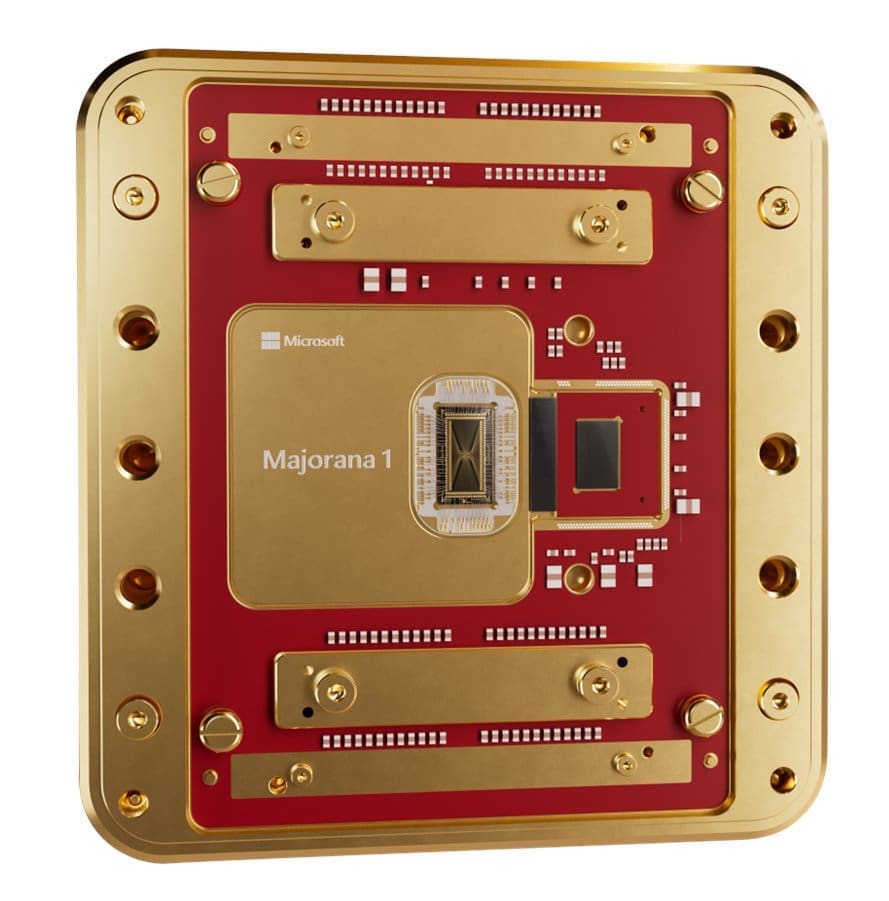
The creation of topological qubits presents several challenges, including the precise manufacturing conditions required—such as specific temperatures and materials—and the accurate detection of braiding operations without introducing errors. Researchers are developing improved detection methods and more stable anyon systems to address these issues.
Key experiments have observed Majorana zero modes in devices with magnetic flux or proximity to superconductors, enabling the creation and manipulation of Majorana fermions essential for topological qubits. These setups provide a foundation for future advancements in quantum computing technology.
Collaborations between academia and industry have been pivotal in driving progress. Institutions like Stanford and those in Europe contribute significantly to both theoretical frameworks and experimental designs, which companies then build upon to develop practical applications.
Challenges In Scaling Topological Quantum Computers
Topological quantum computing leverages the unique properties of anyons, quasiparticles whose states are robust against local perturbations, to perform quantum computations through braiding operations. These operations involve moving anyons in a specific pattern, which encodes quantum gates into the system’s topology. This approach is theoretically advantageous because it inherently protects quantum information from decoherence caused by local disturbances.
However, scaling topological quantum systems presents significant challenges. Maintaining coherence as more qubits are added remains a critical issue. While topological systems offer inherent robustness, practical implementations face difficulties in creating and manipulating anyons without introducing errors. The physical conditions required for these operations, such as low temperatures and specific materials, add layers of complexity that can lead to decoherence if not precisely controlled.
The physical implementation of topological qubits, mainly using candidates like Majorana fermions, poses additional challenges. These systems require highly specialized environments, which are difficult to achieve and maintain at scale. Any deviations from these conditions can disrupt the system’s stability, making it challenging to expand beyond a small number of qubits without compromising performance.
Braiding operations themselves introduce potential sources of error. While each braid is designed to be accurate, performing numerous braids in a large-scale system can lead to accumulated errors. Additionally, reading out the final state without disturbing it remains a complex task, often requiring non-destructive measurement techniques that are still under development and prone to inaccuracies.
The computational overhead for fault-tolerant operations also impacts scalability. While topological systems may offer advantages over traditional quantum computers in terms of error correction, the redundancy required to protect against errors still necessitates significant resources. This overhead must be carefully managed to ensure that scaling does not become prohibitively complex or resource-intensive.
In summary, while topological quantum computing holds promise for fault-tolerant operations through braiding quasiparticles, challenges such as maintaining coherence, physical implementation complexities, error accumulation during braiding, and computational overhead must be addressed to achieve scalable systems. Each of these issues requires careful consideration and innovative solutions to unlock the full potential of topological quantum computing.