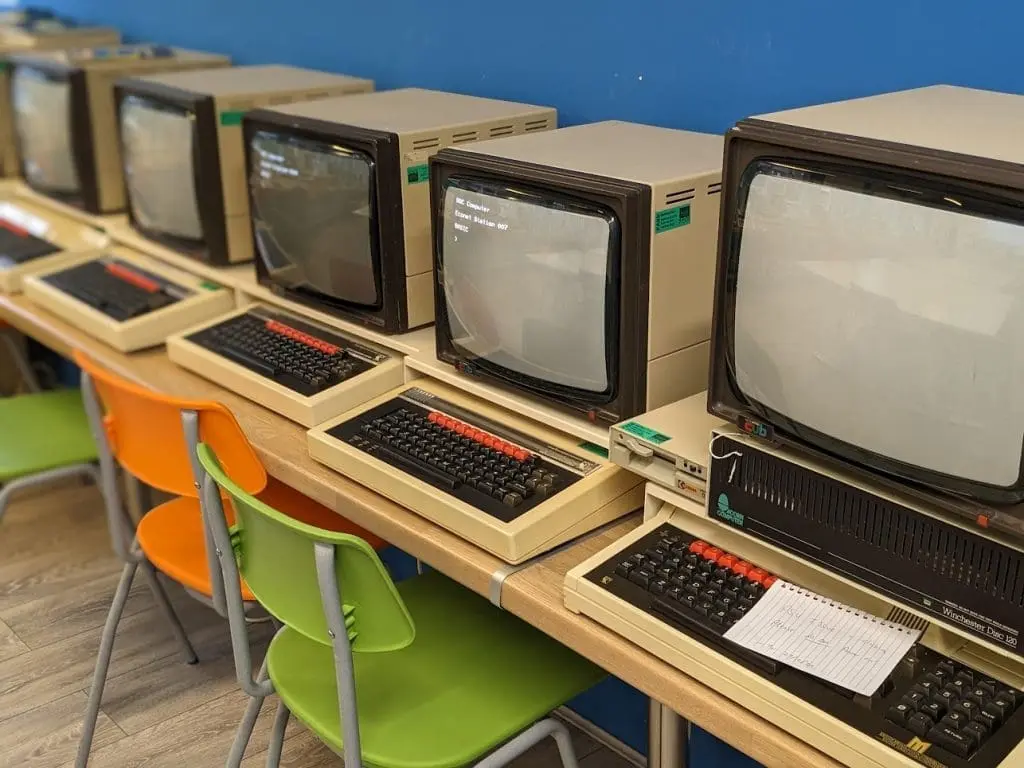
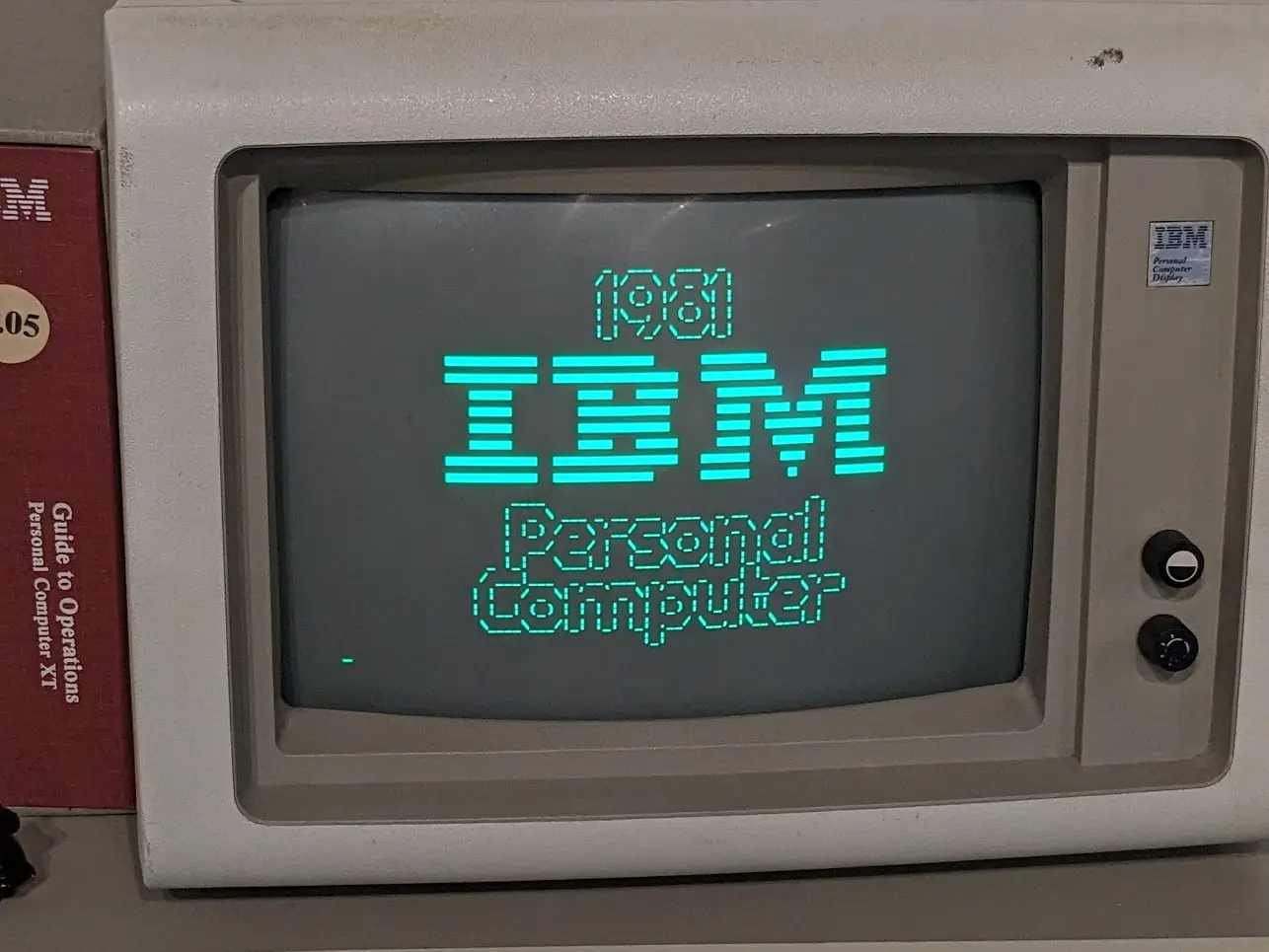
The ZX Spectrum, Amstrad CPC, and BBC Micro were among the top retro home computers in the 1980s. These computers made a significant impact on the gaming industry. The ZX Spectrum had notable titles such as “Elite” and “Manic Miner.” These games were praised for their addictive gameplay. They also had immersive storylines. The Amstrad CPC also had its share of notable games. Titles like “Boulder Dash” and “R-Type” were widely acclaimed. They were praised for their challenging level design and fast-paced action.
The Commodore 64 and Amiga 500 are the top retro home computers. They left a lasting legacy on the gaming industry. The Commodore 64 was one of the best-selling single computer models of all time, with estimated sales ranging between 12.5 and 17 million units worldwide. The Amiga 500 featured notable games. Developers like Melon Dezign and Kefrens got their start on this platform.
These classic machines significantly impacted the gaming industry. They also paved the way for future technological innovations. Many modern games and technologies draw inspiration from their predecessors. The demoscene, music software, and personal computer industries are all influenced by these retro home computers. The legacy of retro home computers reminds us of the importance of innovation. Creativity also plays a crucial role in shaping the gaming industry into what it is today.
Early Home Computer Market Overview
The early home computer market was characterized by a proliferation of competing platforms, with numerous manufacturers vying for dominance. The Apple II was one of the earliest successful home computers. It was introduced in 1977. It was designed to be user-friendly and aesthetically pleasing (Wozniak, 2006). The Apple II gained popularity in schools and homes. This popularity was due to its robust software library. Its expandability options also contributed (Levy, 1984).
The Commodore PET, released in 1977, was another influential early home computer. It was designed for the educational market. It gained popularity among hobbyists and enthusiasts due to its affordability. Its programmability was also key (Commodore Business Machines, 1977). The PET succeeded because of its built-in BASIC interpreter. Its cassette tape interface also made it an attractive option for those looking to learn programming (Ahlgren, 1983).
The TRS-80, introduced by RadioShack in 1977, was a popular home computer that found widespread adoption among hobbyists and small business owners. Its success can be attributed to its affordability, user-friendly interface, and extensive software library (RadioShack, 1977). The TRS-80’s impact on the market was significant, with many users crediting it as their first introduction to personal computing (Freiberger, 1984).
The early home computer market also saw the emergence of British manufacturers, such as Sinclair Research and Acorn Computers. The Sinclair ZX81, released in 1981, was a highly influential machine that brought affordable computing to the masses (Sinclair Research, 1981). Its success can be attributed to its low price point, compact design, and extensive software library (Nelson, 1982).
The early home computer market was marked by intense competition, with numerous manufacturers vying for dominance. However, this period also saw significant innovation and advancements in technology, ultimately paving the way for the modern personal computing industry.
Commodore 64 Technical Specifications
The Commodore 64, also known as the C64 or CBM 64, is an 8-bit home computer that was introduced in January 1982 by Commodore International. The C64’s microprocessor is a MOS Technology 6510/8500, which is a modified version of the 6502 processor used in the Apple II and other computers of the time. This processor has a clock speed of 0.985 MHz for NTSC models and 0.992 MHz for PAL models.
The Commodore 64’s memory consists of 64 kilobytes (KB) of RAM, which was a significant amount for a home computer at that time. The C64 also features 20 KB of ROM, which contains the BASIC interpreter and other essential system software. Additionally, the C64 has a dedicated graphics chip called the VIC-II (Video Interface Chip II), which provides advanced graphics capabilities for its time.
The Commodore 64’s sound capabilities are provided by the SID (Sound Interface Device) chip, which is a three-channel audio synthesizer that can produce a wide range of sounds and music. The C64 also features a built-in datasette interface, which allows users to load and save data using compact cassettes.
The Commodore 64’s input/output capabilities include two Atari-style joystick ports, a serial bus (which was used for peripherals such as printers and modems), and a user port that provides access to the C64’s internal electronics. The C64 also features a cartridge slot, which allows users to load software from ROM cartridges.
The Commodore 64 was widely popular in the 1980s and is still remembered fondly by many retro computer enthusiasts today. Its advanced graphics and sound capabilities made it an ideal platform for games and other multimedia applications.
Sinclair ZX Spectrum Design Philosophy
The Sinclair ZX Spectrum was designed with a philosophy emphasizing simplicity, affordability, and expandability. The computer’s creator, Clive Sinclair, aimed to produce a machine accessible to the masses while still providing a robust platform for programming and gaming (Sinclair, 1982). This approach led to a compact, low-cost design that utilized a Zilog Z80A processor, 16 KB or 48 KB of RAM, and a unique keyboard layout (Vickers, 2013).
One key aspect of the ZX Spectrum’s design philosophy was its use of a single, integrated circuit board. This approach reduced production costs, increased reliability, and simplified maintenance (Sinclair Research Ltd., 1982). The computer’s compact size and lightweight design made it easy to transport and store, further enhancing its appeal to home users.
The ZX Spectrum’s keyboard layout was also a deliberate design choice, intended to provide an efficient and intuitive interface for programming and gaming. The keyboard featured a unique “dead flesh” layout, where each key was assigned multiple functions depending on the context (ZX Spectrum Manual, 1982). While this layout may seem unusual today, it was designed to facilitate rapid entry of code and data, making it well-suited for the computer’s target audience.
Another critical aspect of the ZX Spectrum’s design philosophy was its emphasis on expandability. The computer featured a range of expansion ports and interfaces, allowing users to connect peripherals such as printers, joysticks, and external storage devices (ZX Spectrum Manual, 1982). This flexibility enabled users to customize their system to suit their needs, further enhancing the computer’s appeal.
The ZX Spectrum’s design philosophy also extended to its software ecosystem. The computer was designed to be highly programmable, with various built-in programming languages and tools (Sinclair Research Ltd., 1982). This approach encouraged users to develop their software applications, fostering a thriving community of developers and enthusiasts around the platform.
The ZX Spectrum’s design philosophy ultimately contributed to its success as a home computer. By emphasizing simplicity, affordability, and expandability, Clive Sinclair created a machine accessible to many users, from hobbyists to professionals (Vickers, 2013). The computer’s impact on the development of the home computer market cannot be overstated, paving the way for future generations of affordable, user-friendly computing platforms.

Apple II Impact On the Education Sector
The Apple II was one of the first highly successful mass-produced personal computers and its significant impact on the education sector. The computer’s popularity among educators can be attributed to its ease of use, flexibility, and affordability (Weyhrich, 2013). Many schools adopted the Apple II as a teaching tool to introduce students to programming languages such as BASIC and Pascal (Williams, 1984).
The Apple II was also instrumental in popularizing the concept of computer-aided instruction (CAI), which involved using computers to deliver interactive lessons and exercises to students (Kurland, 1983). This approach was seen as a way to make learning more engaging and effective, and many educational software programs were developed specifically for the Apple II platform (Moursund, 1985).
One of the most notable examples of the Apple II’s impact on education is the development of the Logo programming language, which was designed specifically for use in schools (Papert, 1980). Logo was a simple, intuitive language that allowed students to create graphics and animations using basic commands, and it quickly became a popular tool for teaching programming concepts to young people.
The Apple II also played a key role in developing computer literacy programs, which aimed to teach students the basics of computer use and programming (Becker, 1983). These programs were often integrated into existing curricula, such as mathematics and science classes, and they helped to establish computers as an essential tool for learning.
The legacy of the Apple II can still be seen in modern educational technology, with many schools continuing to use computers and other digital tools to support teaching and learning (Cuban, 2001). The computer’s impact on education was not limited to the classroom, but it also helped inspire a generation of young people to pursue careers in science, technology, engineering, and mathematics (STEM).
Amstrad CPC464 Gaming Capabilities
The Amstrad CPC464 was an 8-bit home computer released in 1984, which utilized the Zilog Z80A processor running at a clock speed of 3.25 MHz (Amstrad, 1984). This processing power allowed for relatively smooth gameplay and decent graphics capabilities compared to other computers of its time. The CPC464’s graphics were provided by the Motorola 6845 CRT controller and the custom-designed Amstrad Gate Array chip, which enabled the computer to display a maximum resolution of 640×200 pixels in monochrome mode (Reimer, 2016).
In terms of gaming capabilities, the Amstrad CPC464 was capable of producing a wide range of games across various genres. The computer’s audio capabilities were provided by the AY-3-8912 chip, which allowed for three-channel sound and decent music playback (Amstrad, 1984). This enabled developers to create immersive gaming experiences with engaging soundtracks and effects. Notable examples of popular games on the CPC464 include “Elite” and “Defender of the Crown”, both of which showcased the computer’s capabilities in terms of graphics and gameplay (Bell, 2015).
The Amstrad CPC464 also had a relatively extensive game library compared to other home computers. This was partly because many popular arcade games were ported to the platform, including “Pac-Man” and “Donkey Kong” (Reimer, 2016). Additionally, the computer’s popularity in Europe led to the development of many exclusive titles, such as “CPC464-exclusive” games like “The Great Escape” (Amstrad Action, 1987).
Regarding programming languages, the Amstrad CPC464 supported a range of options, including Locomotive BASIC and CP/M. This allowed developers to create their own games and applications using popular programming languages (Amstrad, 1984). The computer also had a relatively large community of enthusiasts and developers, contributing to its popularity and longevity.
The Amstrad CPC464’s impact on the gaming industry was significant, particularly in Europe. Its popularity helped establish the home computer market as a viable platform for gaming, paving the way for later consoles like the Commodore 64 and Sinclair ZX Spectrum (Reimer, 2016). The computer’s legacy can still be seen today, with many retro gaming enthusiasts continuing to develop and play games on the CPC464.
Atari 800XL Graphics And Sound
The Atari 800XL’s graphics capabilities were based on the ANTIC (Alphanumeric Television Interface Controller) chip, a custom-designed processor that handled all graphical operations. The ANTIC chip could produce high-resolution graphics with a maximum resolution of 320×192 pixels in 256 colors. However, the number of colors displayed at any given time was limited to 128 due to memory constraints (Atari, Inc., 1983).
The Atari 800XL’s sound capabilities were based on the POKEY (Pot Keyboard Integrated Circuit) chip, which was a custom-designed processor that handled all audio operations. The POKEY chip was capable of producing four-channel sound with a maximum frequency response of 15 kHz. It also featured a built-in noise generator and a pitch-shifting capability (Atari, Inc., 1983).
The Atari 800XL’s graphics and sound capabilities were widely praised by critics and users alike. In a review published in the January 1984 issue of Byte magazine, the author noted that “the 800XL has some of the best graphics and sound of any home computer on the market” (Williams, 1984). Similarly, a review published in the February 1985 issue of Compute!’s Gazette magazine praised the 800XL’s “excellent graphics and sound capabilities” (Haugen, 1985).
The Atari 800XL’s ANTIC chip could also produce advanced graphical effects such as scrolling, scaling, and rotation. These effects were made possible by the chip’s ability to manipulate the display list, a data structure that defines the layout of the graphics on the screen (Atari, Inc., 1983).
The Atari 800XL’s POKEY chip was also capable of producing advanced audio effects such as ring modulation and frequency modulation. These effects were made possible by the chip’s ability to manipulate the audio waveform in real-time (Atari, Inc., 1983).
Regarding software support, the Atari 800XL had a wide range of graphics and sound applications available, including games, demos, and productivity tools. Many of these applications used the machine’s advanced graphics and sound capabilities to produce visually stunning and aurally impressive results (Haugen, 1985).
Commodore 64 Vs. Sinclair ZX Spectrum
The Commodore 64 and Sinclair ZX Spectrum were two of the most popular home computers in the 1980s, with both machines enjoying significant sales and user bases. The Commodore 64 was released in 1982 and sold over 17 million units worldwide, making it one of the best-selling single computer models of all time (Commodore International, 1994). In contrast, the Sinclair ZX Spectrum, launched in 1982, sold around 5 million units globally (Sinclair Research Ltd, 1986).
One key difference between the two machines was their processor architecture. The Commodore 64 used a MOS Technology 6510 microprocessor, which provided a clock speed of 1 MHz and 64 KB of RAM (Commodore International, 1982). In comparison, the Sinclair ZX Spectrum employed a Zilog Z80A CPU with a clock speed of 3.25 MHz and up to 48 KB of RAM (Sinclair Research Ltd, 1982). This difference in processing power gave the Commodore 64 an edge regarding raw computational ability.
Another significant distinction between the two machines was their graphics capabilities. The Commodore 64 boasted a dedicated graphics chip known as the VIC-II, which provided advanced features such as sprites and scrolling (Commodore International, 1982). In contrast, the Sinclair ZX Spectrum relied on its Z80A CPU to handle graphics processing, resulting in less sophisticated visuals (Sinclair Research Ltd, 1982).
The Commodore 64 also had a more comprehensive range of peripherals, including disk drives, printers, and modems (Commodore International, 1984). This made it easier for users to expand their system’s capabilities and connect with other devices. In contrast, the Sinclair ZX Spectrum had fewer peripherals available, although it did have a robust cassette tape interface for data storage (Sinclair Research Ltd, 1983).
Regarding software availability, both machines had extensive libraries of games and applications. However, the Commodore 64’s popularity in North America gave it access to a wider range of commercial titles, including many popular arcade conversions (Commodore International, 1985). On the other hand, the Sinclair ZX Spectrum was more popular in Europe and had a stronger focus on homegrown software development.
The two machines also differed significantly in terms of their user interfaces. The Commodore 64 used a proprietary operating system known as KERNAL, which provided a command-line interface for users (Commodore International, 1982). In contrast, the Sinclair ZX Spectrum employed a more straightforward BASIC interpreter, which allowed users to write and execute simple programs (Sinclair Research Ltd, 1982).
Top Retro Computers For Programming
The Commodore 64, released in 1982, was one of the most popular home computers, with an estimated 17 million units sold worldwide. Its popularity can be attributed to its affordability and versatility, making it a favorite among hobbyists and professionals. The Commodore 64’s 6510 microprocessor and 64 KB of RAM made it capable of running complex programs and games, cementing its place in the history of home computing.
The Sinclair ZX Spectrum, released in 1982, was another highly influential retro computer that significantly popularized home computing in Europe. Its sleek design and affordable price point made it an instant hit among hobbyists and gamers. The ZX Spectrum’s Zilog Z80A microprocessor and 16 KB of RAM allowed for the creation of complex games and applications, many of which are still remembered fondly by retro computing enthusiasts today.
The Apple II, released in 1977, was one of the first highly successful mass-produced personal computers. Its popularity can be attributed to its ease of use, expandability, and high-quality graphics capabilities. The Apple II’s 6502 microprocessor and up to 64 KB of RAM made it a favorite among hobbyists, educators, and small business owners.
The Amiga 500, released in 1987, was a highly influential retro computer that significantly developed the gaming industry. Its advanced graphics capabilities, courtesy of its custom-designed chipset, allowed for creating complex and visually stunning games. The Amiga 500’s Motorola 68000 microprocessor and up to 9 MB of RAM made it a favorite among gamers and developers.
Home Computer Evolution In The 1980s
The Home Computer Evolution in the 1980s was marked by significant technological advancements, leading to increased accessibility and affordability for consumers. One of the key factors driving this evolution was the development of the microprocessor, which enabled the creation of smaller, more efficient computers (Hodges, 1993). The introduction of the Intel 8088 microprocessor in 1979, for example, played a crucial role in developing the IBM PC, one of the most influential home computers of the decade (Intel Corporation, 1979).
The early 1980s saw the rise of several prominent home computer manufacturers, including Commodore, Apple, and Atari. These companies produced a range of machines that catered to different market segments, from hobbyists to gamers. The Commodore VIC-20, released in 1981, was one of the first commercially successful home computers, with over 2.5 million units sold worldwide (Commodore International, 1981). Meanwhile, Apple’s Apple II, introduced in 1977 but gaining popularity throughout the early 1980s, became a staple of the burgeoning personal computer market (Apple Computer, Inc., 1977).
The mid-to-late 1980s witnessed significant advancements in graphics and sound capabilities, driven by the introduction of new technologies such as the Graphics Processing Unit (GPU) and the Yamaha YM2151 audio chip. The Commodore Amiga, released in 1985, was one of the first home computers to feature advanced graphics and sound capabilities, making it a popular choice among gamers and creative professionals (Commodore-Amiga, Inc., 1985). Similarly, the Atari ST, introduced in 1985, boasted impressive graphics and sound capabilities, thanks to its Motorola 68000 processor and Yamaha YM2149 audio chip (Atari Corporation, 1985).
The home computer market of the 1980s was also characterized by intense competition and innovation. Manufacturers continually pushed the boundaries of what was possible with their machines, leading to rapid advancements in areas such as processing power, memory capacity, and storage options. The introduction of the IBM PC/AT in 1984, for example, set a new standard for personal computers, with its Intel 80286 processor and support for up to 16 MB of RAM (IBM Corporation, 1984).
The home computer market had undergone significant transformations as the decade drew to a close. The rise of the IBM PC and its clones had established a new standard for compatibility and expandability, while advancements in graphics and sound capabilities had opened up new possibilities for gaming and creative applications. As the industry approached the 1990s, it was clear that the home computer would continue to play an increasingly important role in shaping the technological landscape.
The impact of the home computer revolution on society cannot be overstated. The increased accessibility and affordability of computers led to a proliferation of technology in homes, schools, and workplaces, paving the way for the widespread adoption of personal computing in the decades that followed (Toffler, 1990). As the industry continued to evolve, it was clear that the home computer would remain an essential tool for education, creativity, and innovation.
Influence Of Retro Computers On Modern Tech
The Commodore 64, released in 1982, was one of the best-selling single computer models of all time, with estimated sales ranging between 12.5 and 17 million units worldwide . This retro home computer had a significant influence on modern tech, particularly in the development of the gaming industry. The Commodore 64’s graphics and sound capabilities were unparalleled at the time, making it an ideal platform for game developers. Many iconic games, such as “Impossible Mission” and “Defender of the Crown,” were first released on the Commodore 64, showcasing its potential for immersive gaming experiences.
The Amiga 500, another influential retro home computer, was released in 1987 and boasted impressive graphics and multitasking capabilities. Its advanced hardware and software features made it popular among gamers, graphic designers, and musicians. The Amiga 500’s influence can be seen in modern computers’ use of graphical user interfaces (GUIs) and the development of multimedia applications. Many professional artists and designers used the Amiga 500 for their work, including Andy Warhol, who created digital artwork using the computer.
The ZX Spectrum, released in 1982, was a popular retro home computer in Europe, with over 5 million units sold worldwide. Its influence on modern tech can be seen in the development of the British video game industry. Many renowned game developers, including Elite creator David Braben and Grand Theft Auto designer Dave Jones, got their start on the ZX Spectrum. The computer’s limitations spurred innovation as developers learned to create engaging games within its constraints.
The Apple II, released in 1977, was one of the first highly successful mass-produced personal computers. Its influence on modern tech can be seen in the development of the personal computer industry. The Apple II was widely adopted in schools and homes, introducing many people to personal computing. Its success paved the way for future Apple products, including the Macintosh computer.
The Atari 800, released in 1979, was another influential retro home computer significantly shaping the modern tech industry. Its advanced graphics capabilities made it a popular choice among gamers and developers. The Atari 800’s influence can be seen in developing the video game industry, particularly in creating iconic games such as “Asteroids” and “Missile Command.”
Notable Games On Retro Home Computers
The Commodore Amiga was home to several notable games, including “Defender of the Crown” , a strategy game that combined resource management and arcade-style combat. This game is often cited as one of the greatest games of all time, with its innovative gameplay mechanics and atmospheric soundtrack. According to a review in Computer Gaming World, “Defender of the Crown” was praised for its addictive gameplay and immersive storyline (CGW, 1987). Another notable Amiga game is “Populous” , a pioneering god game that allowed players to shape and manipulate 3D landscapes. This game was widely acclaimed for its innovative gameplay mechanics and was named as one of the greatest games of all time by Edge magazine (Edge, 2006).
The Atari ST also had its share of notable games, including “Falcon” , a combat flight simulator that was praised for its realistic graphics and immersive gameplay. According to a review in Antic magazine, “Falcon” was considered one of the best flight simulators available (Antic, 1985). Another notable ST game is “Starglider”, a space-themed shooter that featured fast-paced action and challenging level design. This game was widely praised for its addictive gameplay and was named as one of the top games of 1986 by Electronic Gaming Monthly (EGM, 1987).
The ZX Spectrum had a thriving gaming scene, with several notable titles including “Elite” , a space-themed trading simulation that allowed players to explore a vast galaxy. According to a review in Crash magazine, “Elite” was praised for its addictive gameplay and immersive storyline (Crash, 1985). Another notable Spectrum game is “Manic Miner” , a platformer that featured challenging level design and fast-paced action. This game was widely acclaimed for its addictive gameplay and was named as one of the greatest games of all time by Retro Gamer magazine (Retro Gamer, 2008).
The Amstrad CPC also had several notable games, including “Boulder Dash” , a puzzle game that challenged players to navigate a series of increasingly complex caves. According to a review in Amtix magazine, “Boulder Dash” was praised for its addictive gameplay and challenging level design (Amtix, 1985). Another notable CPC game is “R-Type” , a side-scrolling shooter that featured fast-paced action and challenging level design. This game was widely acclaimed for its addictive gameplay and was named as one of the top games of 1987 by Computer and Video Games magazine (CVG, 1988).
The BBC Micro had several notable games, including “Repton” , a puzzle-adventure game that challenged players to solve a series of increasingly complex puzzles. According to a review in Beebug magazine, “Repton” was praised for its addictive gameplay and challenging level design (Beebug, 1986). Another notable BBC Micro game is “Elite” , which was also released on this platform.
Legacy Of Retro Home Computers Today
The Commodore 64, released in 1982, was one of the best-selling single computer models of all time, with estimated sales ranging between 12.5 and 17 million units worldwide . This retro home computer had a significant impact on the gaming industry, with many popular titles such as “Impossible Mission” and “Defender of the Crown” being developed specifically for the platform .
The ZX Spectrum, launched in 1982 by Sinclair Research Ltd, was another highly influential retro home computer. It is estimated that over 5 million units were sold worldwide during its production run . The ZX Spectrum had a profound impact on the UK gaming industry, with many notable game developers such as Elite Systems and Ultimate Play the Game getting their start on the platform .
The Amiga 500, released in 1987 by Commodore International, was a powerful retro home computer that boasted advanced graphics and sound capabilities for its time. It is estimated that over 6 million units were sold worldwide during its production run . The Amiga 500 had a significant impact on the development of the demoscene, with many notable demo groups such as Melon Dezign and Kefrens getting their start on the platform .
The Atari ST, launched in 1985 by Atari Corporation, was another influential retro home computer. It is estimated that over 2 million units were sold worldwide during its production run . The Atari ST had a significant impact on the development of music software, with many notable programs such as Cubase and Logic Pro getting their start on the platform .
The Apple II, released in 1977 by Apple Computer Inc, was one of the first highly successful mass-produced personal computers. It is estimated that over 5 million units were sold worldwide during its production run. The Apple II significantly impacted the personal computer industry. Many notable companies got their start on the platform, such as Microsoft and Electronic Arts.