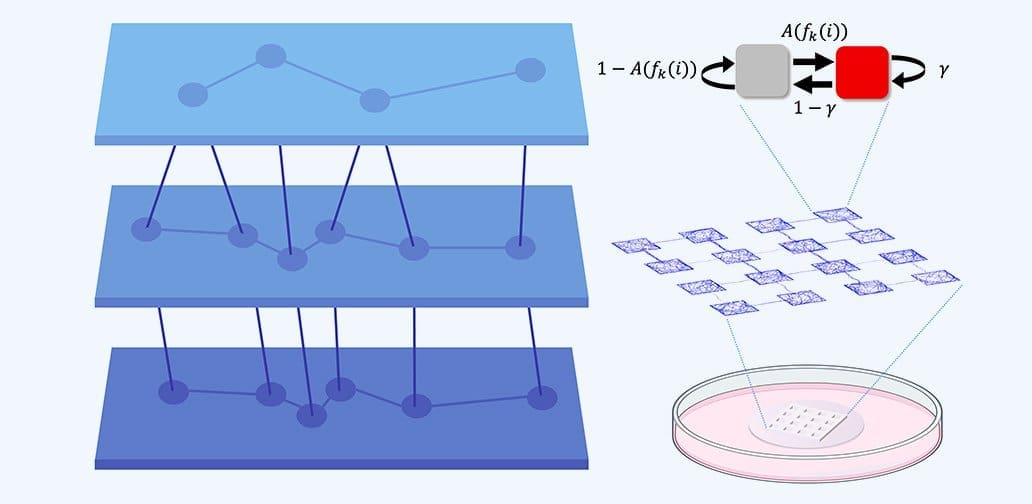
Researchers at Tohoku University have made a crucial step forward in understanding how directional connections shape the complex dynamics of neuronal networks. Led by Nobuaki Monma, the team used microfluidic devices to create lab-grown neurons with artificially controlled connections, providing a useful alternative to animal testing.
By studying these in-vitro neurons, the researchers were able to explore the role of one-way connections in shaping brain dynamics. Associate Professor Hideaki Yamamoto notes that the findings are expected to deepen our fundamental understanding of neuronal networks and have potential applications in fields such as medicine and machine learning.
The team’s work, published in Neural Networks, has significant implications for the development of biologically plausible artificial neural networks and may ultimately contribute to a better understanding of the brain’s many mysteries. The research was conducted in collaboration with several colleagues, including Naoya Fujiwara, Hakuba Murota, Satoshi Moriya, Ayumi Hirano-Iwata, and Shigeo Sato.
Introduction to Neuronal Network Dynamics
The intricate relationship between the structure and function of neuronal networks is a fundamental question in biology, with far-reaching implications for our understanding of brain dynamics. Investigating this relationship directly in animal brains is challenging due to the complexity of neural connections and the invasive nature of required surgeries. As an alternative, lab-grown neurons with artificially controlled connections have emerged as a promising tool for studying neuronal network behavior. Recent research has focused on uncovering how directional connections shape the complex dynamics of these networks.
The use of microfluidic devices has enabled researchers to fabricate neurons that react more similarly to in-vivo models, allowing for efficient exploration of the role of one-way connections in shaping brain dynamics. By studying in-vitro neurons in a lab environment, scientists can gain valuable insights into the underlying mechanisms governing neuronal network behavior. The brain’s dynamic nature, characterized by its ability to learn and respond differently to stimuli over time, makes it essential to understand how directional connections influence activity patterns across space and time.
The development of mathematical models based on experimental data has been instrumental in predicting how connectivity influences activity in neuronal networks. These models have determined that the interplay between modularity and connectivity fosters more complex activity patterns, providing a deeper understanding of the underlying network mechanisms. The findings of such studies are expected to contribute significantly to our fundamental understanding of neuronal networks in the brain, with potential applications in fields like medicine and machine learning.
The reconstruction of directional intermodular coupling has been shown to complicate spontaneous activity in neuronal networks, highlighting the importance of considering directionality when studying these systems. By developing a more thorough understanding of neuronal networks, researchers can unlock the many mysteries of the brain, ultimately leading to breakthroughs in various fields. The use of lab-grown neurons and microfluidic devices has paved the way for further research into the complex dynamics of neuronal networks, enabling scientists to explore new avenues for understanding brain function and behavior.
Directional Connections and Neuronal Network Complexity
Directional connections in neuronal networks play a crucial role in shaping their complex dynamics. By propagating signals in a downstream flow from one area to another, these connections enable the efficient transmission of information across the network. The use of microfluidic devices has allowed researchers to fabricate neurons with directional intermodular coupling, enabling the study of how these connections influence activity patterns.
The incorporation of directional connections into neuronal networks has been shown to result in more complex activity patterns compared to networks without directionality. This increased complexity is thought to arise from the interplay between modularity and connectivity, which fosters a richer variety of activity patterns. The development of mathematical models has helped to clarify the underlying network mechanisms behind these observations, providing valuable insights into the role of directional connections in shaping brain dynamics.
The study of directional connections in neuronal networks has significant implications for our understanding of brain function and behavior. By uncovering how these connections influence activity patterns, researchers can gain a deeper understanding of the neural mechanisms governing various cognitive processes. Furthermore, the development of biologically plausible artificial neural networks may benefit from the insights gained through the study of directional connections, enabling the creation of more sophisticated and realistic models of brain function.
The complexity of neuronal network dynamics is influenced by various factors, including the strength and directionality of connections between neurons. The use of microfluidic devices and lab-grown neurons has enabled researchers to explore these factors in a controlled and efficient manner, providing valuable insights into the underlying mechanisms governing brain function. As research continues to uncover the intricacies of neuronal network dynamics, our understanding of brain behavior and function is likely to become increasingly sophisticated.
Mathematical Modeling of Neuronal Networks
Mathematical modeling has emerged as a powerful tool for understanding the complex dynamics of neuronal networks. By developing models based on experimental data, researchers can predict how connectivity influences activity patterns across space and time. The use of mathematical models has enabled scientists to clarify the underlying network mechanisms governing brain function, providing valuable insights into the role of directional connections in shaping neuronal network behavior.
The development of mathematical models has been instrumental in understanding the interplay between modularity and connectivity in neuronal networks. By simulating the behavior of these networks, researchers can explore how different factors influence activity patterns, enabling the identification of key mechanisms governing brain function. The use of mathematical models has also facilitated the comparison of different network architectures, allowing scientists to determine which features are essential for generating complex activity patterns.
The application of mathematical modeling to neuronal networks has significant implications for various fields, including medicine and machine learning. By developing more sophisticated models of brain function, researchers can create more realistic simulations of neural behavior, enabling the development of more effective treatments for neurological disorders. Furthermore, the insights gained through mathematical modeling may inform the development of artificial neural networks, enabling the creation of more sophisticated and efficient models of brain function.
The integration of experimental and theoretical approaches has been essential for advancing our understanding of neuronal network dynamics. By combining empirical data with mathematical modeling, researchers can develop a more comprehensive understanding of the complex mechanisms governing brain function. As mathematical modeling continues to play an increasingly important role in neuroscience research, our understanding of neuronal network behavior is likely to become increasingly sophisticated.
Applications and Future Directions
The study of directional connections in neuronal networks has significant implications for various fields, including medicine and machine learning. By developing a deeper understanding of the neural mechanisms governing brain function, researchers can create more effective treatments for neurological disorders. Furthermore, the insights gained through the study of directional connections may inform the development of artificial neural networks, enabling the creation of more sophisticated and efficient models of brain function.
The use of lab-grown neurons and microfluidic devices has paved the way for further research into the complex dynamics of neuronal networks. By exploring new avenues for understanding brain function and behavior, scientists can unlock the many mysteries of the brain, ultimately leading to breakthroughs in various fields. The development of biologically plausible artificial neural networks may benefit from the insights gained through the study of directional connections, enabling the creation of more realistic models of brain function.
Future research directions may include the exploration of large-scale networks, which may provide insights into future connectome analysis of the brain. The integration of experimental and theoretical approaches will be essential for advancing our understanding of neuronal network dynamics, enabling the development of more sophisticated models of brain function. As research continues to uncover the intricacies of neuronal network behavior, our understanding of brain function and behavior is likely to become increasingly sophisticated.
The study of directional connections in neuronal networks has significant potential for contributing to our understanding of brain function and behavior. By developing a deeper understanding of the neural mechanisms governing various cognitive processes, researchers can create more effective treatments for neurological disorders. Furthermore, the insights gained through the study of directional connections may inform the development of artificial neural networks, enabling the creation of more sophisticated and efficient models of brain function. As research continues to advance our understanding of neuronal network dynamics, we can expect significant breakthroughs in various fields, ultimately leading to a deeper understanding of the complex mechanisms governing brain behavior.
External Link: Click Here For More