In a move towards miniaturized robotics, researchers from the University of California San Diego and CEA-Leti have developed an innovative circuit design that could extend the operational lifespan of microdrones and other microrobotics without compromising their compactness. The novel self-sustaining circuit configuration, featuring miniaturized solid-state batteries, offers a promising solution to the longstanding challenge of powering these devices for extended periods while maintaining lightweight construction.
The design at the 2025 IEEE International Solid-State Circuits Conference in San Francisco envisions microdrones playing a crucial role in disaster response scenarios. When larger robots struggle to navigate confined spaces, swarms of tiny wing-flapping drones could potentially inspect buildings for hazards or locate trapped individuals. However, the key hurdle has been their limited flight time due to the impracticality of carrying large batteries.
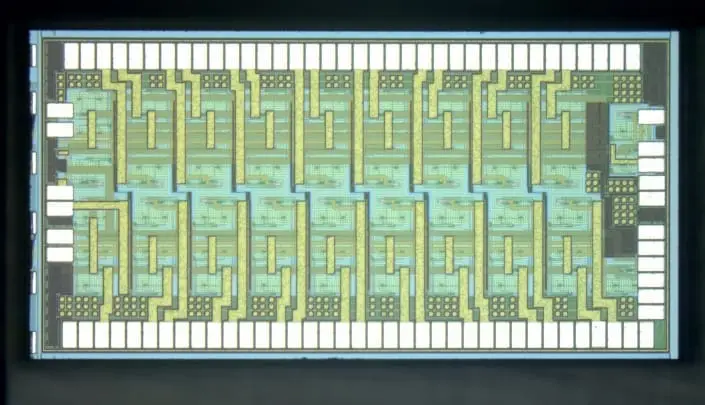
Researchers have turned to emerging solid-state batteries to address this issue, which can be scaled down without sacrificing energy density. By slicing and dicing these batteries into multiple smaller units, the team built a driving circuit with a ‘flying battery’ configuration that adapts dynamically to the system’s shifting energy needs. This versatile setup allows for real-time adjustment between series and parallel connections of individual batteries, maximizing both voltage output and energy storage efficiency.
The system also incorporates energy recovery, making it
The system also incorporates energy recovery, making it more efficient by recharging itself during operation through a process similar to regenerative braking in hybrid or electric vehicles. This breakthrough could extend microdrones’ flight time significantly, paving the way for their widespread adoption in various fields, including disaster response and search-and-rescue missions.
The challenge lies in powering these minuscule devices for an adequate duration without compromising their weight or size. Current microdrones, which could potentially aid first responders in disaster scenarios by navigating confined spaces, can only fly for a few minutes due to their limited battery capacity.
To address this issue, the research team, led by Patrick Mercier of UCSD and Gaël Pillonnet of CEA-Leti, turned away from conventional small batteries towards more compact and lightweight solid-state batteries. By slicing and dicing these batteries into multiple smaller units, they were able to maintain energy density without sacrificing weight.
The team then developed a driving circuit with a “flying battery” configuration, which offers versatility by dynamically switching how individual battery units are connected in real-time, adapting to the system’s shifting energy needs. This adaptability allows for batteries to be connected either in series (for increased voltage) or in parallel (for increased energy capacity).
The system takes efficiency a step further by
The system takes efficiency a step further by incorporating energy recovery, which is made possible due to the rechargeable nature of the solid-state batteries and the ability of the microactuator to function as a capacitor. This design allows for the efficient charging and discharging of the batteries, similar to regenerative braking in hybrid or electric vehicles.
Using 18 battery units of an early commercially available solid-state battery, the system generated up to 56.1 volts while operating continuously for 50+ hours. The entire system weighed just 1.8 grams. Further improvements were achieved with custom-developed tinier solid-state batteries from CEA-Leti, reducing the system’s weight to a mere 14 milligrams.
The team plans to test this driving system in an actual microrobot and continue optimizing the solid-state batteries for even higher voltage outputs.
This innovative research offers a promising solution to the energy dilemma faced by miniature devices, paving the way for extended operational lifespans without compromising weight or size. The potential applications of this technology in various fields, particularly disaster response and search-and-rescue missions, are vast and exciting.
External Link: Click Here For More