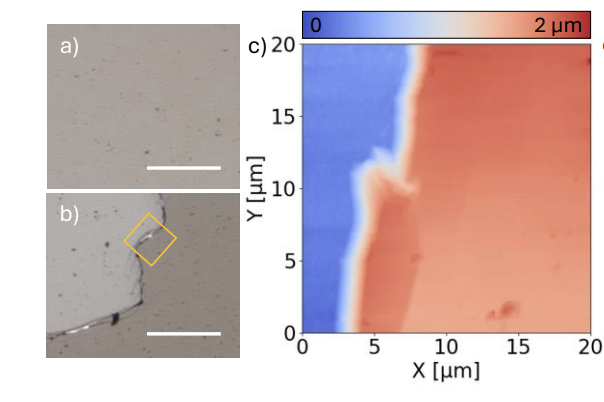
Barium titanate’s exceptional electro-optic properties make it a promising material for building the next generation of integrated photonic devices, but creating thin films with consistently high quality remains a challenge. Researchers led by H. Esfandiar from the Fraunhofer Institute for Applied Optics and Precision Engineering IOF and F. Abtahi from the Institute of Applied Physics, Jena, now demonstrate a method for producing high-quality barium titanate thin films using a technique called Crystal Ion Slicing. The team reveals that a simple thermal treatment effectively repairs lattice damage caused by the slicing process, restoring both the structural integrity and crucial optical properties of the resulting films. This advancement qualifies Crystal Ion Slicing, combined with thermal annealing, as a scalable manufacturing strategy for barium titanate-on-insulator platforms, paving the way for advanced photonic devices with enhanced modulation and frequency conversion capabilities.
Barium titanate (BaTiO₃) is a compelling material for integrated photonics due to its strong electro-optic and non-linear properties. This damage disrupts the ordered arrangement of atoms and can reduce performance in optical applications. Consequently, understanding and mitigating this damage is crucial for realising the full potential of barium titanate in advanced optical technologies. Research focuses on characterising the extent of this damage and developing strategies to minimise its impact on the material’s optical properties, ultimately enabling the fabrication of high-performance photonic devices.
BaTiO₃ Thin Film Characterisation and Validation
This document provides supporting data and detailed explanations for research on crystal ion sliced BaTiO₃ thin films, validating the results presented in the main study by providing raw data and calculations. The study employs Raman microscopy to identify the material and assess its crystalline quality, and Second Harmonic Generation (SHG) microscopy to probe the polar domains within the barium titanate. These techniques allow researchers to understand the material’s structure and optical properties at a microscopic level. Raman spectroscopy data reveals changes in the material’s structure after heat treatment, demonstrating improved crystallinity.
SHG microscopy shows how the arrangement of ferroelectric domains changes after annealing, and a mathematical model was developed to analyse the SHG data and determine the orientation of these domains. The quality of the fit between the experimental data and the theoretical model confirms the accuracy of the analysis. Reflectivity calculations further validate the material’s optical properties. This detailed analysis provides strong evidence to support the claims made in the main paper, allows other researchers to replicate the work, and provides a deeper understanding of the techniques used and the underlying physics of the barium titanate thin films.
Heat Treatment Restores Barium Titanate Film Quality
Barium titanate is a promising material for building advanced optical devices due to its strong interaction with light and its ability to manipulate light’s properties. Researchers have been exploring crystal ion slicing as a cost-effective method for creating thin films of this material, but this process introduces damage to the crystal structure, potentially hindering performance. This study demonstrates that a simple post-slicing heat treatment effectively restores the structural integrity and optical quality of the barium titanate films. The team used Raman spectroscopy to examine the crystal structure of the films before and after heat treatment, confirming that the process successfully repaired damage caused by ion implantation.
Importantly, they observed that the arrangement of ferroelectric domains was also restored, enhancing the material’s ability to interact with light in a predictable way. Remarkably, strong optical signals were detected even in areas with some remaining structural imperfections, suggesting that the long-range order within the material is surprisingly resilient. Optical measurements revealed that the light-handling properties of the heat-treated films closely match those of bulk barium titanate crystals, validating their suitability for integration into complex optical circuits. This is a significant achievement, as it demonstrates that the films can effectively guide and manipulate light without introducing unwanted distortions or losses. Researchers found that annealing promotes recrystallization and reconfigures ferroelectric domains within the material, evidenced by significant changes in Raman spectroscopy data. Specifically, the intensity of key Raman modes increased after annealing, indicating recovery of the perovskite lattice and strengthening of the material’s tetragonal symmetry. These findings qualify CIS, combined with thermal processing, as a viable method for manufacturing high-quality BaTiO₃-on-insulator platforms suitable for advanced integrated photonics.
The restored optical properties closely match those of bulk BaTiO₃, validating its potential for applications in modulation, frequency conversion, and other optical devices. While the process successfully restores much of the material’s structure, some domain reorientation occurred, shifting configurations from in-plane to out-of-plane. Further research could explore optimising this aspect to achieve even greater structural perfection and tailored domain configurations for specific photonic applications. This work represents a significant step towards creating cost-effective and high-performance barium titanate-based photonic devices.
🗞 Structural and Optical Properties of Crystal Ion Sliced BaTiO Thin Films
🧠 ArXiv: https://arxiv.org/abs/2508.05874