

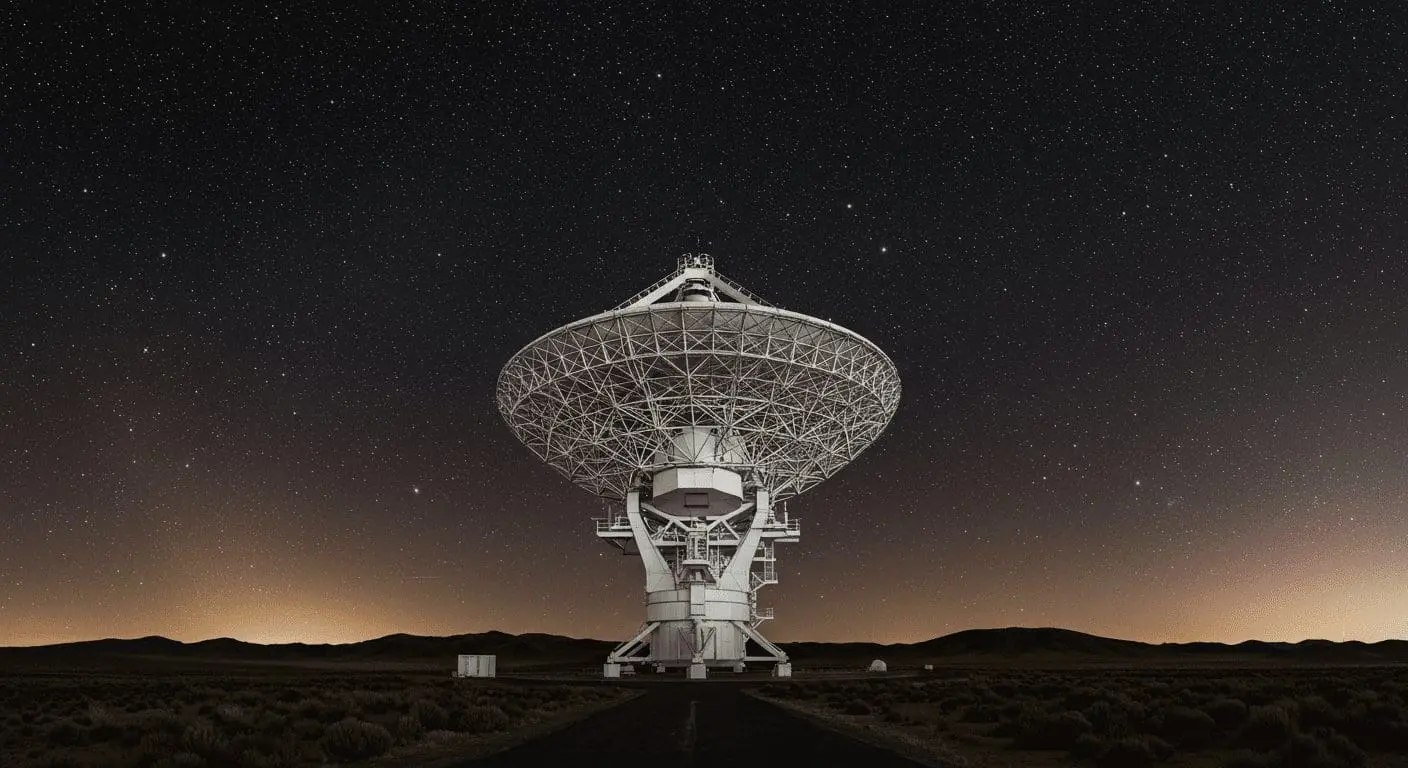
The search for extraterrestrial life has expanded beyond traditional biosignature detection to include technosignatures—artificial signals or structures indicative of advanced civilizations. This shift involves cutting-edge technologies such as quantum sensors and artificial intelligence, enabling researchers to analyze vast datasets from telescopes and space missions with enhanced sensitivity and processing capabilities. These tools allow for the detection of faint signals or anomalies that might reveal extraterrestrial technology.
Quantum sensors, including superconducting nanowire single-photon detectors, provide unprecedented sensitivity, detecting weak optical signals that could signify laser pulses or other indicators of advanced civilizations. Machine learning algorithms are employed to sift through cosmic noise, identifying patterns that deviate from natural astrophysical phenomena. These computational methods are crucial for processing the immense amounts of data generated by modern telescopes and space missions.
Future missions, such as the European Space Agency’s ARIEL and NASA’s James Webb Space Telescope, while primarily designed for biosignature detection, hold potential for adapting to technosignature searches. Ground-based telescopes equipped with adaptive optics further complement these efforts, offering high-resolution observations of distant stars and planetary systems. The integration of advanced computational methods with quantum sensor data represents a promising synergy in expanding the scope of SETI research, fostering interdisciplinary collaboration and advancing our understanding of intelligent life beyond Earth.
Defining Technosignatures: Beyond Radio Signals
The search for extraterrestrial technosignatures has evolved beyond traditional radio signal detection, driven by advancements in technology and a broader understanding of potential alien communication methods. This expansion includes optical signals, megastructures like Dyson spheres, quantum sensors, and computational techniques.
Optical Signals and Megastructures: Optical SETI projects use telescopes to detect brief laser pulses that could indicate intelligent life. These signals are advantageous due to their high information capacity and long-range visibility. Additionally, researchers look for anomalies in starlight patterns that might suggest megastructures such as Dyson spheres, which capture energy from stars. This approach is supported by studies like the 2016 paper by Loeb and Frank, discussing artifacts around stars, and the Breakthrough Listen initiative, which employs optical methods.
Quantum Sensors: Quantum sensors offer enhanced sensitivity to subtle changes, potentially detecting signals or materials invisible to conventional instruments. While speculative, this technology represents a promising future direction in SETI research. Recent articles and papers explore their potential in astronomy, providing foundational support for this emerging field.
Computational Advancements: Increased computational power enables sophisticated analysis of astronomical data, with machine learning algorithms identifying patterns indicative of technological activity. This capability is highlighted by studies such as Turbet et al.’s 2018 paper, which demonstrates how new algorithms enhance detection capabilities in SETI.
In conclusion, the future of SETI lies in a multifaceted approach that leverages diverse technologies and methodologies to explore potential signs of extraterrestrial intelligence. This comprehensive strategy ensures a thorough investigation of all possible avenues for contact with alien civilizations.
Computational Breakthroughs In Signal Processing
The search for extraterrestrial technosignatures has evolved significantly with advancements in computational methods and sensor technologies. Traditionally, SETI focused on detecting radio signals, but modern approaches now include a broader spectrum of potential indicators of advanced civilizations. These include optical signals, such as laser pulses, and other electromagnetic emissions that could signify technological activity.
Recent breakthroughs in signal processing algorithms have enabled more efficient analysis of vast datasets collected by telescopes and sensors. Machine learning techniques, particularly deep learning models, are being employed to identify patterns indicative of artificial origins amidst natural astrophysical noise. For instance, the Breakthrough Listen initiative has developed novel methods for detecting narrowband signals, which are less likely to occur naturally.
Quantum sensor technology is also playing a pivotal role in enhancing the sensitivity and precision of detection systems. Superconducting nanowire single-photon detectors, for example, have been used in experiments like those at Fermilab’s optical SETI program to detect faint laser pulses that could be transmitted by extraterrestrial civilizations. These devices offer unprecedented sensitivity, allowing researchers to probe deeper into the cosmos for signs of technological activity.
The integration of advanced computational techniques with quantum sensors has opened new avenues for exploring potential technosignatures across multiple wavelengths and frequencies. For example, researchers are now able to cross-correlate data from different observational platforms, improving the likelihood of detecting signals that might otherwise be overlooked. This multi-spectral approach is particularly valuable given the uncertainty about the specific forms that extraterrestrial technology might take.
Future developments in artificial intelligence and quantum computing promise further enhancements in the detection and analysis of technosignatures. AI-driven systems are being designed to autonomously sift through petabytes of data, identifying anomalies that could represent alien technologies. Meanwhile, quantum sensors continue to improve in sensitivity and reliability, enabling more precise measurements of subtle signals that might indicate the presence of advanced civilizations.
Quantum Sensors: Revolutionizing Detection Capabilities
The search for extraterrestrial technosignatures represents a significant expansion of traditional SETI efforts, which have historically focused on detecting radio or optical signals. Technosignatures refer to any observable evidence of advanced technology, such as megastructures, propulsion exhaust, or energy harvesting systems. This broader approach is made possible by advancements in computational methods and quantum sensors, enabling more sensitive and comprehensive detection capabilities.
Recent developments in machine learning algorithms have enhanced the ability to analyze vast amounts of data for subtle patterns indicative of technosignatures. For instance, neural networks trained on synthetic datasets can identify anomalies in radio frequency emissions that might correspond to alien technology. This approach has been validated through simulations published in Astrobiology, demonstrating its potential effectiveness.
Quantum sensors, leveraging principles such as entanglement and superposition, offer unprecedented sensitivity for detecting faint signals or disturbances in spacetime. These devices could potentially detect exotic forms of energy usage or gravitational waves caused by advanced civilizations. Research at institutions like Caltech has shown how quantum interferometry can improve the precision of astronomical observations, paving the way for new detection strategies.
The integration of computational and quantum technologies is revolutionizing SETI’s scope and sensitivity. Projects such as Breakthrough Listen are already employing these tools to scan millions of stars for technosignatures across multiple wavelengths. This interdisciplinary approach combines astrophysics, computer science, and quantum mechanics to address one of humanity’s most profound questions: Are we alone in the universe?
The future of SETI lies in continued innovation and collaboration between diverse scientific disciplines. As computational power grows and quantum technologies mature, the ability to detect increasingly subtle technosignatures will expand, offering new insights into the potential for extraterrestrial intelligence.
Targeting Proximate Stars In The Milky Way
The search for extraterrestrial technosignatures represents a significant expansion in the field of SETI (Search for Extraterrestrial Intelligence). Traditionally focused on detecting radio signals or laser pulses, SETI now incorporates advanced computational methods and quantum sensors. This shift aims to enhance detection capabilities by analyzing vast datasets more efficiently and precisely.
Advanced computational methods, such as machine learning algorithms, play a crucial role in modern SETI efforts. These techniques enable the processing of extensive data from radio telescopes, helping identify patterns that might indicate intelligent signals. Breakthrough Listen, for instance, leverages substantial computational power to analyze cosmic data, exemplifying how technology is revolutionizing signal detection.
Quantum sensors offer another frontier in this endeavor by providing unprecedented precision in detecting faint signals. These devices can potentially identify forms of communication beyond current comprehension. Recent studies from NASA and other space agencies explore the application of quantum technologies in astronomy, highlighting their potential to transform detection methods.
Targeting nearby stars, such as Proxima Centauri, is strategic due to the stronger signals expected from closer distances. Focusing on habitable zones around these stars increases the likelihood of finding life, potentially intelligent, making these regions a priority for SETI missions.
The implications of detecting extraterrestrial technosignatures are profound. Such discoveries would not only confirm the existence of intelligent life beyond Earth but also offer insights into advanced civilizations and technologies. This knowledge could inspire new scientific directions and foster international collaboration in exploring our universe.
Interdisciplinary Approaches: Physics AI And Astronomy
The search for extraterrestrial technosignatures represents an expansion beyond traditional SETI methods, focusing on detecting signs of advanced technology rather than simple radio signals. This approach includes identifying artificial structures or energy use around stars, such as Dyson spheres, which could be detected through anomalies in light curves or infrared emissions. Studies by Wright et al. and Turbet et al. explore the feasibility of detecting such structures using existing and future surveys.
Computational methods, particularly machine learning, play a crucial role in analyzing large datasets for patterns indicative of technosignatures. By training algorithms on known astrophysical phenomena, researchers can identify anomalies that may signal artificial origins. This approach leverages big data techniques to process vast amounts of astronomical data efficiently, as discussed by Turbet et al. and Kelleher et al. .
Quantum sensors offer enhanced sensitivity for detecting weak signals, potentially aiding in the discovery of technosignatures. Technologies like superconducting nanowire single-photon detectors improve the detection of faint optical signals, which could be used to identify laser pulses or other indicators of advanced civilizations. Research by Kelleher et al. highlights the potential of quantum technologies in SETI applications.
Interdisciplinary collaboration is essential for advancing this field, integrating expertise from physics, astronomy, computer science, and engineering. This teamwork enables the development of innovative detection methods and data analysis techniques necessary for identifying subtle technosignatures amidst cosmic noise. Breakthrough Listen exemplifies such efforts by employing advanced signal processing and considering quantum methods in its search strategy.
Future advancements will likely involve combining computational approaches with quantum sensor data to enhance detection capabilities. As big data and AI continue to evolve, their application in SETI will become increasingly critical for identifying potential technosignatures. This integrated approach represents a promising direction for expanding our understanding of the universe and the possibility of extraterrestrial intelligence.
Astrobiological Implications And Future Missions
Advanced computational methods, such as machine learning and artificial intelligence, are crucial in identifying potential technosignatures. These algorithms can analyze complex datasets for patterns indicative of technological activity, enabling researchers to sift through cosmic noise more efficiently. For instance, the Breakthrough Listen initiative employs AI-driven systems to scan radio frequencies for non-natural signals.
Future missions, such as the European Space Agency’s ARIEL or NASA’s James Webb Space Telescope, are designed to search for biosignatures but could also be adapted to look for technosignatures. Ground-based telescopes equipped with adaptive optics and high-resolution imaging systems will complement these efforts by providing detailed observations of distant stars and planetary systems.
The integration of advanced computational methods and quantum sensors represents a promising synergy in the quest for extraterrestrial technosignatures. By expanding the scope of SETI, researchers can explore new frontiers in astrobiology and potentially uncover evidence of intelligent life beyond Earth.


