
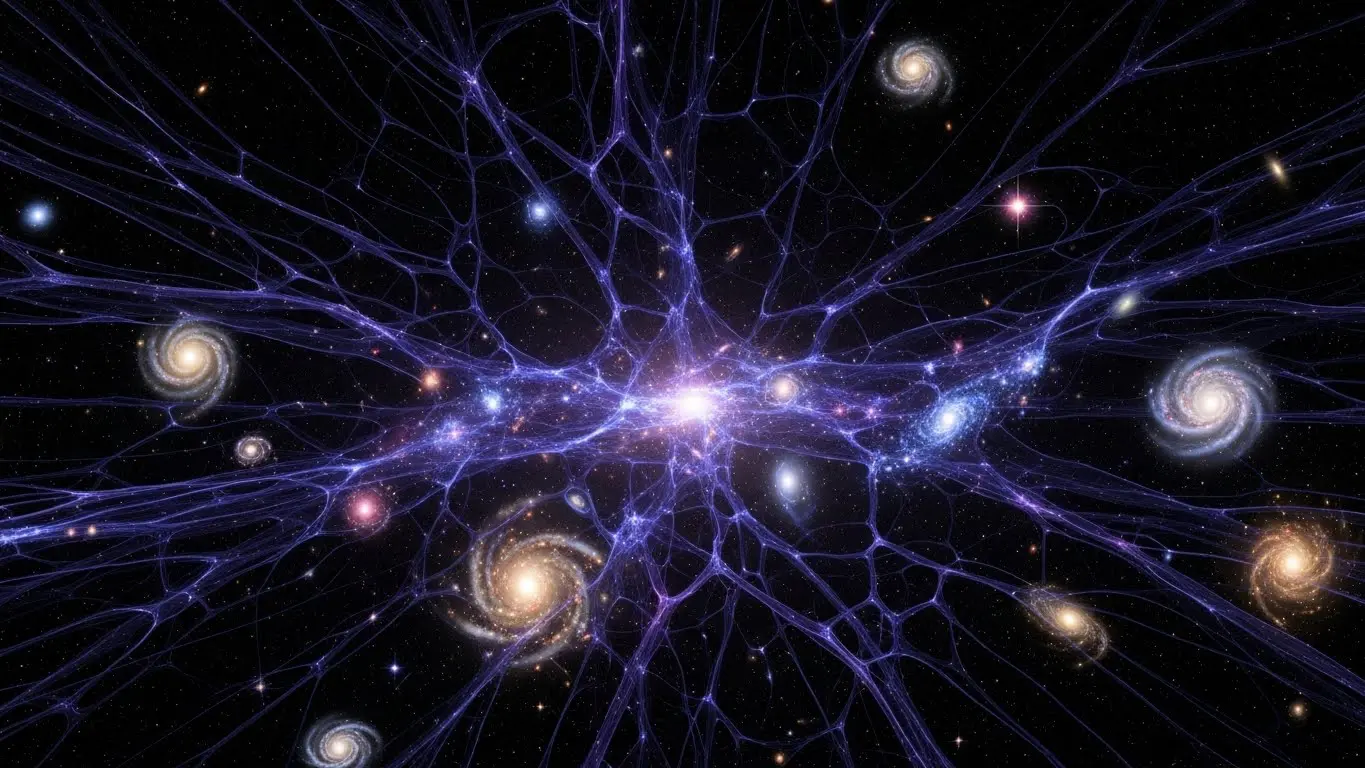
Dark matter, the invisible scaffolding of the universe, constitutes roughly 85% of its mass. Despite its prevalence, its composition remains one of the most profound mysteries in modern physics. While the leading hypothesis centers on Weakly Interacting Massive Particles (WIMPs), decades of dedicated searches have yielded no conclusive evidence. This has spurred a growing interest in alternative candidates, and among them, the axion stands out, a hypothetical particle born from a solution to another perplexing problem in particle physics. The axion, initially proposed in the 1980s, isn’t just a dark matter contender; it’s a beautifully elegant solution to the strong CP problem, a puzzle concerning why the strong nuclear force doesn’t violate a fundamental symmetry known as CP symmetry. This connection between two seemingly disparate problems makes the axion a particularly compelling, and increasingly focused, target for experimental physicists worldwide.
The Strong CP Problem and Peccei-Quinn’s Insight
The strong nuclear force, one of the four fundamental forces of nature, governs the interactions between quarks and gluons within protons and neutrons. Quantum Chromodynamics (QCD), the theory describing this force, allows for a term that would violate CP symmetry, a combined symmetry relating particles to their mirror images and their antimatter counterparts. However, experiments show no evidence of this violation. This discrepancy, known as the strong CP problem, baffled physicists for years. In 1977, Roberto Peccei and Helen Quinn, both at the Stanford Linear Accelerator Center (SLAC), proposed a solution: a new particle, initially dubbed the “pseudo-Nambu-Goldstone boson, ” now commonly known as the axion. Their insight was that introducing a new global symmetry, now called the Peccei-Quinn symmetry, would dynamically cancel out the problematic CP-violating term in QCD. This symmetry, when spontaneously broken, gives rise to the axion, a particle with extremely weak interactions with ordinary matter.
A Particle of Tiny Mass and Elusive Interactions
The predicted mass of the axion is inversely proportional to the scale at which the Peccei-Quinn symmetry is broken. This means the axion is incredibly light, potentially billions of times lighter than an electron. This minuscule mass, combined with its extremely weak interactions, makes it exceptionally difficult to detect. Unlike WIMPs, which are expected to interact with atomic nuclei, axions primarily interact with photons in the presence of strong magnetic fields. This interaction, predicted by Frank Wilczek, a Nobel laureate at MIT, forms the basis for many current axion search experiments. Wilczek demonstrated that in a strong magnetic field, an axion can convert into a detectable photon, a process known as the Primakoff effect. The frequency of the emitted photon is directly related to the axion’s mass, making precise control of the magnetic field and sensitive photon detection crucial.
Haloscopes: Tuning into the Axion Wind
One of the leading experimental approaches to detecting axions is the use of haloscopes. These devices, pioneered by Karl van Bibber at the University of California, Berkeley, utilize a resonant cavity placed within a strong magnetic field. The cavity is meticulously tuned to search for photons produced by axions converting within the field. The idea is that the galactic halo, the diffuse region surrounding our galaxy, is filled with cold dark matter, including potentially a vast number of axions. These axions, moving relative to the Earth, create a “wind” of axions. By carefully scanning the resonant frequency of the cavity, researchers hope to detect the faint signal of axions converting into photons. The ADMX (Axion Dark Matter eXperiment) at the University of Washington is currently the most sensitive haloscope, and has been steadily pushing the limits of axion detection for over a decade.
Helioscopes: Catching Sunlight’s Axion Glow
While haloscopes search for axions from the galactic halo, helioscopes focus on axions produced within the Sun. The Sun’s core, a region of extreme temperature and density, is predicted to be a prolific source of axions. These solar axions, unlike those from the halo, have a well-defined energy. The CERN Axion Solar Telescope (CAST) at the European Organization for Nuclear Research, led by Giovanni Cantatore, utilizes a decommissioned LHC dipole magnet, one of the most powerful magnets ever built, to search for these solar axions. The magnet is aligned with the Sun, and any axions produced in the solar core would convert into detectable X-rays within the magnetic field. CAST has set stringent limits on axion-photon coupling, but the faintness of the signal continues to challenge researchers.
Light Shining Through Walls: A Quantum Test of Axion Existence
Another innovative approach, known as “light shining through walls, ” tests the axion’s ability to mediate the conversion of photons into other photons. This experiment, initially proposed by Jacques Haissinsky, involves sending a laser beam through a strong magnetic field, which, if axions exist, would allow some of the photons to convert into axions. These axions can then pass through an opaque wall, where they might convert back into photons, which are then detected on the other side. The ALPS II experiment at DESY in Hamburg, Germany, is a leading example of this technique, utilizing a high-power laser and a powerful magnetic field to search for this elusive signal. While not specifically designed to detect dark matter, a positive result would provide strong evidence for the existence of axions, regardless of their contribution to the dark matter density.
Beyond the Standard Model: The QCD Axion and its Relatives
The original Peccei-Quinn mechanism and the resulting QCD axion are not the only possibilities. Several extensions to the Standard Model of particle physics predict other axion-like particles (ALPs) with different properties. These ALPs might interact with different particles, have different masses, and even contribute to dark matter in different ways. This proliferation of axion-like particles has broadened the scope of axion searches, requiring experiments to explore a wider range of parameter space. Furthermore, theoretical work by groups at Princeton, led by Lyman Hurd, has explored the possibility of axion “miniclusters”, dense clumps of axions formed in the early universe, which could enhance the signal strength in certain frequency ranges.
The Next Generation of Axion Detectors: Pushing the Boundaries
The search for axions is entering a new era with the development of next-generation detectors. These experiments, such as HAYSTAC (Haloscope At Yale Sensitive To Axion Cold dark matter) and ORGAN (At the University of California, Berkeley), are employing innovative technologies to increase sensitivity and explore previously inaccessible regions of parameter space. HAYSTAC utilizes a superconducting microwave cavity cooled to extremely low temperatures, reducing noise and enhancing signal detection. ORGAN, on the other hand, employs a large array of lumped-element cavities, allowing for a broader frequency search. These experiments, along with upgrades to existing facilities like ADMX, promise to significantly advance our understanding of axions and their potential role in the universe.
The Future of Dark Matter Research: A Multi-pronged Approach
The search for axions is not just about finding a dark matter candidate; it’s about pushing the boundaries of our understanding of fundamental physics. Even if axions are not the sole constituent of dark matter, their discovery would have profound implications for particle physics and cosmology. However, it’s crucial to remember that the search for dark matter is a multi-pronged effort. Experiments searching for WIMPs, sterile neutrinos, and other exotic particles continue to operate alongside axion searches, each contributing to the growing body of knowledge. As technology advances and theoretical models become more refined, the quest to unravel the mystery of dark matter promises to remain one of the most exciting and challenging endeavors in science for decades to come. The whispers from the void may yet reveal the true nature of the universe’s hidden mass.