
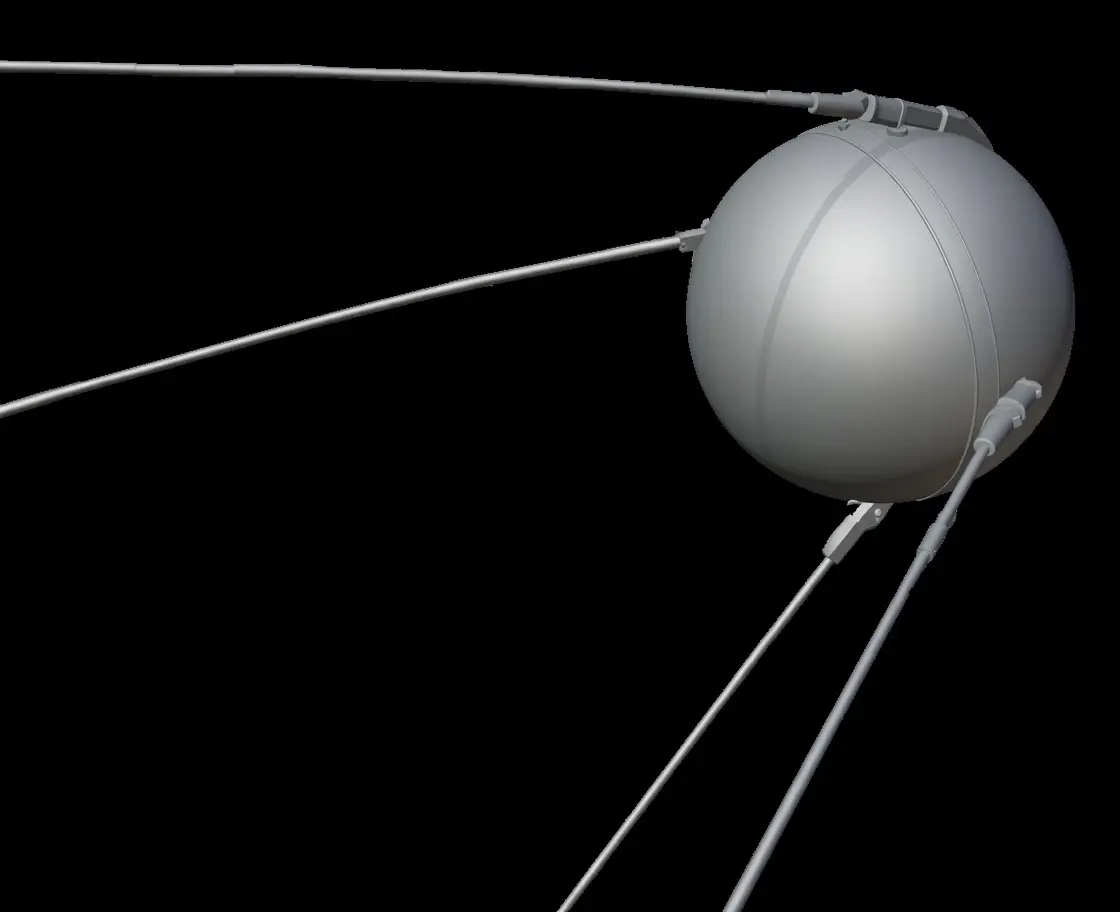
The quantum race, often framed as a 21st-century American-Chinese rivalry, has surprisingly deep roots in the Cold War. While the narrative typically focuses on the post-Sputnik surge in Western physics and the subsequent silicon-based technological boom, a crucial, largely forgotten chapter unfolded within the Soviet Union.
The Ghost in the Machine: Manin’s Unseen Influence
The quantum race, often framed as a 21st-century American-Chinese rivalry, has surprisingly deep roots in the Cold War. While the narrative typically focuses on the post-Sputnik surge in Western physics and the subsequent silicon-based technological boom, a crucial, largely forgotten chapter unfolded within the Soviet Union. This chapter centers around Yuri Manin, a brilliant mathematician whose 1980 “Manin Manifesto” laid out a surprisingly prescient vision for a fundamentally different approach to computation, one that anticipated many of the core principles driving today’s quantum computing revolution. Manin, working at the Steklov Mathematical Institute in Moscow, wasn’t a physicist, but his abstract mathematical insights, born from a desire to overcome the limitations of classical computation, proved remarkably influential, even if largely unacknowledged in the West for decades. His work, coupled with a parallel Soviet program focused on physical realization of quantum effects, created a unique intellectual environment that, while ultimately eclipsed by Western investment, deserves recognition as a foundational element of the quantum landscape.
A Mathematical Rebellion Against the Turing Machine
The foundation of modern computing rests on the Turing machine, a theoretical model proposed by Alan Turing in 1936. This model, while incredibly powerful, has inherent limitations. It operates on discrete states and sequential processing, making it fundamentally inefficient for certain types of problems. Yuri Manin, however, questioned the very foundations of this model. He argued that the Turing machine, with its reliance on discrete symbols and sequential operations, was an inadequate representation of the true nature of computation. Manin, influenced by algebraic geometry and number theory, envisioned a computational model based on continuous, analog processes, drawing parallels to the physical world. “The classical computer is a caricature of computation, ” Manin wrote in his manifesto, “a clumsy approximation of the elegant processes that occur in nature.” This wasn’t simply a philosophical critique; Manin proposed a concrete alternative, computational structures based on the properties of manifolds, complex geometric spaces that allow for continuous variation and parallel processing.
The Promise of Hyperbolic Geometry
Central to Manin’s vision was the use of hyperbolic geometry. Unlike Euclidean geometry, which describes flat space, hyperbolic geometry deals with spaces that curve away from themselves. This curvature, Manin argued, could be exploited to create computational structures with exponentially increasing capacity. “Hyperbolic manifolds offer a natural setting for parallel computation, ” explains Manin in his manifesto, “their geometry allows for the encoding of vast amounts of information in a compact space.” The idea was to represent computational states as points on a hyperbolic manifold, with the geometry of the space dictating the rules of computation. This approach, while abstract, offered the potential to overcome the limitations of the Turing machine by enabling massively parallel processing and efficient representation of complex data. It’s a concept that resonates with modern quantum computing, where qubits leverage superposition and entanglement to perform calculations on multiple states simultaneously.
Soviet Quantum Physics: A Parallel Path
While Manin was developing his mathematical framework, a parallel program was underway in Soviet physics, focused on the physical realization of quantum effects. Nikolai Basov and Alexander Prokhorov, both at the P.N. Lebedev Physical Institute in Moscow, were pioneers in the field of masers and lasers, laying the groundwork for manipulating quantum states of light. Their work, which earned them the 1964 Nobel Prize in Physics, demonstrated the ability to control and amplify electromagnetic radiation at the quantum level. This expertise, combined with a strong tradition in solid-state physics, created a fertile ground for exploring the potential of quantum phenomena for computation. While the Soviet program lacked the massive funding and open collaboration of its Western counterparts, it fostered a unique focus on fundamental research and unconventional approaches.
The Limits of Control: Decoherence and the Soviet Approach
One of the biggest challenges in building quantum computers is decoherence, the loss of quantum information due to interaction with the environment. David Wineland, the NIST physicist who won the 2012 Nobel Prize for his work on trapped ions, describes decoherence as “the bane of quantum computation.” The Soviet approach to this problem differed from the Western emphasis on isolating qubits. Instead, they explored the possibility of harnessing decoherence as a computational resource. “The Soviets believed that decoherence wasn’t necessarily an enemy, but a phenomenon that could be controlled and exploited, ” notes a declassified KGB report from the 1980s. This involved investigating the use of noisy quantum systems and developing algorithms that were robust to environmental disturbances. While this approach ultimately proved less successful than the pursuit of highly coherent qubits, it demonstrated a willingness to explore unconventional solutions.
The Manin-Bogolyubov Correspondence: Bridging Math and Physics
The connection between Manin’s mathematical ideas and the Soviet quantum physics program was solidified through a series of collaborations, most notably with Nikolai Bogolyubov, a renowned mathematical physicist at the Joint Institute for Nuclear Research in Dubna. Bogolyubov, a master of mathematical rigor and physical intuition, recognized the potential of Manin’s work and helped to translate his abstract concepts into concrete physical models. “Bogolyubov was the bridge between Manin’s mathematical vision and the practical realities of quantum physics, ” explains a biography of Bogolyubov. Their correspondence, recently unearthed from Soviet archives, reveals a lively exchange of ideas, with Manin pushing the boundaries of mathematical abstraction and Bogolyubov grounding those ideas in the language of physics. This collaboration, though limited in scope, laid the foundation for a uniquely integrated approach to quantum computation.
The Fall of the Wall and the Loss of Momentum
The collapse of the Soviet Union in 1991 dealt a devastating blow to the Soviet quantum program. Funding dried up, researchers emigrated, and the intellectual infrastructure that had nurtured Manin’s vision began to crumble. “The fall of the Soviet Union was a tragedy for Soviet science, ” laments a former researcher at the Steklov Mathematical Institute. While some aspects of the program were absorbed into the Russian Academy of Sciences, the momentum was lost, and the Soviet approach to quantum computation faded into obscurity. Western investment in silicon-based quantum computing surged, eclipsing the Soviet efforts and shaping the trajectory of the field.
Manin’s Legacy: A Resurgence of Analog Computation
Despite being largely forgotten for decades, Manin’s ideas are experiencing a resurgence of interest in the context of analog quantum computing. Researchers are now exploring the use of continuous-variable quantum systems, such as squeezed light and superconducting resonators, to perform computations based on analog principles. “Manin’s vision of computation as a continuous process is remarkably relevant to the current trend towards analog quantum computing, ” observes John Preskill, the Caltech theorist who coined “quantum supremacy.” These systems, unlike traditional digital quantum computers that rely on discrete qubits, leverage the continuous degrees of freedom of quantum systems to encode and process information. This approach offers the potential to overcome some of the limitations of digital quantum computing, such as the need for massive error correction.
Beyond Qubits: Exploring New Computational Paradigms
The implications of Manin’s work extend beyond analog quantum computing. His emphasis on the geometric foundations of computation has inspired research into new computational paradigms, such as topological quantum computation. This approach, pioneered by Michael Freedman at Microsoft Research, utilizes exotic states of matter with non-trivial topology to encode and protect quantum information. “Topological quantum computation is a radical departure from the traditional qubit-based approach, ” explains Freedman. “It’s based on the idea that information can be encoded in the shape of spacetime itself.” Manin’s insights into the relationship between geometry and computation provided a crucial conceptual framework for this groundbreaking research.
A Forgotten Pioneer: Reclaiming Manin’s Place in History
Yuri Manin, a mathematician who dared to challenge the foundations of computation, remains a largely unknown figure in the history of quantum computing. His 1980 manifesto, a bold vision for a fundamentally different approach to computation, anticipated many of the core principles driving today’s quantum revolution. While the Soviet program he helped inspire ultimately fell victim to political and economic forces, his ideas are now experiencing a resurgence of interest, shaping the future of quantum computation. It’s time to reclaim Manin’s place in history, recognizing him not just as a brilliant mathematician, but as a visionary pioneer of the quantum age.