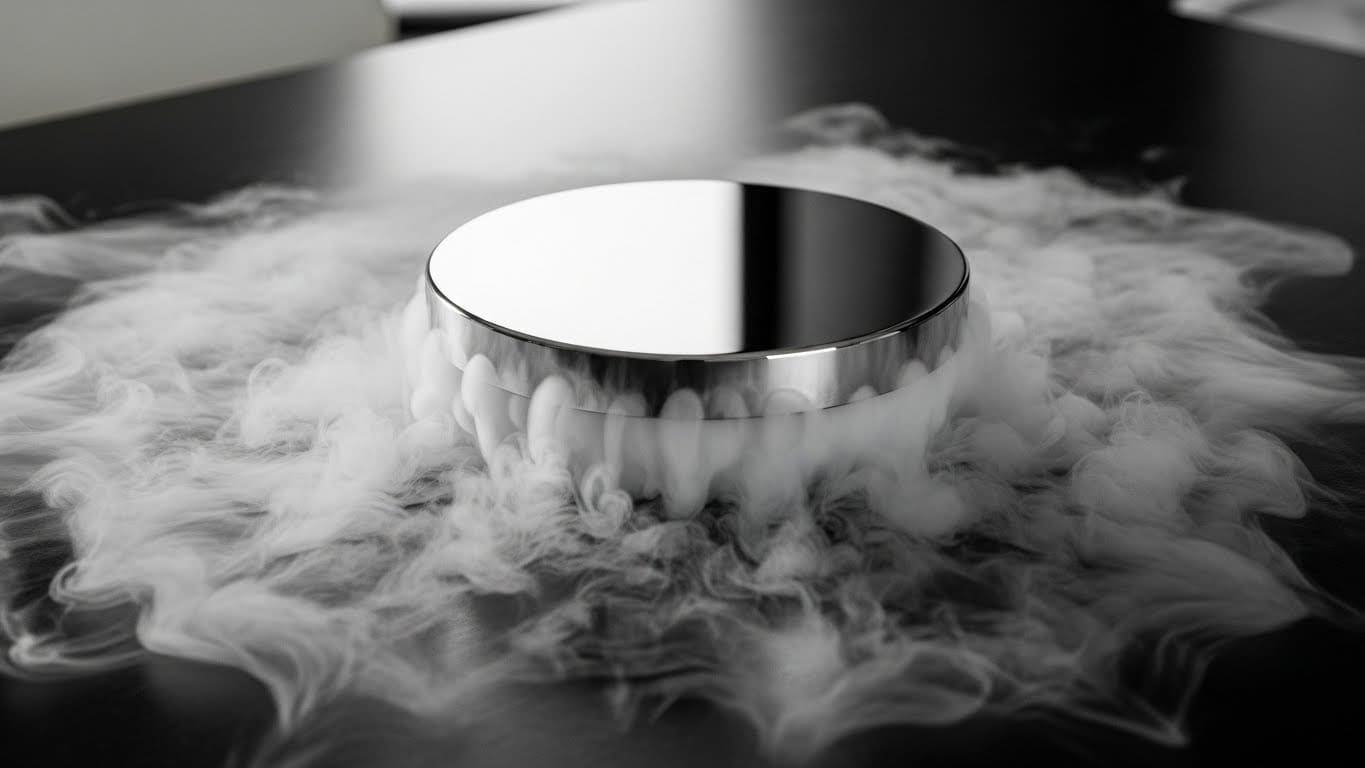
While conventional superconductors, discovered over a century ago, required cooling to extremely low temperatures, these new materials, primarily copper oxides known as cuprates, exhibited superconductivity at significantly higher temperatures achievable with liquid nitrogen. This opened the door to potentially revolutionary technologies, from lossless power transmission to ultra-fast computing. Yet, despite over three decades of intense research, the underlying mechanism driving this phenomenon remains one of the most profound unsolved mysteries in condensed matter physics. The initial excitement has tempered into a persistent, frustrating enigma, demanding a re-evaluation of fundamental principles.
The breakthrough came from researchers at IBM’s Zurich lab, led by Georg Bednorz and K. Alex Müller, who in 1986 published their findings on lanthanum barium copper oxide. This discovery, for which they were awarded the Nobel Prize in Physics in 1987, shattered the established understanding of superconductivity, rooted in the Bardeen-Cooper-Schrieffer (BCS) theory developed in 1957 by John Bardeen, Leon Cooper, and John Robert Schrieffer. BCS theory explained superconductivity as arising from the formation of Cooper pairs, pairs of electrons bound together by vibrations in the crystal lattice, known as phonons. However, the strength of the electron-phonon interaction in cuprates was deemed insufficient to explain the observed high transition temperatures. This immediately signaled that a fundamentally different mechanism was at play, one that continues to elude physicists today.
The Role of Mott Insulators and Strong Correlations
Central to understanding the puzzle of high-temperature superconductivity is the concept of a Mott insulator. Proposed by Nevill Mott in the 1940s, a Mott insulator is a material that should conduct electricity according to conventional band theory, but doesn’t. This occurs when strong electron-electron interactions prevent electrons from moving freely through the material. Copper oxides, in their normal state, are often Mott insulators. “The key is that the copper oxide layers are essentially insulators when electrons are not moving, ” explains Philip Anderson, the Princeton physicist who significantly contributed to the understanding of localized magnetic moments in solids. “It’s the delicate balance between these strong interactions and the introduction of charge carriers, holes, in this case, that creates the conditions for superconductivity.” These “holes” are vacancies left by missing electrons, and their behavior is far more complex than simple electron flow.
The strong electron-electron interactions in cuprates lead to what physicists call “strong correlations.” Unlike conventional materials where electrons behave largely independently, in strongly correlated materials, the behavior of one electron is intimately linked to the behavior of all others. This makes theoretical calculations incredibly difficult, as standard approximations break down. “The problem isn’t just the temperature, ” states David Pines, a physicist at the University of Illinois at Urbana-Champaign, known for his work on collective electronic phenomena. “It’s the fact that these materials are fundamentally different. We’re dealing with a system where the electrons are not weakly interacting, but strongly correlated, and that changes everything.” This necessitates new theoretical frameworks beyond the BCS paradigm.
The Pseudogap: A Shadow of Superconductivity
One of the most perplexing observations in high-temperature superconductors is the existence of a “pseudogap”, a suppression of the electronic density of states above the superconducting transition temperature. This pseudogap resembles a superconducting gap, but it doesn’t lead to zero resistance. “The pseudogap is like a shadow of superconductivity, ” explains Steven Kivelson, a physicist at Stanford University specializing in strongly correlated systems. “It suggests that something is happening even before the material becomes superconducting, a pre-formed pairing state that isn’t quite robust enough to sustain superconductivity on its own.” The origin of the pseudogap is hotly debated, with theories ranging from fluctuating Cooper pairs to the formation of exotic electronic phases.
The pseudogap’s existence challenges the conventional understanding of superconductivity as a sudden transition from a normal metallic state to a superconducting state. Instead, it suggests a more gradual evolution, with pairing correlations building up over a range of temperatures. Furthermore, the pseudogap appears to be intimately linked to the “strange metal” behavior observed in cuprates, a state characterized by a linear temperature dependence of resistivity, a stark contrast to the quadratic behavior expected in conventional metals. This strange metal phase seems to be a precursor to superconductivity, but its connection to the underlying mechanism remains unclear.
Stripes, Charge Density Waves, and the Quest for Order
For years, researchers have sought evidence of some form of static order within the cuprates that could explain the high-temperature superconductivity. One prominent candidate is the formation of “stripes”, one-dimensional regions of charge density waves (CDWs) and spin density waves (SDWs). These stripes, first predicted by John Toner, a physicist at Duke University, are thought to arise from the interplay between charge and spin fluctuations. “The idea is that these stripes create a periodic potential that modifies the electronic structure and enhances the superconducting pairing, ” explains Eun-Ah Seol, a materials scientist at Cornell University who studies the interplay between charge and spin order. “However, the evidence for static stripes is mixed, and it’s unclear whether they are a cause or a consequence of superconductivity.”
More recent research has focused on the role of transient, fluctuating charge density waves. These dynamic CDWs, observed using techniques like resonant X-ray scattering, appear to be more prevalent than static stripes and may play a crucial role in mediating the electron pairing. “We’re finding that the electronic structure of cuprates is incredibly complex and dynamic, ” says Andrea Caviglia, a physicist at the Swiss Federal Institute of Technology in Zurich. “These fluctuating charge density waves are constantly rearranging, and they may be providing the ‘glue’ that holds the Cooper pairs together.” However, proving this connection remains a significant challenge.
The Role of Quantum Fluctuations and Exotic Pairing Symmetries
Another avenue of research explores the possibility of unconventional pairing symmetries. In conventional superconductors, Cooper pairs have a simple s-wave symmetry, meaning they are spherically symmetric. However, in cuprates, theorists have proposed that the pairing symmetry may be d-wave, meaning the Cooper pairs have a more complex, lobed shape. “The d-wave symmetry is consistent with many experimental observations, such as the angular dependence of the superconducting gap, ” explains David Pines. “But it doesn’t explain why the pairing symmetry is d-wave.”
Furthermore, quantum fluctuations, inherent uncertainties in the quantum world, are believed to play a crucial role in stabilizing the superconducting state. These fluctuations can disrupt the formation of long-range order, but they can also enhance the pairing interaction. “The interplay between quantum fluctuations and strong correlations is incredibly delicate, ” says Michael Norman, a physicist at Argonne National Laboratory. “It’s like trying to build a house of cards in a hurricane. You need to find the right balance between stability and flexibility.” Understanding how these fluctuations contribute to superconductivity is a major focus of current research.
Beyond Cuprates: The Search for New High-Temperature Superconductors
While cuprates remain the most well-studied high-temperature superconductors, researchers are actively searching for new materials that exhibit this phenomenon. Iron-based superconductors, discovered in 2008, offer a promising alternative, although their transition temperatures are generally lower than those of the best cuprates. “Iron-based superconductors are structurally different from cuprates, but they share many of the same characteristics, such as strong correlations and a complex electronic structure, ” explains Robert J. Cava, a chemist at Rutgers University who has been instrumental in the discovery of new superconducting materials. “This suggests that the underlying mechanism may be similar, but there are also important differences that we need to understand.”
Other promising candidates include nickelates and hydrides, but these materials are still in their early stages of development. The ultimate goal is to find a material that exhibits superconductivity at room temperature, which would revolutionize energy transmission, transportation, and computing. “The search for room-temperature superconductivity is a grand challenge, ” concludes Philip Anderson. “It will require a fundamental breakthrough in our understanding of condensed matter physics, but the potential rewards are enormous.” The enigma of high-temperature superconductivity, after 35 years, remains a testament to the complexity of the quantum world and a beacon for future scientific exploration.