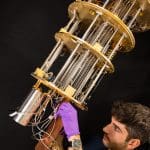
The 2025 International Year of Quantum Science and Technology event in Paris, organized by IEEE Spectrum’s Editor-in-Chief Harry Goldstein, marked the centennial celebration of foundational quantum papers. Unlike nanotechnology, which is integrated into existing sectors, quantum engineering has emerged as a distinct industry.
Companies such as Xanadu, IonQ, IBM, and Welinq are advancing quantum computing to solve complex problems, while Quantum Catalyzer is developing sensors for extreme environments. These technologies require specialized fabrication facilities and skilled professionals with expertise in quantum mechanics.
The Coming Quantum Boom
Quantum engineering is poised to revolutionize technology by tackling impossible challenges with classical physics. This emerging field diverges significantly from traditional areas like nanotechnology, relying on distinct mathematical principles and phenomena. Companies such as Xanadu, IonQ, IBM, and Welinq are at the forefront of advancing modular quantum computing solutions, addressing complex problems in cryptography and extreme environment sensing.
Applications extend beyond computing, including quantum sensors that exploit diamond defects for detecting magnetic fields, temperature, pressure, and gravity. Startups like Quantum Catalyzer are driving innovation in this space, promising transformative advancements across various industries. However, the fabrication of these technologies demands meticulous control over environmental factors such as temperature, vibration, and electromagnetic interference.
As funding grows and applications expand, the demand for skilled professionals with expertise in quantum mechanics, error correction, and system integration intensifies. This surge is fueled by both academic research and private sector investment, underscoring the industry’s promising future.
Fabrication Challenges and Required Skills
Central to quantum engineering are tasks that classical systems cannot perform, such as leveraging quantum entanglement for secure communication and developing sensors for extreme conditions. Companies like Xanadu, IonQ, IBM, and Welinq are pioneering modular approaches to scale quantum computing, targeting solutions for intricate problems in number theory and weather modeling.
Quantum sensors represent another critical area of innovation, utilizing diamond defects to measure magnetic fields, temperature, pressure, and gravity. Ventures such as Quantum Catalyzer are at the vanguard of commercializing these technologies, enhancing sensing capabilities across diverse sectors. The fabrication process requires stringent environmental controls, including precise temperature regulation, vibration management, and electromagnetic shielding.
As the field progresses, there is a growing need for professionals with advanced skills in quantum mechanics, error correction, and system integration. This demand is driven by increasing funding and expanding applications, reflecting the industry’s significant growth potential.
Opportunities for Learning and Collaboration in Quantum Tech
The rapid expansion of quantum engineering necessitates a workforce equipped with specialized knowledge in quantum mechanics, error correction, and system integration. While many electrical engineers possess foundational skills, the unique demands of quantum technology require targeted expertise to overcome its challenges.
Quantum engineering stands apart from conventional fields like nanotechnology due to its reliance on novel mathematical frameworks and physical phenomena. This distinctiveness enables breakthroughs in areas such as secure communication through quantum entanglement and sensor development for extreme environments.
Major advancements are being made in quantum computing, with companies including Xanadu, IonQ, IBM, and Welinq developing scalable modular systems to address complex issues like prime factorization and climate modeling. These efforts aim to integrate quantum processors into data centers and distributed networks.
In the realm of sensing, quantum technologies utilize diamond defects for detecting magnetic fields, temperature fluctuations, pressure changes, and gravitational variations. Startups such as Quantum Catalyzer are leading the charge in commercializing these innovations, poised to redefine industry standards.
As funding increases and applications diversify, the demand for skilled professionals continues to rise. This growth is propelled by both academic exploration and private investment, highlighting the field’s vast potential for future development.
More information
External Link: Click Here For More