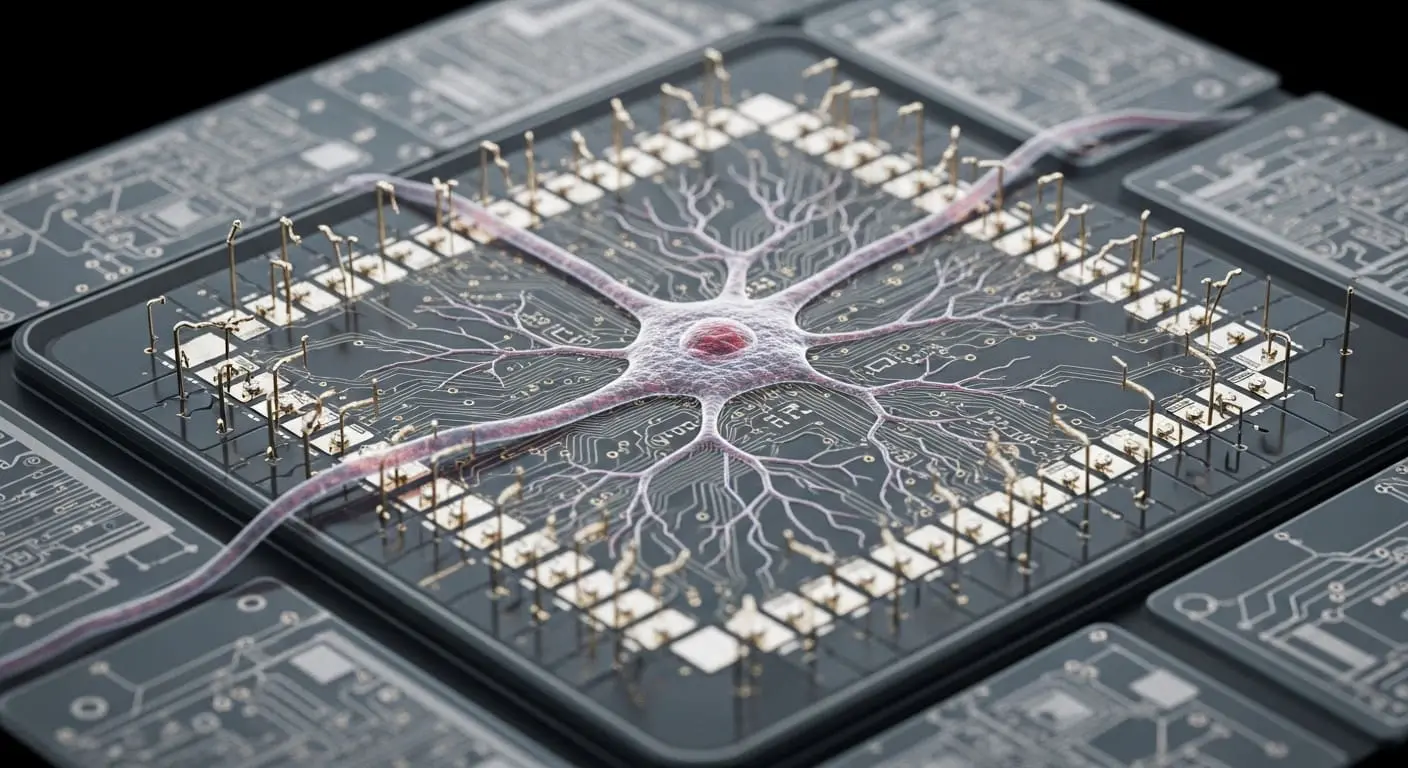
A new consortium led by Tessara Therapeutics is developing a quantum-enabled brain-on-chip platform designed to improve the discovery and development of therapies for challenging neurological diseases like Alzheimer’s, epilepsy, and schizophrenia. The platform will combine Tessara’s RealBrain human neural micro-tissue cultures with a diamond-based quantum sensing approach to measure real-time electrical activity from 3D human neural tissues, addressing a critical need for more reliable preclinical models. Researchers from Chromos Labs, Quantum Brilliance, Axol Biosciences, and the University of Melbourne are collaborating on the project, building on initial successes in fabricating high-aspect-ratio diamond micropillar arrays capable of detecting neural signals. “This collaboration moves us closer to a new standard in neurological drug development,” said Dr. Christos Papadimitriou, Co-Founder and CEO of Tessara Therapeutics; “We are creating a platform that aligns with the global regulatory shift toward more accurate, human-relevant methods for identifying and advancing new therapies.”
RealBrain Micro-tissue Integration with Diamond Nano-pillar Arrays
Researchers have already demonstrated the feasibility of this integration, achieving what they describe as “world-first high-aspect-ratio pillar fabrication” and confirming the ability to detect electrical signals at the millivolt scale, a level relevant to neural communication. This initial success involved creating sensors capable of imaging beneath the surface of neural tissues, a feat previously challenging for conventional methods. The consortium is now focused on expanding the field of view of these sensors to encompass entire RealBrain micro-tissues, allowing for a more comprehensive assessment of network-level electrical signaling; this expansion is crucial for accurately modeling complex brain activity and understanding disease states. “In this next phase, we are expanding the field of view so that we can measure the electrical signals across the whole RealBrain micro-tissues, ensuring we get the most comprehensive picture of the network state,” explained Dr. Nikolai Dontschuk, Founder and CEO of Chromos Labs.
The ultimate goal is to create a platform that can differentiate between healthy, diseased, and toxin-exposed neural tissues, accelerating the development of more effective therapies. This collaborative effort is bolstered by a grant from the Australian Government’s Critical Technologies Challenge Program, and leverages each partner’s expertise; Chromos Labs provides the diamond nano-pillar chip technology, Tessara Therapeutics the RealBrain micro-tissue platform, Quantum Brilliance a pathway to scalable manufacturing, and Axol Biosciences standardized human neurons. Dr. Marcus Doherty, Co-Founder and CTO of Quantum Brilliance, emphasized the importance of accessible, scalable diamond production, stating, “This consortium brings together Australia’s strength in advanced technology and manufacturing and validates our long-held belief that access to scalable, reliable quantum-grade diamond is essential.” The project’s success could significantly improve the accuracy and efficiency of neurological drug development, a field historically plagued by high failure rates.
Scalable Quantum Sensor Manufacturing for Neurological Disease Modeling
The development of functional, human-relevant models for neurological disease has long been hampered by the limitations of traditional preclinical methods; however, a new consortium is addressing this challenge by focusing on scalable manufacturing of quantum sensors for brain-on-chip platforms. This approach is particularly crucial given that neurological drug development is historically a high-risk endeavor, often due to the poor predictive power of existing models. Central to this advancement is the ability to fabricate diamond micropillar arrays capable of detecting subtle electrical signals; Chromos Labs has already demonstrated “world-leading fabrication techniques that allowed us to produce sensors that can look below the surface of neural tissues,” according to Dr. The current phase of development focuses on expanding the sensor’s field of view to capture comprehensive electrical activity across entire micro-tissue samples, moving beyond initial feasibility studies. Quantum Brilliance is contributing expertise in scalable sensor chip manufacturing, a critical step toward widespread adoption, with the goal of making diamond-based products as readily available as conventional silicon chips. Dr.
This collaboration moves us closer to a new standard in neurological drug development. We are creating a platform that aligns with the global regulatory shift toward more accurate, human-relevant methods for identifying and advancing new therapies.
Dr. Christos Papadimitriou, Co-Founder and CEO of Tessara Therapeutics