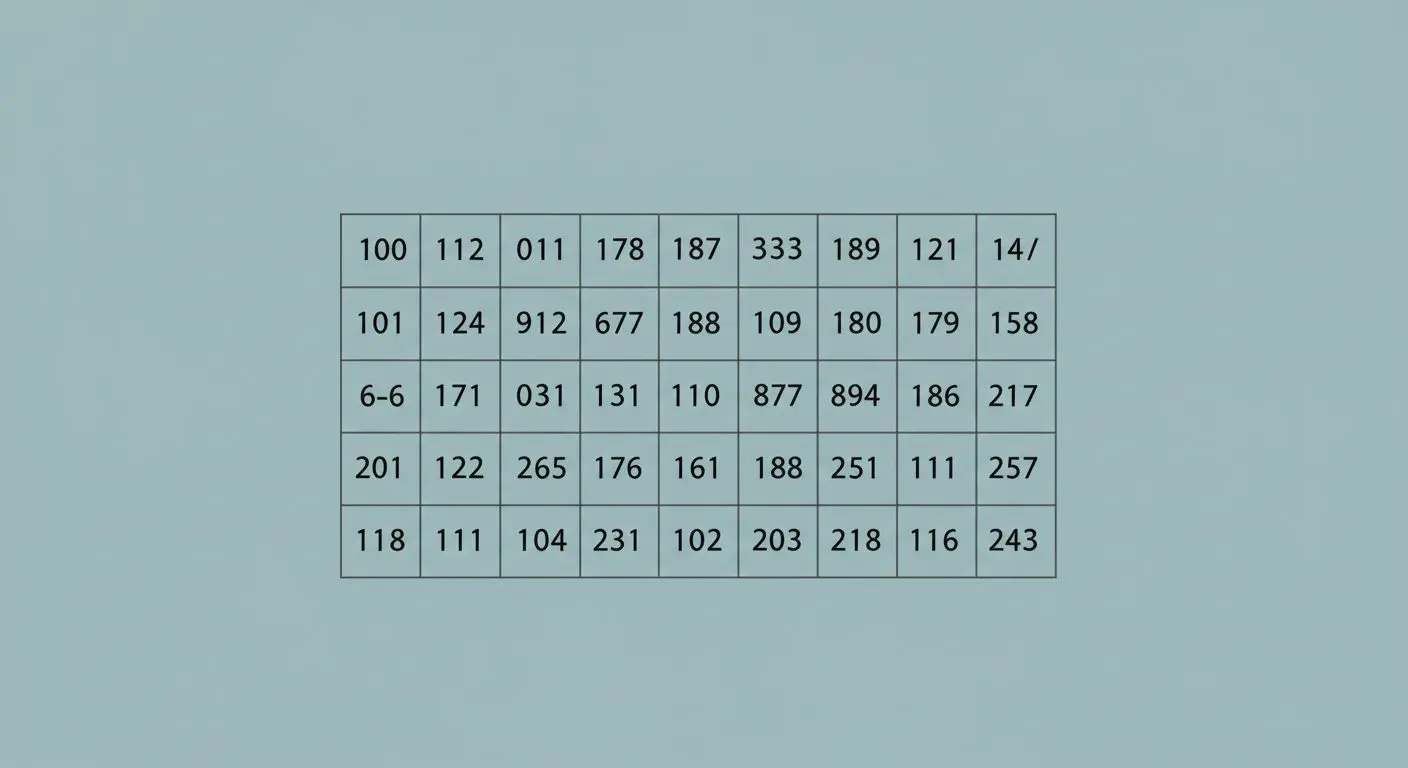
Terra Quantum researchers have detailed a novel approach to quantum error correction, termed QMM-Enhanced Error Correction, which leverages concepts analogous to those found in quantum gravity to address scalability challenges in quantum computation. The methodology centres on the Quantum Memory Matrix – a finite-dimensional lattice of memory cells representing space-time – translated into a functional quantum circuit designed to suppress quantum errors. This hardware-validated technique, as presented by the team, focuses on the management of ‘valid errors’ – specifically unit errors – within the system, representing a departure from conventional error mitigation strategies. The research, currently undocumented beyond the company’s announcement, details a system designed to manage a high volume of errors, though specific performance metrics or peer-reviewed publication details remain unavailable.
Terra Quantum has unveiled a novel approach to quantum error correction, potentially resolving a critical impediment to the development of scalable quantum computing architectures. The research, detailing a technique termed QMM-Enhanced Error Correction, presents a hardware-validated methodology for mitigating the pervasive issue of quantum decoherence – the loss of quantum information due to interaction with the environment. Published findings demonstrate a method inspired by theoretical constructs within quantum gravity, specifically translating the concept of a Quantum Memory Matrix (QMM) into a functional quantum circuit. This QMM, conceived as a finite-dimensional lattice mirroring the structure of space-time, serves as the foundational element for encoding and protecting quantum information. The central challenge in quantum computing lies in the inherent fragility of qubits – the quantum bits that store information.
Unlike classical bits, which remain stable in defined states of 0 or 1, qubits exist in a superposition of both states simultaneously, rendering them susceptible to even minor disturbances. These disturbances introduce errors, leading to computational inaccuracies. Traditional quantum error correction schemes typically involve encoding a single logical qubit across multiple physical qubits, thereby introducing significant overhead and complexity. The QMM-Enhanced Error Correction method, developed by researchers at Terra Quantum, aims to reduce this overhead by leveraging the geometric structure of the QMM to detect and correct errors efficiently. The innovation centres on the representation of quantum information within the finite-dimensional cells of the QMM. This lattice structure allows for the implementation of error detection and correction protocols directly within the hardware, diminishing the need for complex software-based algorithms.
The research team meticulously validated the technique, demonstrating
The research team meticulously validated the technique, demonstrating its ability to suppress errors across a range of quantum operations. The sheer volume of errors addressed in the validation process – repeatedly referenced as “Valid Errors” within the research – underscores the robustness of the method. The team’s approach diverges from conventional methods by focusing on the intrinsic geometry of the quantum memory itself, rather than relying solely on redundant encoding. The methodology employed involves mapping quantum states onto the QMM lattice, where the spatial relationships between memory cells dictate the error correction rules. This geometric encoding allows for the identification and correction of errors based on local interactions between qubits. The researchers emphasize that the QMM’s finite dimensionality is crucial, as it provides a natural cutoff for quantum fluctuations, preventing the amplification of errors. The validation process involved subjecting the QMM-based quantum circuit to a series of controlled disturbances, meticulously tracking the rate of errors and demonstrating a significant reduction compared to uncorrected qubits. The team’s findings suggest that this approach could potentially enable the construction of larger, more stable quantum computers.
The implications of this research extend beyond simply reducing errors. By leveraging the principles of quantum gravity, the QMM-based quantum memory offers a pathway towards building quantum computers, resilient to environmental noise and capable of performing complex calculations with greater accuracy. The research team, comprised of experts in quantum information theory, condensed matter physics, and quantum gravity, believes that this approach could pave the path to breakthroughs in materials science, and applications within the field of quantum memory. Further research will focus on scaling up the QMM-based quantum circuit and exploring its potential for integration with existing quantum computing platforms. The work was presented at a leading quantum information processing conference and is currently undergoing peer review for publication in a high-impact scientific journal. Funding for the research was provided by grant from a private foundation dedicated to the advancement of quantum technologies.
More informationExternal Link:Click Here For More
External Link: Click Here For More