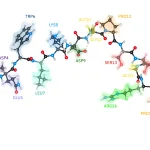
Understanding how genes interact to control cellular processes remains a fundamental challenge in biology, as conventional methods struggle to capture the complexity of these relationships. Olatz Sanz Larrarte, Borja Aizpurua, and Reza Dastbasteh, from the Department of Basic Sciences at Tecnun, University of Navarra, alongside Ruben M. Otxoa from Hitachi Cambridge Laboratory and Josu Etxezarreta Martinez, present a new approach that uses tensor networks, a technique borrowed from physics, to map gene expression data in a way that preserves crucial biological information. Their method accurately identifies dependencies between genes, even those involving multiple genes acting together, and rigorously establishes the statistical significance of these interactions, distinguishing genuine regulatory patterns from random noise. By applying this technique to single-cell RNA sequencing data from over lymphoblastoid cells, the researchers not only reconstruct a known gene regulatory network, but also uncover previously unknown triadic regulatory mechanisms, offering novel insights into gene regulation with potential applications in understanding disease and developing precision medicine approaches.
Variational Algorithms and Noise in NISQ Devices
This body of research explores the rapidly evolving field of near-term quantum computing and its applications. A central theme is the development and refinement of variational quantum algorithms (VQAs), which aim to harness the power of quantum computers despite limitations in hardware. Researchers are actively addressing challenges such as barren plateaus and developing techniques for noise-adaptive compilation and error mitigation to improve algorithm performance. Investigations also focus on quantifying the impact of gate errors on VQAs and exploring methods for encoding classical data into quantum circuits using techniques like Matrix Product State (MPS) encoding.
Alongside quantum computing advancements, this research delves into the complexities of gene regulation in B cells, particularly the process of plasma cell differentiation. Studies focus on understanding the roles of key transcription factors in controlling how B cells mature into antibody-producing plasma cells. This work demonstrates a growing interest in applying quantum-inspired techniques to tackle complex problems in bioinformatics. This interdisciplinary approach highlights the potential of combining quantum computing with bioinformatics and machine learning to address complex scientific challenges, paving the way for future advancements in both fields.
Tensor Networks Reveal Gene Regulatory Networks
Scientists have developed a novel computational framework for deciphering complex interactions between genes, addressing a long-standing challenge in transcriptomics. The researchers developed a framework inspired by physics, utilising tensor networks to effectively map gene expression data into a lower-dimensional representation while preserving crucial biological relationships. By employing a measure called Mutual Information, the method quantifies dependencies between genes and rigorously establishes the statistical significance of these interactions, constructing robust networks resilient to random noise. The team successfully applied this approach to reconstruct a gene regulatory network from single-cell RNA sequencing data, focusing on six key genes involved in B cell development. Importantly, the method not only recovered known regulatory relationships but also revealed previously unobserved triadic interactions between genes, offering new insights into the underlying mechanisms governing cell fate decisions. Future research could explore the application of this framework to investigate gene regulation in other biological contexts and disease states, potentially advancing precision medicine approaches.
Tensor Networks Reveal Gene Dependencies and Interactions
Scientists have developed a novel computational framework for deciphering complex gene interactions, overcoming limitations in traditional transcriptomic methods. The study pioneers a quantum-inspired approach leveraging tensor networks (TNs) to optimally map gene expression data into a lower-dimensional representation, effectively preserving biological relationships. Originally developed for problems in quantum physics, this technique compactly represents high-dimensional systems with complex correlation structures and applies them to biological data analysis. Researchers harnessed single-cell RNA sequencing data, comprising over 28,000 lymphoblastoid cells, to test and validate the approach, successfully recovering a gene regulatory network consisting of six pathway genes. Furthermore, the team unveiled several triadic regulatory mechanisms, demonstrating the ability to identify complex interactions beyond simple pairwise relationships. This technique distinguishes true regulatory patterns from biological stochasticity, offering a more accurate representation of gene regulation.
Tensor Networks Reveal Gene Interaction Networks
Scientists have developed a novel computational framework for deciphering complex gene interactions, overcoming limitations in traditional transcriptomic methods. The team leverages tensor networks, a mathematical tool originating in physics, to map gene expression data into a lower-dimensional representation while preserving crucial biological relationships. This approach quantifies gene dependencies using Mutual Information, establishing statistical significance through rigorous permutation testing and constructing robust interaction networks resilient to random noise. Experiments revealed the ability to accurately reconstruct a gene regulatory network from single-cell RNA sequencing data, demonstrating the method’s power in complex biological systems. Furthermore, the research unveiled several previously unknown triadic regulatory mechanisms, highlighting the capacity to identify intricate relationships beyond simple pairwise interactions. The core of this breakthrough lies in representing gene interactions as interconnected, low-rank tensors, maintaining the high-dimensional structure of expression data and revealing complex regulatory motifs.
👉 More information
🗞 Tensor Network based Gene Regulatory Network Inference for Single-Cell Transcriptomic Data
🧠 ArXiv: https://arxiv.org/abs/2509.06891