

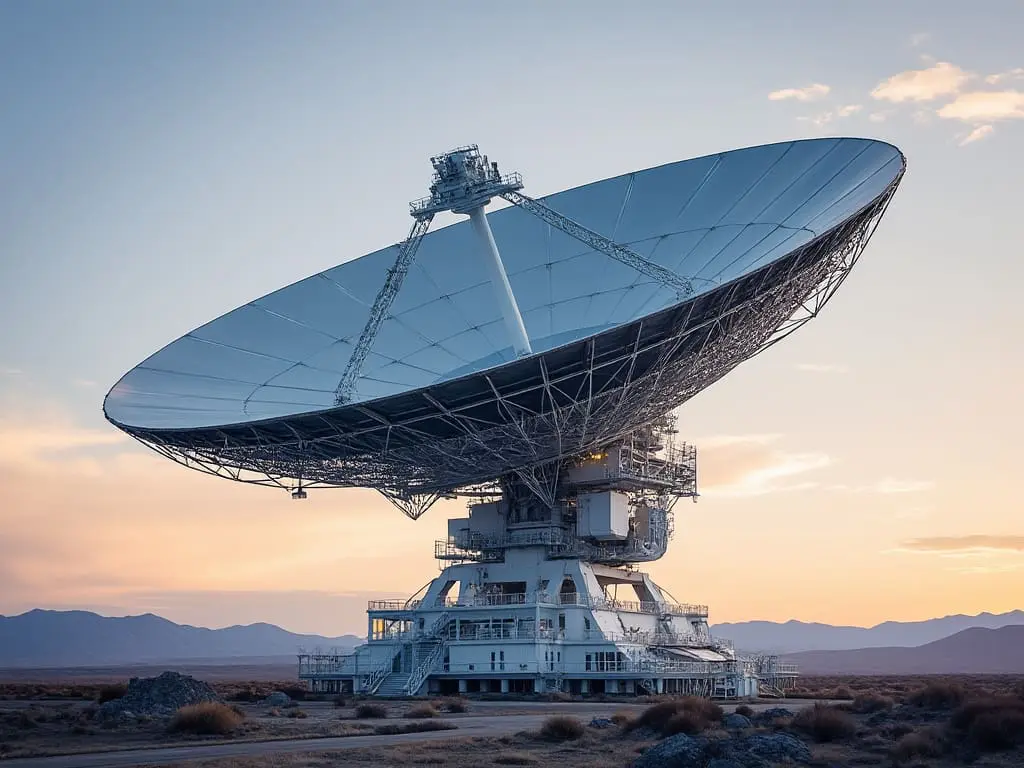
Astronomers are on the cusp of a revolution in their field, thanks to a new service that enables real-time coordination among observatories worldwide. The National Center for Supercomputing Applications and the Center for AstroPhysical Surveys have received over $2 million in funding from the US National Science Foundation to develop the Hop-Enabled Real-time Observatory Information and Coordination (HEROIC) service. This innovative platform will allow researchers to access a single destination for coordinating astronomical readings, minimizing duplication and maximizing the value of combined datasets.
Gautham Narayan, Deputy Director of CAPS, notes that this service is critical for multi-messenger time-domain astronomy, which requires simultaneous observations of rare phenomena across different facilities. The HEROIC service will be integrated with major observatories, including NSF NOIRLab’s Víctor M. Blanco 4-meter Telescope and the twin International Gemini Observatory telescopes, as well as Las Cumbres Observatory’s global network of robotic telescopes. Key collaborators on this project include Tom Matheson from NOIRLab and Andy Howell from Las Cumbres Observatory.
Building a Unified Ecosystem for Astrophysical Research
The National Science Foundation (NSF) has awarded funding to the University of Illinois’s National Center for Supercomputing Applications (NCSA) and the Center for Astrophysics (CAPS) to develop a novel cyberinfrastructure, dubbed HEROIC (Highly Efficient Real-time Observatory and Instrument Collaboration), aimed at revolutionizing astrophysical research. This ambitious project seeks to create a unified ecosystem that enables seamless collaboration, coordination, and data sharing among researchers, observatories, and instruments worldwide.
The Need for Interoperability
Currently, astrophysicists face significant challenges in coordinating observations across different facilities, leading to duplication of efforts, wasted resources, and lost opportunities. The lack of interoperability between siloed facilities hinders the scientific community’s ability to respond rapidly to rare and fleeting astronomical events. HEROIC aims to bridge this gap by providing a centralized platform that facilitates real-time collaboration, automates requests, and streamlines data sharing.
The HEROIC Solution
HEROIC will collate, save, and publish observatory and instrument status from a worldwide network of ground- and space-based facilities. This comprehensive platform will enable scientists to:
- Receive alerts and plan follow-up observations in real-time.
- Coordinate with other researchers and facilities to optimize observation strategies.
- Access archival data and current weather conditions.
- Schedule observations and receive notifications on instrument status.
By providing a unified interface, HEROIC will break down barriers between previously isolated facilities, fostering a culture of collaboration and accelerating scientific discovery.
Partnerships and Collaborations
The NSF has awarded funding to NCSA and CAPS in partnership with NSF NOIRLab and the Las Cumbres Observatory. These collaborations will enable the development of critical infrastructure that can be extended to other missions, reducing the burden on individual observatories and increasing their incentive to participate.
The Role of Artificial Intelligence
HEROIC is part of a broader effort to develop new artificial intelligence (AI) tools for astrophysics research, as exemplified by the recently announced NSF-Simons AI Institute for the Sky (SkAI). By leveraging cutting-edge computing expertise at NCSA, HEROIC will harness the power of AI to advance our understanding of the universe.
The Future of Astrophysical Research
The development of HEROIC marks a significant shift in the way astrophysicists conduct research. By creating a unified ecosystem that enables seamless collaboration and data sharing, this project has the potential to revolutionize the field, enabling scientists to respond more effectively to rare astronomical events and make groundbreaking discoveries.
In conclusion, HEROIC represents a critical step forward in the pursuit of advancing our understanding of the universe. By bridging the gap between siloed facilities and fostering a culture of collaboration, this innovative cyberinfrastructure will accelerate scientific discovery and pave the way for new breakthroughs in astrophysical research.
External Link: Click Here For More


