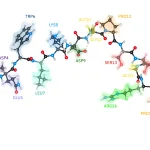
Understanding the electronic behaviour of strongly correlated materials presents a significant challenge in materials science, as conventional computational methods often fall short in accurately describing these complex systems. Archith Rayabharam and N. R. Aluru, from The University of Texas at Austin, now present a hybrid quantum-classical framework that combines the strengths of both computational approaches to overcome these limitations. Their method integrates advanced quantum algorithms with classical simulations, enabling the accurate prediction of binding energies for interactions between graphene analogues and various molecules and metals. This research demonstrates the ability to model larger, strongly correlated systems, such as metal-graphene complexes, with chemically accurate results, revealing crucial charge transfer effects often missed by standard techniques and paving the way for materials discovery in the emerging field of quantum computing.
This work focuses on algorithms and techniques suitable for implementation on current, limited-capacity quantum computers known as Noisy Intermediate-Scale Quantum (NISQ) devices. A significant effort involves developing and refining quantum algorithms specifically tailored for these NISQ devices, with a focus on improving their efficiency and accuracy. Key algorithms under investigation include the Variational Quantum Eigensolver (VQE), which combines quantum and classical computation, and Unitary Coupled Cluster (UCC), a powerful algorithm inspired by classical quantum chemistry.
The Quantum Equation of Motion (Q-EOM) offers a method for calculating excited states and properties beyond ground state energies. Researchers are also exploring methods for representing electronic Hamiltonians and mapping them onto qubit systems, optimizing these techniques for improved performance. Algorithms like Superfast Simulation aim for exponential speedups in simulating fermionic systems, and these methods are being applied to calculate molecular properties, study the electronic structure of materials like graphene, and accurately model the interaction of water with graphene, a benchmark problem for electronic structure methods. Current research focuses on optimizing orbital selection, reducing errors, minimizing resource requirements, and improving the scalability of these algorithms, paving the way for quantum computing to revolutionize quantum chemistry and materials science.
Hybrid Quantum-Classical Approach to Correlation Problems
Researchers have developed a novel computational framework that combines Multiconfigurational Self-Consistent Field (MCSCF) theory with the Variational Quantum Eigensolver (VQE) to accurately model strongly correlated systems, where conventional methods often struggle. The team validated this approach using water dissociation, carefully optimizing computational parameters such as the quantum ansatz and active space configuration before applying it to more complex materials. Scientists extended the methodology to investigate the interactions between water and transition metals, iron, cobalt, and nickel, with both pristine and defective graphene analogues, enabling the prediction of binding energies with high accuracy. Results demonstrate the framework’s ability to capture strong charge transfer effects and pronounced multireference character, complex electronic behaviors often misrepresented by standard calculations. This hybrid approach offers a practical route toward realizing quantum advantage for real-world materials applications in the Noisy Intermediate-Scale Quantum (NISQ) era, paving the way for advancements in catalysis, sensing, and materials design.
Water and Transition Metal Interactions Predicted Accurately
Researchers have developed a hybrid quantum-classical computational framework that accurately predicts the electronic behavior of strongly correlated materials, overcoming limitations found in conventional methods. This new approach combines Multiconfigurational Self Consistent Field (MCSCF) calculations with the Variational Eigensolver (VQE), delivering chemically accurate predictions for complex systems previously inaccessible to detailed analysis. Building on this success, scientists applied the method to investigate the interactions between water and transition metals, iron, cobalt, and nickel, on both pristine and defective graphene analogues. Results demonstrate the ability to capture strong charge-transfer effects and multi-reference electronic character, phenomena often misrepresented by standard Density Functional Theory (DFT) calculations. The framework’s power lies in its ability to efficiently partition large, complex problems into smaller, independently solvable subproblems, reducing computational cost and enabling simulations on current, Noisy Intermediate Scale Quantum (NISQ) devices.
Hybrid Quantum-Classical Method Simulates Correlated Systems
This research presents a hybrid quantum-classical framework, combining Multiconfigurational Self Consistent Field (MCSCF) with the Variational Eigensolver (VQE), to model strongly correlated electronic systems, a challenge for conventional computational methods. The team successfully demonstrated the framework’s ability to accurately predict binding energies for water interacting with graphene analogues and for transition metals adsorbed on graphene, capturing crucial charge transfer effects and multireference character often missed by standard techniques. The study establishes a scalable methodology for tackling strongly correlated systems, serving as a prototype for future applications in areas like catalysis, sensing, and materials design. While the current calculations were limited to modest active spaces, the framework’s adaptability and accuracy suggest it can be extended to more intractable systems as quantum hardware improves.
👉 More information
🗞 Hybrid Quantum-Classical Simulations of Graphene Analogues: Adsorption Energetics Beyond DFT
🧠 ArXiv: https://arxiv.org/abs/2508.21325