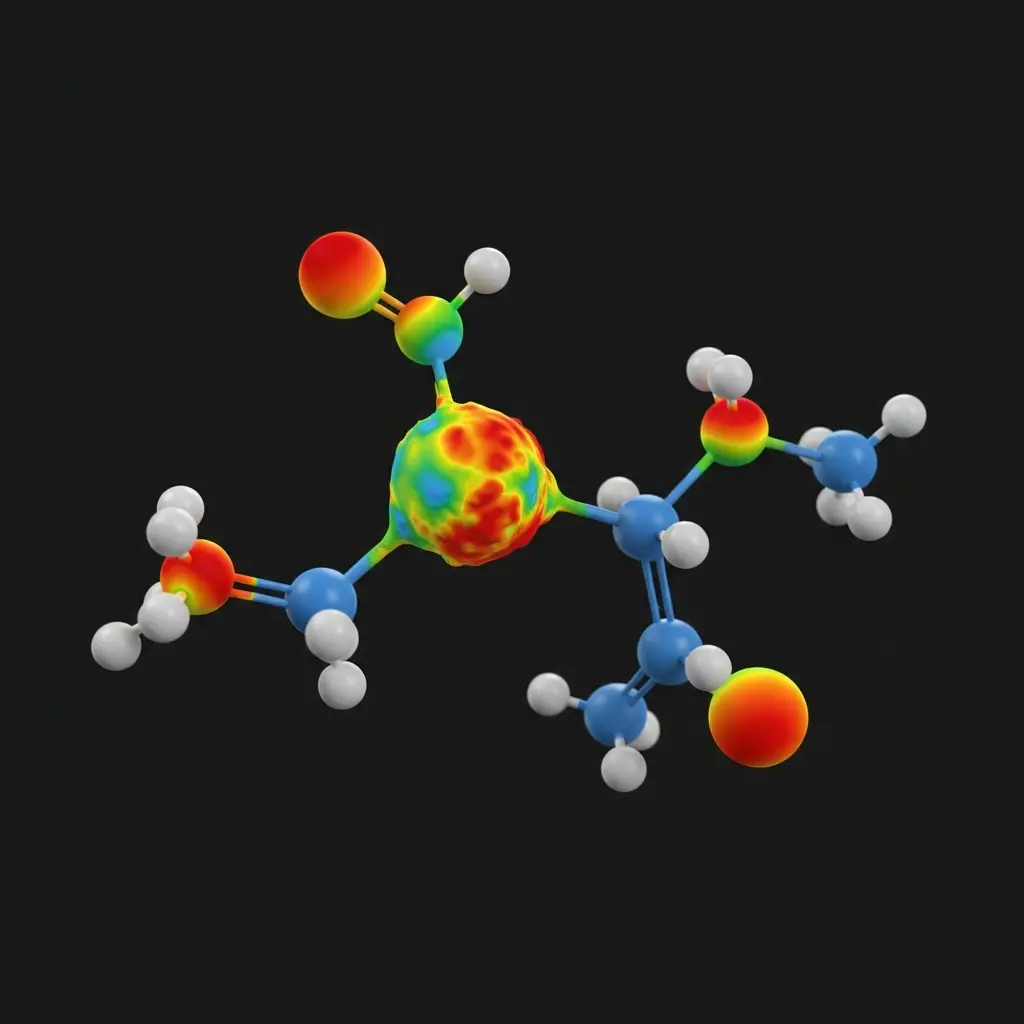
Understanding the behaviour of complex molecular systems at realistic temperatures presents a significant challenge for computational chemistry, yet is crucial for modelling many chemical and biological processes. Shaozhi Li and Jeng-Da Chai from National Taiwan University now present a suite of advanced computational methods to address this, extending thermally-assisted-occupation density functional theory to finite temperatures. This work introduces finite-temperature TAO-DFT, alongside its integration with ab initio molecular dynamics to create finite-temperature TAO-AIMD, and a novel quantum mechanics/molecular mechanics approach, FT-TAO-QM/MM. By applying these methods to study n-acenes, molecules consisting of fused benzene rings, the researchers demonstrate a powerful new capability to accurately model both the electronic and nuclear effects on molecular properties, even at elevated temperatures and within complex environments, offering new insights into the behaviour of these important organic systems.
Acene Properties in Vacuum and Argon Matrices
This research investigates the electronic and vibrational properties of acenes, molecules consisting of fused benzene rings, using advanced computational methods. Scientists employed a technique called FT-TAO (Finite-Temperature Time-dependent Auxiliary-field Oscillator) to study acenes in both isolated conditions and embedded within an argon matrix. The goal is to understand how the surrounding environment affects the molecules’ characteristics. This approach combines quantum mechanics/molecular mechanics (QM/MM) with time-dependent density functional theory (TDDFT) to model these complex systems.
The study focuses on acenes ranging from two to six fused rings, examining their behavior in vacuum and within an argon matrix at various positions. Researchers calculated properties including the symmetrized von Neumann entropy, which measures electron entanglement, and infrared (IR) spectra, which reveal vibrational modes. These calculations provide insights into the stability, electronic structure, and spectroscopic behavior of the acenes. The results demonstrate that the argon matrix environment and the specific position of the acene within it influence its electronic structure and vibrational properties, as evidenced by changes in the calculated properties.
Finite Temperature Multi-Reference Electronic Structure Methods
Scientists have developed a suite of computational methods to accurately model the thermal behavior of complex molecules, particularly those with multi-reference character, where traditional calculations struggle. Building upon existing thermally-assisted-occupation density functional theory (TAO-DFT), the team pioneered a finite-temperature extension, FT-TAO-DFT, to simulate systems at realistic temperatures. This new method addresses limitations in conventional finite-temperature density functional theory, enabling the study of molecular properties at finite temperatures. To investigate molecular dynamics, researchers combined FT-TAO-DFT with ab initio molecular dynamics, creating FT-TAO-AIMD.
To enhance efficiency for larger systems, the team developed FT-TAO-DFT-based quantum mechanics/molecular mechanics (QM/MM). This technique combines high-level quantum mechanical calculations for crucial parts of a molecule with more efficient molecular mechanics for the surrounding areas. These methods were applied to study n-acenes, linearly fused benzene rings ranging from two to six rings, both in isolation and embedded within an argon matrix. Calculations demonstrate that electronic temperature effects on the radical nature and infrared spectra of n-acenes are minimal up to 1000 K, while nuclear temperature effects are noticeable, highlighting the importance of considering molecular vibrations.
Finite Temperature Molecular Dynamics with Tao-DFT
Scientists have developed a new computational method, finite-temperature Tao-Density Functional Theory (FT-TAO-DFT), to accurately model the behavior of large, complex molecules at realistic temperatures. This work extends existing Tao-DFT methods to account for thermal effects, enabling the study of molecular properties at finite temperatures, and combines this with ab initio molecular dynamics to create FT-TAO-AIMD. To further enhance efficiency, the team also developed FT-TAO-QM/MM, a method that combines quantum mechanical calculations for crucial parts of a molecule with classical mechanics for the rest. The researchers applied these methods to study n-acenes, molecules consisting of linearly fused benzene rings, ranging in size from two to six rings.
Calculations demonstrate that electronic temperature has a minimal impact on the radical nature and infrared spectra of these molecules, while nuclear temperature effects are noticeable, indicating that molecular vibrations significantly influence the observed properties. For acenes in an argon matrix, the matrix itself has little effect on the radical nature, though the deposition process can alter the infrared spectrum. Detailed analysis reveals that smaller acenes exhibit non-radical behavior up to 1000 K, while 6-acene displays noticeable di-radical nature, enhanced by nuclear motion and increasing with the number of rings.
Finite Temperature Multi-Reference Electronic Structure Methods
This work presents a significant advancement in electronic structure methods, extending thermally-assisted-occupation density functional theory (TAO-DFT) to finite temperatures, denoted FT-TAO-DFT. Researchers successfully developed FT-TAO-DFT alongside related methods, FT-TAO-AIMD and FT-TAO-QM/MM, enabling the investigation of thermal equilibrium properties and dynamics in large multi-reference systems. These new techniques allow for a more accurate description of systems where electronic and nuclear temperatures play a crucial role, particularly for systems with complex electronic structures. The methods were applied to study n-acenes, a series of linearly fused benzene rings, examining their radical character and infrared spectra at varying temperatures and within argon matrices.
Calculations reveal that electronic temperature effects are minimal up to 1000 K, while nuclear temperature effects are noticeable. Furthermore, the presence of an argon matrix has a limited impact on the radical nature of the acenes, though the deposition process can influence the observed infrared spectra. This research establishes a powerful new toolkit for investigating the thermal behavior of complex molecules and materials, paving the way for a deeper understanding of their properties and reactivity.
🗞 Finite-Temperature Thermally-Assisted-Occupation Density Functional Theory, Ab Initio Molecular Dynamics, and Quantum Mechanics/Molecular Mechanics Methods
🧠 ArXiv: https://arxiv.org/abs/2512.20313