

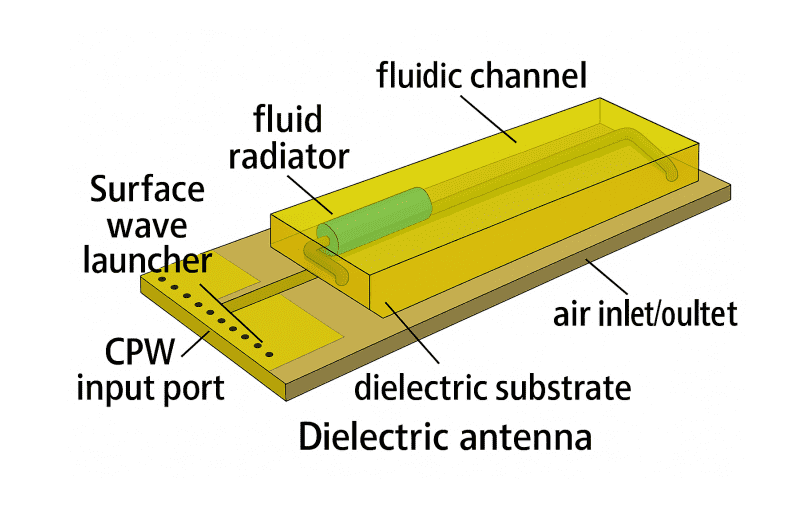
Reconfigurable fluid antennas represent a potentially transformative technology for future wireless communication systems, promising to dynamically optimise signal transmission and reception, but realising this potential demands a critical examination of practical limitations. Halvin Yang from Imperial College London, Yizhe Zhao from the University of Electronic Science and Technology of China, and Kai-Kit Wong from University College London and Yonsei University, alongside their colleagues, investigate the discrepancy between theoretical predictions and real-world performance of these systems. The team dissects common assumptions within existing models, such as instantaneous reconfiguration and perfect channel knowledge, revealing how these idealisations often overestimate achievable gains in capacity and coverage. By proposing refined modelling techniques, experimental validation methods, and robust control algorithms, the researchers demonstrate a pathway towards incorporating realistic constraints, including finite actuation times, imperfect information, and dynamic fading, into the design and evaluation of reconfigurable antennas for applications in future B5G/6G networks and the Internet of Things.
Fluid Antennas, Practical Limits and Future Paths
This comprehensive study critically examines fluid antenna systems and reconfigurable antennas, moving beyond idealized assumptions to highlight practical challenges and suggest future research directions. The central argument is that much existing research relies on overly simplistic assumptions, such as perfect channel knowledge and instantaneous reconfiguration, which inflate performance predictions and hinder practical deployment. The authors advocate for more realistic modeling and experimentation to accurately assess system capabilities. Key challenges identified include limitations imposed by physical materials, actuation mechanisms, packaging, and manufacturing tolerances, all impacting performance, reliability, and scalability.
Significant overhead is also introduced by the time and energy required to switch antenna configurations, demanding careful consideration in system design and scheduling algorithms. Obtaining accurate and up-to-date channel state information proves difficult in dynamic environments, limiting the effectiveness of reconfigurable antennas that rely on adapting to changing conditions. Real-world channels constantly change due to mobility, interference, and environmental factors, requiring antenna systems to be robust to these variations. Accurately modeling the complex interaction between the antenna, the environment, and the reconfiguration process remains a significant challenge, as simplified models often fail to capture critical effects.
Imperfect materials also exhibit losses and variations in properties, further impacting antenna performance. The research outlines several promising avenues for future work, including the development of stochastic and hybrid channel models that incorporate uncertainty and randomness in channel behavior and reconfiguration processes. Adapting medium access control protocols to account for reconfiguration overhead and dynamic channel conditions is also crucial. Integrating antenna control with higher-layer protocols, such as those governing medium access control and applications, can optimize overall system performance.
Machine learning and predictive algorithms offer potential for predicting channel variations and proactively optimizing antenna configurations. Reducing complexity through limited-codebook approaches, which utilize a finite set of pre-defined antenna configurations, is another promising direction. Developing algorithms that minimize energy consumption during reconfiguration is also essential. Realistic prototyping and field trials are vital for validating theoretical models and identifying practical challenges. Finally, developing standards for testing, compliance, and performance evaluation of reconfigurable antennas will facilitate wider adoption. This work provides a valuable critical assessment of the current state of research on fluid antenna systems and reconfigurable antennas, shifting the focus from idealized performance predictions to practical considerations and challenges. It outlines a clear roadmap for future research, highlighting the most promising avenues for innovation and emphasizing the importance of holistic system design, considering all aspects of the antenna, the channel, and the network.
Fluid Antennas, Realistic Channel Modelling, and Validation
Researchers are pioneering a new approach to wireless communication using fluid antenna systems, which employ antennas capable of changing position within a defined space. This work dissects common assumptions in antenna design, such as instantaneous reconfiguration and perfect channel knowledge, revealing how finite actuation time, imperfect channel information, and rapidly changing signal conditions significantly impact performance. The study demonstrates that overlooking these real-world constraints can lead to overestimation of gains in capacity and coverage, prompting the development of refined modeling techniques and experimental validation methods. To rigorously assess fluid antenna system performance, scientists developed a comprehensive simulation environment that incorporates realistic channel models and antenna characteristics.
This system allows for precise control over parameters like antenna movement speed, channel fading rates, and signal interference levels, enabling detailed analysis of system behavior under diverse conditions. Experiments employ both single-antenna fluid antenna systems and large reconfigurable surfaces, evaluating their ability to mitigate interference and maximize signal strength in multipath-rich environments. The team specifically investigates how fluid antenna systems can access the null points of interference created by natural fading, reducing the need for complex beamforming and channel estimation techniques. Further research focuses on scaling fluid antenna systems into large reconfigurable surfaces, envisioning the transformation of building facades and urban infrastructure into adaptive communication environments.
Scientists are exploring the potential of these surfaces to dynamically shape signal paths, maximizing coverage and enhancing capacity in real time. This work extends the principles of reconfigurable intelligent surfaces into fully adaptive systems, embedding communication optimization directly into physical infrastructure. Recent studies demonstrate that a single-antenna fluid antenna system can significantly outperform traditional fixed-position antenna systems, achieving high multiplexing and diversity gains. The team continues to refine these systems, pushing the boundaries of wireless communication technology towards 6G-enabled smart environments.
Antenna System Limits, Real-World Effects Revealed
Researchers investigated the practical limitations of reconfigurable antenna systems, revealing that commonly held assumptions overestimate potential performance gains. The study demonstrates that ignoring real-world effects, such as finite actuation time and imperfect channel knowledge, can lead to inaccurate predictions of capacity and coverage. Experiments focused on dissecting these assumptions and contrasting them with observed realities in wireless communication scenarios. The work highlights the significant impact of mutual coupling in multi-element systems; shifting or resizing one antenna alters the collective radiation pattern in unpredictable ways.
Researchers found that mechanical friction and alignment tolerances mean the intended antenna position often differs from the actual one, and actuator precision is limited by tolerances that accumulate over multiple cycles. These factors invalidate assumed radiation patterns and mismatch, impacting overall system performance. Investigations into reconfiguration speed revealed that many analyses assume negligible latency, but liquid-based antennas require pumps or valves, and mechanical antennas need motors, both incurring delays and energy costs. The study quantified these limitations, demonstrating that frequent reconfiguration drains battery life and creates communication gaps.
Results show that overlooking reconfiguration latency exaggerates theoretical throughput gains and can violate quality-of-service requirements in low-latency applications. Furthermore, the research addressed the assumption of static or slowly varying channels, finding that millimeter-wave channels fluctuate rapidly. Experiments demonstrated that in mobile or vehicular settings, multipath components change quickly, and coherence times in high-frequency bands can be as short as milliseconds. The study illustrated that models assuming quasi-static channels overestimate achievable performance, and protocols relying on repeated reconfiguration struggle to keep pace with channel variations.
The research also examined the assumption of perfect channel knowledge, noting that acquiring complete channel state information for all antenna states is prohibitively complex. Researchers found that measurement overhead and the complexity of capturing channel responses limit the accuracy of antenna selection. The work offers insight into the performance of reconfigurable antenna systems under fast channel variations and the detriment to performance from assuming a slow fading channel.
Realistic Constraints Limit Fluid Antenna Performance
Research into fluid antennas demonstrates significant potential for enhancing next-generation wireless systems through adaptive optimization of radiation characteristics. However, this work reveals that many theoretical analyses rely on assumptions, such as instantaneous reconfiguration and perfect channel knowledge, that do not accurately reflect real-world conditions. By contrasting these idealized scenarios with the realities of finite actuation times, limited information about the communication channel, and practical material constraints, scientists have shown that predicted performance gains can be overestimated. The team’s findings highlight the importance of incorporating realistic factors, including reconfiguration latency, energy consumption, and mechanical limitations, into models and simulations. They emphasize that accurate performance evaluation requires accounting for the interplay of hardware constraints, dynamic channels, and network-level interactions.
👉 More information
🗞 Bridging Theory and Practice in Reconfigurable Fluid Antenna Systems
🧠 ArXiv: https://arxiv.org/abs/2510.14794

