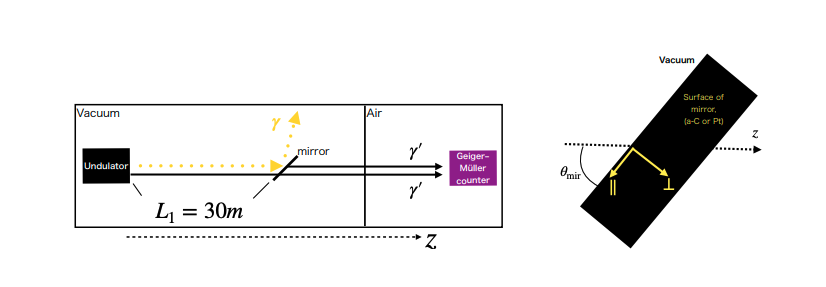
The search for dark photons, hypothetical particles that could comprise dark matter, receives a novel approach from Wen Yin of Tokyo Metropolitan University and colleagues. This research proposes utilising existing radiation-safety monitoring systems at large synchrotron facilities, such as NanoTerasu, SPring-8, and others, to detect these elusive particles. The team demonstrates that even standard Geiger-Müller counters, routinely employed for safety checks, possess the sensitivity to identify dark photons escaping shielding, and consequently establish stringent limits on their properties in the electronvolt mass range. This method offers a particularly robust and realistic constraint on dark photon existence, as it leverages already-established safety regulations and monitoring infrastructure, providing some of the strongest laboratory bounds to date.
The search for light and weakly interacting particles, such as axions and dark photons, attracts significant attention as potential components of dark matter and extensions to the Standard Model of particle physics. Recent research demonstrates that even a simple Geiger-Müller counter, routinely used for radiation-safety monitoring, can detect dark photons outside of shielding, establishing competitive limits on their properties in the electron volt mass range.
Repurposing Synchrotrons for Dark Photon Searches
Researchers are proposing a novel method for searching for dark photons by utilizing existing infrastructure at synchrotron facilities and other high-intensity photon sources. This approach dramatically lowers the cost and complexity of the search by repurposing facilities as dark photon helioscopes or light shining through walls experiments. Dark photons are hypothetical particles that interact very weakly with known matter, potentially forming a hidden sector of particles. Synchrotrons accelerate electrons to near the speed of light, emitting intense beams of X-rays, known as synchrotron radiation.
The idea is that dark photons produced in the synchrotron’s components could interact with the facility’s magnetic fields, converting back into detectable photons. Undulators and wigglers, special magnets used in synchrotrons, enhance the emission of synchrotron radiation and are crucial for this proposed search. The search can be significantly enhanced by tuning the experiment to a resonant frequency, maximizing the conversion probability between photons and dark photons. The research also considers the thermal production of dark matter in the early universe, providing a broader theoretical context. This approach offers several advantages, including cost-effectiveness by leveraging existing infrastructure, high intensity due to the extremely high photon fluxes from synchrotrons, tunability allowing for resonant enhancement of the signal, and versatility enabling the search for a wide range of dark photon masses. In simpler terms, imagine a powerful flashlight (the synchrotron) attempting to shake light into a hidden particle (the dark photon), then shaking the hidden particle back into light and detecting it.
Synchrotron Safety Systems Hunt Dark Photons
Recent research demonstrates a novel approach to searching for dark photons by repurposing data from radiation-safety monitoring systems at synchrotron facilities, such as NanoTerasu and SPring-8. These facilities routinely employ Geiger-Müller counters to ensure safe operating conditions, and this work reveals these same detectors can be used to hunt for evidence of these elusive particles. The key insight is that dark photons, if produced within the synchrotron’s components like undulators or mirrors, could traverse shielding and be detectable by these safety systems. This method offers a significant advantage over dedicated dark matter experiments because it leverages pre-existing infrastructure, reducing both cost and complexity.
Importantly, the constraints derived from this analysis are considered particularly robust due to the strict regulations governing radiation safety monitoring, ensuring the data is reliable and realistic. The findings suggest that synchrotron facilities are uniquely positioned to contribute to the search for dark matter, effectively turning safety systems into scientific instruments. This approach expands the possibilities for dark photon detection beyond traditional laboratory setups, opening new avenues for exploration. This work not only advances the search for dark matter but also underscores the value of interdisciplinary research, combining expertise in particle physics, radiation safety, and synchrotron technology.
Dark Photon Search with Radiation Monitors
This work demonstrates a novel approach to searching for dark photons by repurposing data from radiation-safety monitoring systems at synchrotron facilities. The research shows that even a standard Geiger-Müller counter, routinely used for safety checks, can detect dark photons escaping shielding and establish limits on their properties. These limits are, in some cases, competitive with or stronger than those obtained from dedicated laboratory experiments. The method relies on analyzing the response of these detectors to potential dark photon signals, and the results indicate that the detection rate is not straightforward; it varies significantly with dark photon mass and detector characteristics. The study also establishes the potential for “parasitic experiments”, extracting physics data from existing infrastructure, offering a cost-effective way to explore new physics. Future research could significantly improve these limits by employing more precise X-ray detectors for real-time monitoring, allowing for a more sensitive search and a more detailed understanding of dark photon interactions.
🗞 Novel Limits on Dark Photon Mixing from Radiation Safety
🧠 ArXiv: https://arxiv.org/abs/2508.14885