The proliferation of artificial intelligence generates increasingly realistic deepfake images, creating significant challenges for digital security and trust. Xiaoya Zhu, Yibing Nan, and Shiguo Lian, all from the AI Innovation Center at China Unicom, address this growing threat with a novel deepfake detection method. Their approach leverages the power of the Swin Transformer V2-B classification network, combined with innovative data augmentation techniques, to improve the accuracy and reliability of identifying manipulated images. This research, which earned an award of excellence in the 2024 Global Deepfake Image Detection Challenge, demonstrates a substantial advance in the field and offers a promising solution for combating the spread of deceptive visual content.
The approach centres on classifying images and outputting a probability score indicating whether an image is a Deepfake. As artificial intelligence advances rapidly, deepfake technology has emerged, presenting both opportunities and risks. Unlike earlier methods that struggled with the computational demands of processing entire images at once, the Swin Transformer employs a ‘shifting window’ technique, focusing computational power on localized areas while still maintaining connections across the whole image. This allows the network to identify subtle inconsistencies indicative of deepfake manipulation without being overwhelmed by image complexity. To further enhance the model’s robustness, the researchers implemented a two-pronged strategy to expand the training dataset.
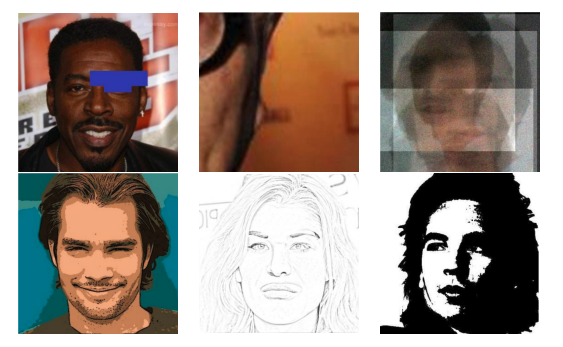
They employed both online data augmentation and offline sample generation, deliberately increasing the diversity of images the network learns from. Online augmentation involved applying random transformations, such as flips, rotations, and contrast adjustments, directly to existing images during the training process. Beyond this, the team proactively generated new training samples, simulating a wide range of deepfake techniques. This included methods like randomly erasing facial regions, cropping specific areas, and even cartoonizing images, effectively exposing the network to a broader spectrum of potential forgeries. Finally, the team incorporated post-processing steps using established tools like Dlib and OpenCV to refine the network’s predictions. A key innovation of this approach is the creation of a diverse and challenging training dataset. Beyond using existing datasets, the team generated new training samples by applying a range of transformations to images, including random cropping, cartoonization, and sketching. This process effectively exposes the detection system to a wider variety of deepfake techniques, enhancing its ability to generalize and identify previously unseen manipulations.
The system achieves impressive performance with approximately 86
The system achieves impressive performance with approximately 86. 89 million model parameters and an inference speed of 39. 215 frames per second on specialized hardware. This combination of accuracy and speed makes it suitable for real-world applications where timely detection is crucial. Furthermore, the team incorporated post-processing steps, combining the neural network’s output with established face detection tools, to refine the confidence levels of its predictions and improve overall reliability. The research demonstrates a two-stage training strategy, beginning with a model pre-trained on a large image dataset and then fine-tuned using both existing and newly generated training samples. This approach, combined with a carefully tuned optimization process, contributes to the system’s robust performance and ability to accurately identify deepfakes across a range of techniques.
The team successfully developed a deepfake image detection system, achieving recognition in a competitive setting. The results demonstrate the potential of this approach to address the growing challenge of deepfake technology and its implications for digital security. This research highlights the increasing sophistication of deepfake technology and the need for robust detection methods. While the system achieved notable performance, the authors acknowledge the ongoing nature of this technological arms race, with deepfakes continually becoming more realistic. Future work should focus on continued refinement of algorithms and models, alongside interdisciplinary collaboration and strengthened legal frameworks, to build a more secure and trustworthy digital environment.
👉 More information🗞Data-Driven Deepfake Image Detection Method —
🗞 Data-Driven Deepfake Image Detection Method — The 2024 Global Deepfake Image Detection Challenge
🧠 ArXiv: https://arxiv.org/abs/2508.11464