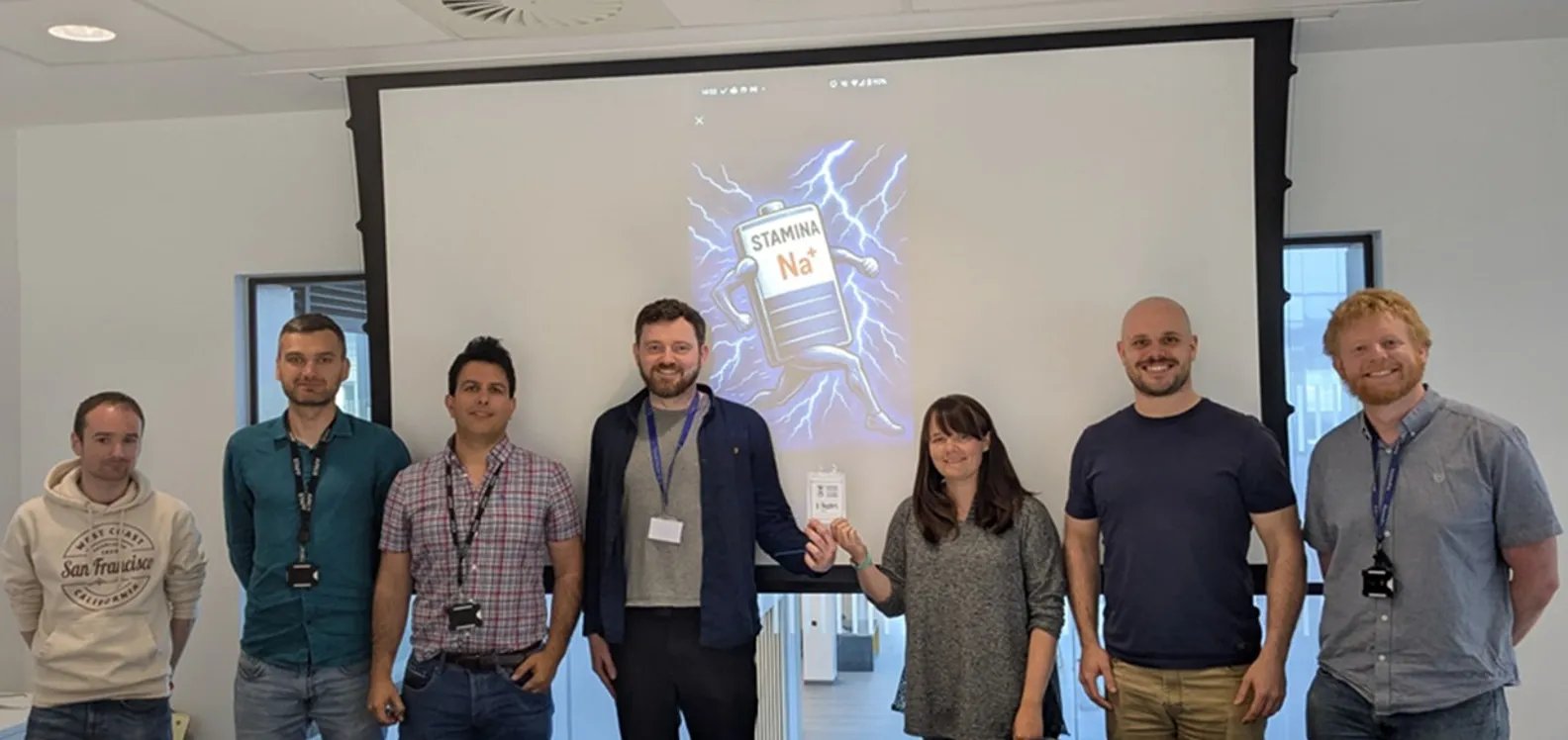
A research collaboration led by Swansea University has secured funding to develop sodium-ion battery (SIB) technology for e-mobility applications in Sub-Saharan Africa. The StamiNa project, partnering with institutions in the UK, Kenya, and Nigeria, will refine SIB production utilising Prussian White cathodes and coal-derived hard carbon anodes, aiming to exceed the energy density of current SIBs and compete with lithium iron phosphate (LFP) performance. The initiative will scale production, validate cell performance via field testing of e-bikes in Kenya, and assess the technology’s cost, supply chain feasibility, and recyclability, with the goal of establishing a locally-led energy storage ecosystem.
Sodium-Ion Battery Development in Sub-Saharan Africa
The StamiNa project, a collaborative research initiative, has received funding to develop and implement sodium-ion battery (SIB) technology in Sub-Saharan Africa as part of the Ayrton Challenge on Energy Storage (ACES) R&D programme. Led by Swansea University in partnership with multiple institutions, the project aims to optimise and validate battery systems to improve performance and facilitate commercial viability. Professor Serena Margadonna of Swansea University highlighted the project’s commitment to delivering locally sourced, environmentally responsible solutions and fostering an African-led battery ecosystem with a local supply chain.
Sodium-ion batteries are being investigated as an alternative to lithium iron phosphate (LFP) batteries for electric mobility applications within Sub-Saharan Africa, specifically addressing potential advantages in transport logistics and supply chain security. Batri Ltd and Swansea University have jointly developed a SIB technology utilising Prussian White cathodes and coal-derived hard carbon anodes, which is predicted to exceed the energy density of currently available SIBs and compete with LFP performance. The production of Prussian White is notable as it is synthesised in water under mild conditions and does not require nickel or cobalt, potentially enabling an energy-efficient production process and establishing local supply chains.
The StamiNa project includes objectives focused on scaling up the production of active materials and refining electrode fabrication and cell assembly processes at Coventry University, encompassing both multilayer pouch cells and 18650 cylindrical cells. Performance validation will occur through field testing of e-bikes at Strathmore University in Kenya, while the Federal University of Technology Owerri in Nigeria will evaluate pack performance and compare data against LFP and existing SIB alternatives. A comprehensive assessment of cost, supply chain feasibility, recyclability, and overall sustainability of the SIB technology for the Sub-Saharan e-mobility market is also central to the project’s aims, seeking to accelerate commercialisation and establish a sustainable energy storage ecosystem.
Project Objectives and Technological Approach
The StamiNa project encompasses several key objectives beyond materials development and cell fabrication, including a thorough evaluation of the technology’s broader implications. These objectives include assessing the cost, supply chain feasibility, recyclability, and overall sustainability of the sodium-ion battery technology specifically for the Sub-Saharan e-mobility market. This detailed assessment aims to support the acceleration of commercialisation efforts and the establishment of a sustainable, African-led energy storage ecosystem.
The project’s validation strategy involves real-world performance testing in East Africa, with field trials of e-bikes being conducted at Strathmore University in Kenya. Simultaneously, the Federal University of Technology Owerri in Nigeria will evaluate the performance of assembled battery packs, comparing the data obtained with that of lithium iron phosphate (LFP) batteries and existing sodium-ion battery alternatives. This comparative analysis is intended to provide a comprehensive understanding of the sodium-ion battery’s capabilities within the regional context.
This initiative seeks to not only advance battery technology but also to establish a sustainable, African-led energy storage ecosystem, supporting both clean mobility initiatives and broader electrification efforts across Sub-Saharan Africa. The project’s focus on locally sourced solutions and local supply chains is integral to this goal, aiming to deliver environmentally responsible technologies accessible to all.
Establishing a Sustainable African Energy Storage Ecosystem
The StamiNa project’s objectives extend to scaling up the production of active materials and refining electrode fabrication and cell assembly processes at Coventry University, encompassing both multilayer pouch cells and 18650 cylindrical cells. This work will be complemented by demonstrating and validating cell performance in real-world applications through field testing of e-bikes at Strathmore University in Kenya.
Evaluation of pack performance will be undertaken at the Federal University of Technology Owerri in Nigeria, with resultant data being compared to both LFP and existing SIB alternatives to establish performance benchmarks. Furthermore, the project will assess the cost, supply chain feasibility, recyclability, and overall sustainability of the SIB technology specifically for the Sub-Saharan e-mobility market.
This initiative seeks to accelerate the commercialisation of UK SIB technology and establish a sustainable, African-led energy storage ecosystem supporting clean mobility and broader electrification efforts across the region.
More information
External Link: Click Here For More