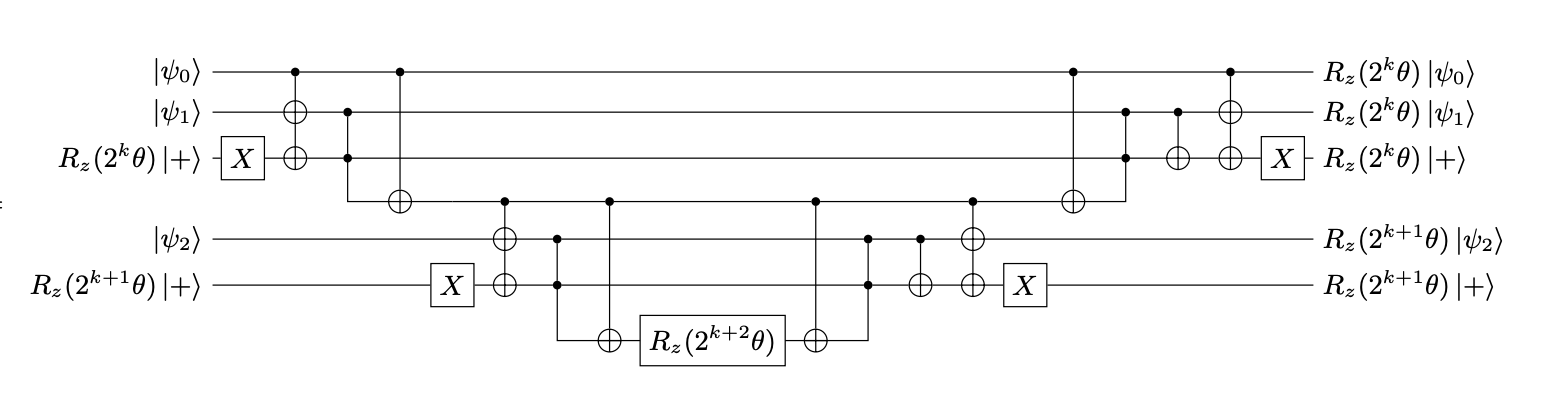
Implementing continuous rotation gates presents a major challenge for building practical quantum computers, and researchers are actively seeking ways to overcome this hurdle. Zhu Sun from Quantum Motion and the University of Oxford, along with Bálint Koczor and colleagues, investigate the trade-offs between computational time and the resources required to perform these rotations within a surface code architecture. Their work directly addresses the question of how to most efficiently implement continuous rotations, considering not just the number of operations, but also the total space and time needed for computation. The team demonstrates that a technique called catalyst towers can reduce both runtime and the overall ‘spacetime volume’ of rotations at smaller code distances, potentially offering significant advantages for early fault-tolerant applications where circuits are run repeatedly, although conventional methods may become more efficient as code distances increase. This analysis provides valuable insight into optimising quantum algorithms for near-term quantum devices.
This work addresses how to most efficiently implement these rotations within a surface code architecture. To explore this, the researchers explicitly constructed surface code layouts for specific examples within the context of option pricing.
Variational Algorithms and Resource Optimisation
Quantum computing research increasingly focuses on making fault-tolerant quantum computers practical, optimising quantum circuits to reduce the number of qubits and operations needed for applications in chemistry, materials science, and finance. A key goal is to achieve near-term quantum advantage, demonstrating a speedup over classical algorithms with current quantum hardware. Surface codes are a leading candidate for fault-tolerant quantum computation, and techniques like lattice surgery refine these layouts to minimise qubit requirements. Creating the necessary non-Clifford gates relies on magic state factories, and efficient production of these states is crucial.
The AutoCCZ technique offers a way to implement complex gates with reduced overhead. Research also focuses on improving the training of variational quantum algorithms (VQAs), including methods to address the barren plateau problem, where gradients vanish during training. VQAs have potential in quantum chemistry, materials science, and finance, with techniques like shadow spectroscopy to improve accuracy. Quantum simulation methods aim to efficiently model quantum systems. Hamiltonian simulation is fundamental to many algorithms, while random compilation and spectrum amplification reduce complexity.
Optimising circuits involves gate decomposition, linear circuit complexity, and mapping circuits onto physical qubit architectures. Repetition codes improve reliability. Specific algorithms like phase estimation, iterative quantum amplitude estimation, and randomised time evolution are also being refined.
Catalyst Towers Improve Quantum Rotation Gates
Researchers are exploring more efficient ways to implement complex calculations on fault-tolerant quantum computers, with a particular focus on continuous rotation gates, which currently represent a significant bottleneck. Their work investigates the best approach for performing these rotations within a surface code architecture, a leading candidate for building practical quantum computers. The results demonstrate that catalyst towers can offer substantial advantages, particularly for near-term applications where the size of the quantum computer is limited. For smaller and medium-sized quantum computations, catalyst towers not only reduce the time required for a calculation but also minimise the overall space needed, a crucial factor when resources are scarce.
This is achieved by strategically arranging quantum operations in a layered structure, optimising the flow of information and reducing the number of qubits required to store intermediate results. Specifically, the team found that by using catalyst towers, they could reduce the number of qubits needed for a particular financial modelling calculation compared to traditional methods. However, the study also reveals that the benefits of catalyst towers diminish as the size of the quantum computer increases. For very large computations, conventional methods of combining basic operations may ultimately prove more efficient.
This suggests that the optimal approach depends on the specific application and the scale of the problem being solved. The team’s analysis indicates a trade-off between runtime and the overall space required, highlighting the importance of considering both factors when designing quantum algorithms. Importantly, the researchers developed a novel method for arranging the necessary quantum operations within the catalyst towers, maximising efficiency and minimising the need for complex routing of qubits. This arrangement allows for parallel processing of information, further reducing the time required to perform calculations. The team’s findings are particularly relevant for applications requiring a high number of repeated calculations, such as complex financial modelling or machine learning, where even small improvements in efficiency can have a significant impact.
Catalyst Towers Optimise Quantum Rotation Efficiency
This research investigates efficient methods for implementing continuous rotations within fault-tolerant quantum computers, a critical challenge due to the complexity of these operations. The study focuses on catalyst towers, a technique that uses pre-prepared resource states to perform rotations in parallel, potentially reducing the overall runtime of quantum algorithms. Results demonstrate that, at smaller and medium code distances, catalyst towers can not only decrease the time required for rotations but also reduce the total spacetime volume needed, effectively optimising resource usage. The analysis reveals a trade-off between code distance and efficiency; while catalyst towers prove beneficial at lower code distances, conventional methods for synthesising rotations may become more efficient as code distances increase.
The authors acknowledge that the optimal approach is sensitive to the specific application and chosen parameters. However, catalyst towers appear particularly promising for early applications of fault-tolerant quantum computing, where lower code distances are typical and a reduction in runtime is crucial, especially when algorithms require many repeated circuit runs. Future work will likely focus on refining these techniques and exploring their performance across a wider range of quantum algorithms and hardware architectures.
🗞 Space and Time Cost of Continuous Rotations in Surface Codes
🧠 ArXiv: https://arxiv.org/abs/2508.06236