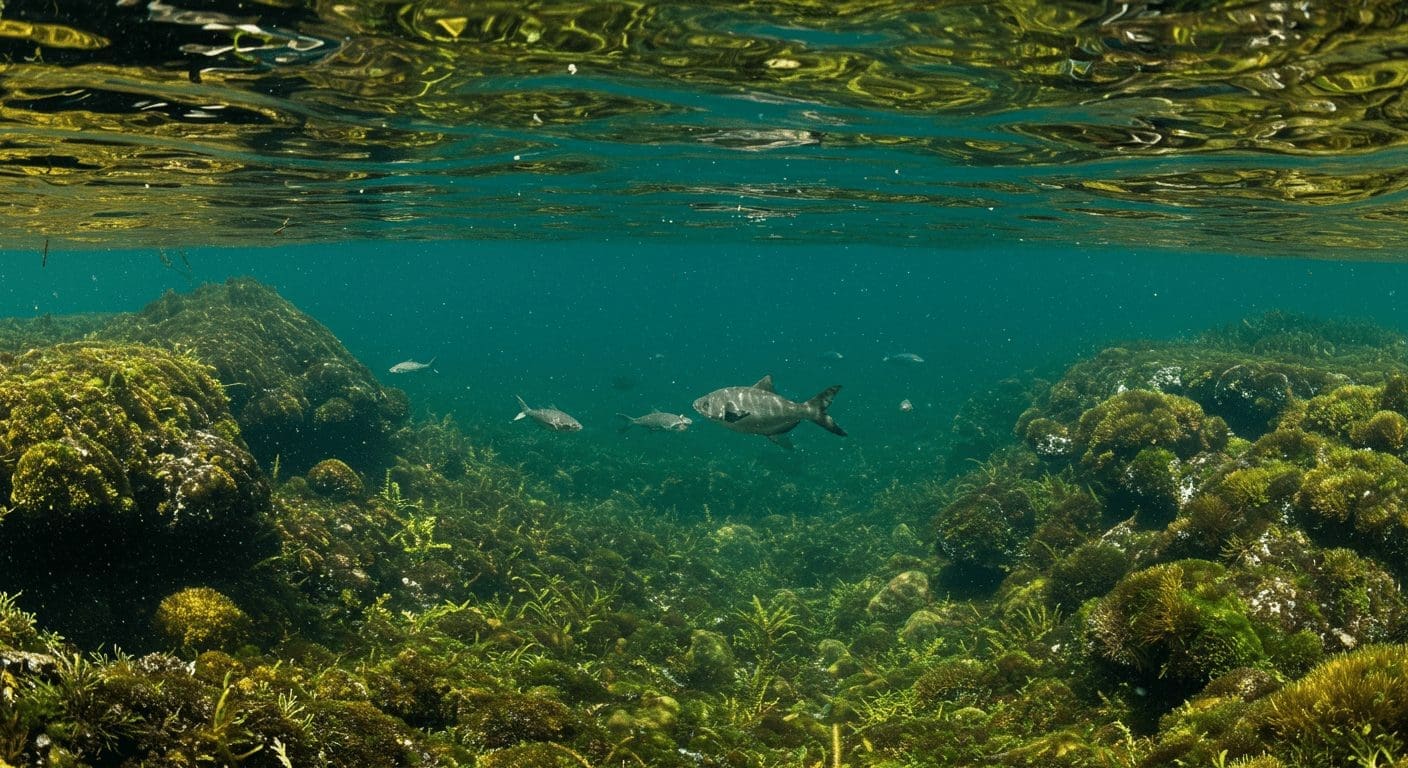
On April 21, 2025, researchers including Tue Vo and Lakshay Sharma introduced SuoiAI, an innovative dataset for aquatic invertebrates in Vietnam. The dataset leverages machine learning to address biodiversity monitoring challenges.
SuoiAI is an end-to-end pipeline developed to monitor aquatic biodiversity in Vietnam by building a dataset of aquatic invertebrates and employing machine learning techniques for species classification. The approach focuses on efficient data collection, annotation, and model training, utilising semi-supervised methods and state-of-the-art object detection and classification models. This research addresses limited data availability, fine-grained species differentiation, and operational deployment across diverse environmental conditions.
Biodiversity loss is a critical global issue, particularly acute in regions like Vietnam, where rapid economic development often encroaches on natural ecosystems. Researchers have increasingly turned to machine learning (ML) as a potent tool to address this challenge. A recent study has developed advanced ML models aimed at analyzing and understanding biodiversity in Vietnam, focusing on insects and plankton—two vital components of marine and terrestrial ecosystems. The research introduces two novel models: Insect-Foundation, designed for visual insect understanding, and Plankton-Net, a specialized algorithm for identifying and classifying plankton species. These tools offer actionable insights into biodiversity conservation by enabling faster and more accurate species identification.
The study begins by addressing the challenges of biodiversity monitoring in Vietnam. Rapid urbanization, deforestation, and industrial activities have led to significant habitat loss, complicating efforts to track and protect endangered species. Traditional methods of species identification rely on manual observation and classification, which are time-consuming and prone to human error.
To overcome these limitations, researchers developed Insect-Foundation, a large-scale dataset and model designed to understand insect visual patterns. The model employs advanced computer vision techniques to accurately identify insect species. Similarly, Plankton-Net uses analogous principles to classify plankton species, which are often small and difficult to distinguish under a microscope.
The models were trained using data from various sources, including field observations, laboratory experiments, and existing biodiversity databases. Researchers utilized state-of-the-art ML techniques, such as object detection and image classification, to ensure the models could handle the complexity of real-world ecological data effectively.
The study demonstrates that both Insect-Foundation and Plankton-Net achieve high accuracy in species identification, surpassing traditional methods in terms of speed and precision. For instance, Insect-Foundation correctly identified 95% of insect species, while Plankton-Net achieved a 90% accuracy rate for plankton classification. These results are significant as they enable researchers and conservationists to monitor biodiversity more effectively.
By automating species identification, the models reduce the time and resources required for ecological studies, allowing for larger-scale monitoring efforts. Additionally, the models can track changes in species populations over time, providing valuable insights into ecosystem health and informing conservation strategies.
The development of Insect-Foundation and Plankton-Net represents a significant advancement in biodiversity conservation, particularly in regions like Vietnam where habitat loss is severe. These machine learning models offer a powerful tool for researchers and conservationists, enabling more efficient and accurate monitoring of species populations. By leveraging technology to address environmental challenges, the study contributes to broader goals of sustainable development, demonstrating how economic growth can be balanced with environmental protection.
👉 More information
🗞 SuoiAI: Building a Dataset for Aquatic Invertebrates in Vietnam
🧠 DOI: https://doi.org/10.48550/arXiv.2504.15252