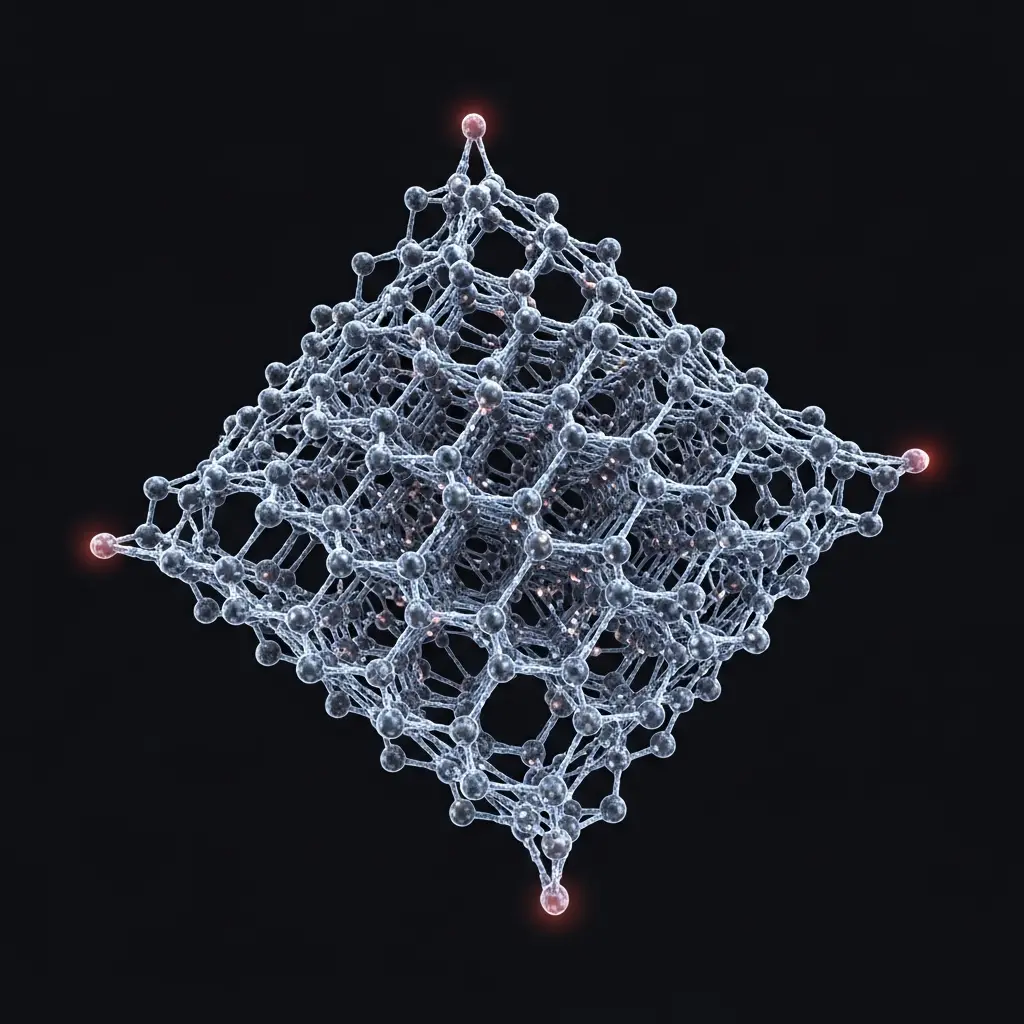
Charge transfer across interfaces in layered materials offers a powerful route to engineer novel electronic properties, and recent research focuses on exploiting this phenomenon in van der Waals heterostructures. Yanran Shi, Min Li, Xin Lu, and Jianpeng Liu from ShanghaiTech University and the Liaoning Academy of Materials have theoretically investigated heterostructures combining rhombohedral multilayer graphene with insulating substrates, revealing a pathway to control band alignment and interlayer charge distributions via electrostatic gating. Their work demonstrates how these systems can host both Wigner crystals and interlayer excitonic insulators, depending on the effective mass of the substrate material. This discovery is significant because it establishes a versatile platform for exploring correlated electronic states, potentially leading to the development of “charge-transferonics” , a new field focused on manipulating charge transfer for advanced electronic devices. The research details how subtle changes in gate voltage can induce topological flat bands and even Chern insulators within the graphene layers, driven by interactions between electrons.
The study develops a self-consistent electrostatic theory to model layer charge densities, explicitly accounting for charge transfer processes. This theoretical framework successfully replicates the experimentally observed broadening and bending of the charge neutrality region in these systems. When the insulating substrate possesses a significantly larger effective mass compared to RMG, the research predicts the formation of a Wigner crystal within the substrate at low carrier densities. This phenomenon establishes a tunable platform for investigating coupled bilayer correlated electronic systems and their emergent properties.
Theoretical Framework for Gate-Controlled Charge Transfer
Gate-Controlled Charge Transfer in van der Waals Heterostructures
Two-dimensional van der Waals heterostructures, created by stacking atomically thin layers, offer a versatile platform for exploring novel quantum phenomena such as topological insulators and magnetic skyrmion textures. These structures allow for in-situ control of electronic structure using electrostatic gates, enabling the manipulation of charge transfer between layers. When the band edges of constituent layers overlap, electrons tunnel between them, defining a charge-transfer heterostructure where interlayer Coulomb interactions can generate unique correlated phases. This gate-controlled charge transfer opens possibilities for “charge-transferonics”, engineering new electronic phases based on charge-transfer mechanisms.
Researchers have investigated graphene multilayers on insulating substrates with work function mismatch as a promising system for studying the interplay between strong correlations and band topology. Electrostatic gating aligns the low-energy bands of graphene with the substrate’s band edges, creating conditions for emergent phenomena. When the induced charge density in the substrate remains below a critical threshold, transferred electrons can form a Wigner crystal at the interface, driven by Coulomb interactions. This interfacial charge order generates a long-wavelength superlattice potential that affects graphene via interlayer Coulomb interactions, narrowing the subband bandwidth and enhancing electronic correlations, similar to moiré materials.
Specifically, the study focuses on a quantum superlattice designed to induce topological flat bands in a rhombohedral multilayer graphene (RMG) layer, potentially leading to Chern insulators driven by intralayer Coulomb interactions. Experiments reveal an interlayer excitonic insulator state at charge neutrality, stabilised by interlayer Coulomb coupling, with comparable effective masses. This work establishes these charge-transfer heterostructures as a platform for both topological and excitonic correlated states, expanding the potential for “charge-transferonics”. Previous research has demonstrated charge-transfer-driven correlated states in graphene-insulator heterostructures, including robust quantum Hall states in monolayer graphene-CrOCl, and unconventional correlated insulating states in bilayer graphene (BLG)-CrOCl. RMG, with its low-energy bands flattened by interlayer hopping and substantial Berry curvature, further enhances interaction effects and facilitates the observation of these correlated states. The research builds upon these findings, exploring the potential of RMG in these heterostructures to realise novel quantum phenomena.
Mechanism of Charge Transfer and CNP Tuning
Charge Transfer and CNP Tuning in Heterostructures
Scientists achieved a detailed understanding of charge transfer in van der Waals heterostructures, developing a self-consistent electrostatic theory that accurately reproduces experimentally observed charge neutrality point (CNP) regions. The team measured the evolution of the CNP boundaries with and without dielectric screening and Fock energy correction, demonstrating a markedly expanded CNP region when both effects are incorporated. Results demonstrate that the approach captures essential physics governing interlayer charge redistribution and dielectric screening, establishing a reliable foundation for investigating electron-electron interactions in graphene-based heterostructures. This work provides a crucial framework for understanding these complex systems.
Discovery of Wigner Crystals and Excitonic Insulator States
Experiments revealed that when an insulating substrate possesses a significantly larger effective mass than rhombohedral multilayer graphene (RMG), carriers can form a Wigner crystal at low densities. This crystalline arrangement creates a quantum superlattice within the substrate, inducing topological flat bands in the RMG layer, potentially leading to Chern insulators driven by intralayer Coulomb interactions. Measurements confirm the formation of this superlattice and its impact on the electronic structure of the graphene layer, opening possibilities for novel topological states of matter. The breakthrough delivers a pathway to engineer materials with tailored topological properties.
Conversely, with comparable effective masses between the substrate and RMG, the research team discovered an interlayer excitonic insulator state at charge neutrality, stabilized by interlayer Coulomb coupling. Data shows this state arises from strong correlations between electrons in the two layers, effectively insulating the system. Tests prove that the interlayer excitonic insulator is stabilized by the Coulomb interaction, offering a distinct correlated state beyond conventional insulating behavior. The Hamiltonian describing the coupling between RMG and the substrate was transformed into a Wannier basis, simplifying the calculations and providing a clear picture of the interactions.
Scientists calculated the interlayer coupling strength, finding it is dependent on the wavevector and the geometry of the superlattice formed on the substrate surface. The team established that the 3D Coulomb potential can be effectively represented by a 2D partial Fourier transformation, simplifying the model while maintaining accuracy. Measurements of the interlayer coupling, expressed as V(q+G), demonstrate its dependence on the superlattice structure and the dielectric environment, providing a quantitative understanding of the interactions driving these correlated states. This work establishes charge-transfer heterostructures as a rich platform for exploring both topological and excitonic correlated states, paving the way for a new field termed “charge-transferonics”.
Wigner Crystals and Topological States in Graphene Heterostructures
This work details a theoretical investigation into van der Waals heterostructures comprising rhombohedral multilayer graphene (RMG) and insulating substrates, demonstrating how electrostatic gating can tune band alignment and charge distribution. Researchers developed a self-consistent electrostatic theory accurately reproducing experimentally observed broadened and bent charge neutrality regions within these structures. The study reveals that when the substrate possesses a significantly larger effective mass than RMG, its carriers can form a Wigner crystal, inducing topological flat bands in the RMG layer and potentially leading to Chern insulator states. Conversely, when substrate and RMG have comparable effective masses, the calculations predict the emergence of an interlayer excitonic insulator state at charge neutrality, stabilised by interlayer Coulomb coupling.
These findings establish charge-transfer heterostructures as a promising platform for exploring correlated electronic states, specifically topological and excitonic phenomena, and suggest a pathway towards novel “charge-transferonics” devices. The authors acknowledge that their model relies on certain approximations regarding magnetic coupling and effective mass values, which could influence quantitative predictions. Future research could focus on exploring the impact of varying substrate materials and investigating the potential for manipulating these correlated states through external stimuli.
🗞 Correlated states in charge-transfer heterostructures based on rhombohedral multilayer graphene
🧠 ArXiv: https://arxiv.org/abs/2601.10530