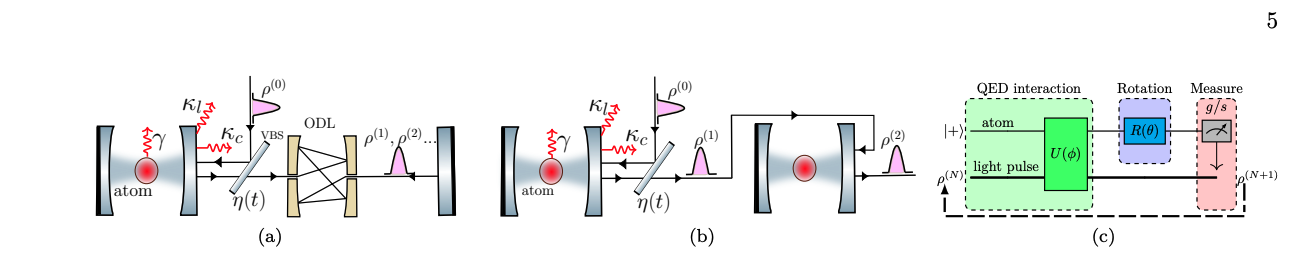
Generating light pulses containing a precisely defined number of photons, known as Fock states, remains a significant challenge in quantum optics, yet holds immense potential for advanced technologies. G. P. Teja, Chandan Kumar from The Institute of Mathematical Sciences, and Lukáš Lachman, along with Radim Filip from Palacký University, present a new theoretical framework demonstrating how to reliably create and manipulate these states, extending previous methods to achieve Fock states containing up to ten photons. Their work conclusively predicts a filtering protocol, utilising the interaction between light and matter within a high-quality cavity, that not only generates these states with a high success rate, but also prepares superpositions of them, a crucial step towards complex quantum computations. This research establishes essential criteria for utilising optical cavities to outperform conventional photon detection methods, paving the way for applications ranging from enhanced sensing of minute forces and noise to improved quantum communication networks.
Squeezed Light for Enhanced Phase Sensing
This collection of appendices provides the mathematical foundation for a research project focused on generating and characterizing non-classical states of light, specifically squeezed coherent states, for use in quantum sensing, particularly phase sensing. The authors explore how to optimize these states and measurement strategies to achieve the highest possible precision in estimating a phase shift, detailing the mathematical calculations behind state preparation, evolution, measurement, and key performance indicators like Fisher information. Appendices define the mathematical representation of squeezed coherent states, utilizing concepts like displacement and squeezing operators, and employing Hermite polynomials to expand states in terms of Fock states. The framework for calculating the precision of phase estimation is also defined, utilizing quantum Fisher information to represent the maximum achievable precision.
Appendices analyze the effect of dephasing noise on the phase sensing scheme, utilizing the Lindblad master equation to describe how open quantum systems evolve. Understanding and accounting for noise is crucial for building practical quantum sensors, and the calculation of Fisher information allows quantification of precision and comparison of different states and strategies. This research contributes to the field of quantum metrology, demonstrating the potential for highly sensitive phase sensing with applications in gravitational wave detection, biomedical imaging, precision spectroscopy, and quantum communication.
Fock State Generation via Cavity Filtering
Scientists have developed a novel method for generating and manipulating Fock states of light, overcoming the limitations of traditional techniques. This new approach utilizes the interaction between light and matter within a high-quality cavity, offering a viable alternative for generating Fock states containing more than three photons. The team successfully predicts the generation of states containing up to ten photons with a success rate of 20%, verified using quantum non-Gaussian criteria, and demonstrates the preparation of superposition states of Fock states, up to two photons, with a high success rate of 50% and provable quantum non-Gaussian coherence. The method achieves deterministic generation of non-Gaussian states by harnessing the strong interaction between light and atoms within the cavity, unlike heralded methods which rely on probabilistic triggering.
Researchers rigorously tested the generated states using hierarchical criteria to confirm their non-Gaussian character, ensuring their suitability for advanced quantum technologies. This innovative approach overcomes limitations in detector sensitivity and efficiency, paving the way for more complex quantum states and applications in quantum sensing, error correction, and advanced quantum computing. To assess the practical utility of these states, the team evaluated their robustness, bunching capability within a linear network, and sensing capabilities for estimating unknown forces, noise, and phase, demonstrating that optical cavity quantum electrodynamics can outperform conventional photon detection methods in specific applications.
Ten-Photon Fock States and Superpositions Demonstrated
Scientists have achieved a significant breakthrough in generating and manipulating high-Fock states of light, demonstrating the creation of states containing up to ten photons with a high degree of success. This research overcomes longstanding challenges in producing these non-Gaussian states, which are crucial for advancing quantum technologies beyond the capabilities of classical light sources. Experiments reveal the ability to not only create these Fock states, but also to prepare superpositions of them, up to two photons, with provable non-Gaussian coherence, demonstrated through a novel filtering protocol combining optical cavity interaction with carefully designed optical delay elements. Researchers have established a robust method for certifying the genuine non-Gaussian nature of these states, using a hierarchy of criteria that confirms their quantum properties.
To assess the practical utility of these states, the team evaluated their robustness against photon loss, finding that the generated states maintain their non-Gaussian characteristics even with significant attenuation. They demonstrated the ability to tolerate loss while preserving quantum non-Gaussian features, a critical factor for real-world applications, and confirmed the “bunching capability” of these Fock states, meaning multiple states can combine to form higher-order states. The findings demonstrate that these filtered Fock states outperform traditional photon detection methods, opening new avenues for quantum sensing and computation, and enabling more precise estimation of unknown forces, noise, and phase. The research establishes a threshold for high Fock state generation and confirms the feasibility of these states for use in quantum error correction and quantum computing, conclusively demonstrating the potential of optical cavity QED interaction to generate and manipulate light pulses for advanced quantum technologies.
Fock State Generation via Cavity Filtration
This research demonstrates a promising method for generating non-Gaussian states of light using a cavity-QED filtration protocol, achieving a success rate of 20%, which is notably higher than conventional techniques. The study successfully filters light pulses into Fock states, up to ten photons, while maintaining high-quality photon number statistics and assessing the resulting states using multiple criteria for non-Gaussian character, and enables the creation of superpositions of Fock states, up to two photons, with coherence approaching ideal values. The findings suggest this cavity-QED approach offers advantages for applications in quantum communication, sensing, and potentially quantum computing, particularly where high-quality, non-Gaussian light sources are required. Assessments of the filtered states reveal strong bunching capability and high Fisher information, indicating suitability for precise measurements of optical displacement and squeezing. While the filtration process has inherent limitations in adjusting state coefficients, the research lays the groundwork for future experimental verification and potential extension to more complex quantum states.
👉 More information
🗞 Quantum non-Gaussian high Fock states of light pulses and their superpositions
🧠 ArXiv: https://arxiv.org/abs/2509.04891