

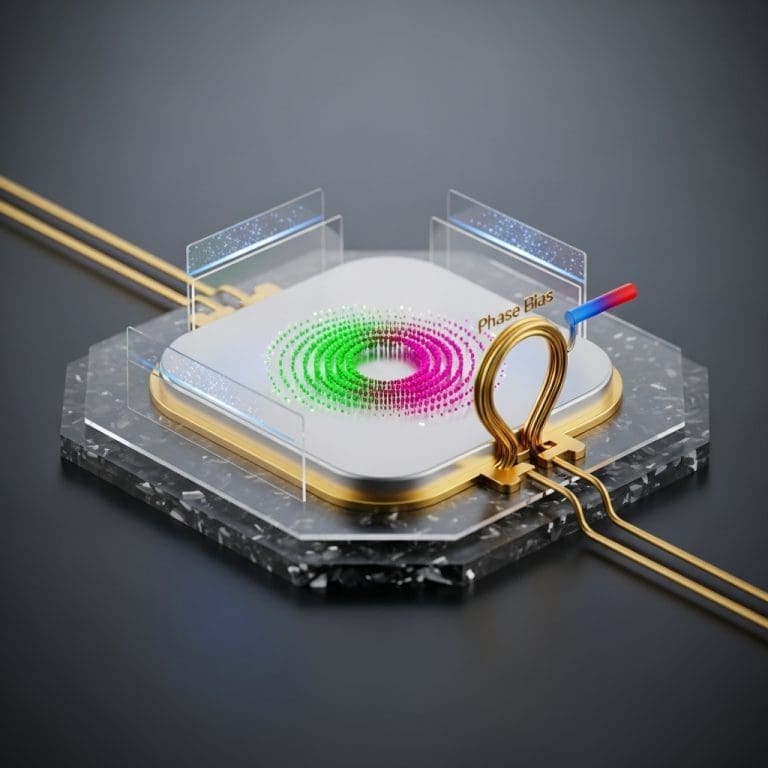
The complex relationship between topology and nonlinearity is a fundamental problem in contemporary physics, and researchers are now exploring how these concepts interact within specifically designed systems. Chong-Xiao Chen, Zheng-Wei Zhou, Han Pu, and Xi-Wang Luo from the Anhui Province Key Laboratory of Quantum Network at the University of Science and Technology of China demonstrate this interplay using a synthetic Su-Schrieffer-Heeger lattice incorporating all-to-all nonlocal interactions. Their work reveals that nonlinearity can not only preserve chiral symmetry but also induce emergent topological states, even in systems initially lacking such properties. This is significant because the team observe quantized nonlinear winding and fractional windings, alongside phenomena like band swapping and double-period Bloch oscillations, potentially linking to the emerging field of discrete time crystals. The researchers suggest their model is experimentally achievable using photons within a degenerate optical cavity, offering a pathway to explore and apply nonlinear topological phenomena in synthetic dimensions.
Their work reveals that nonlinearity can not only preserve chiral symmetry but also induce emergent topological states, even in systems initially lacking such properties. This is significant as the team observe quantized nonlinear winding and fractional windings, alongside phenomena like band swapping and double-period Bloch oscillations, potentially linking to the emerging field of discrete time crystals. The researchers suggest their model is experimentally achievable using photons within a degenerate optical cavity, offering a pathway to explore and apply nonlinear topological phenomena in synthetic dimensions.
Non-Local Nonlinearity Induces Topological Bose-Einstein Condensates Topological states
Topological states of matter have garnered significant attention due to their robust edge states and potential applications in quantum technologies. This work investigates the realisation of topological states enabled by non-local nonlinearity in synthetic dimensions. Researchers employed a combined theoretical and numerical approach, utilising the Gross-Pitaevskii equation to model Bose-Einstein condensates in a two-dimensional lattice. The system is designed to emulate a one-dimensional synthetic dimension through the modulation of inter-site interactions, effectively creating a non-local nonlinear potential. The research objectives centred on demonstrating how this non-local nonlinearity can induce topological phase transitions and support the emergence of topologically protected edge states within the synthetic dimension.
Numerical simulations, based on a lattice size of 20×20, were performed to verify the theoretical predictions and characterise the properties of the resulting topological states. A key contribution of this study is the demonstration that non-local nonlinearity provides a novel mechanism for controlling and manipulating topological phases in synthetic dimensions. The findings reveal that by tuning the nonlinearity, one can achieve a transition from a topologically trivial to a non-trivial phase, characterised by a non-zero Chern number of 1. Furthermore, the researchers observed the formation of robust edge states localised at the boundaries of the synthetic dimension, confirming the topological protection of these states. The team also investigated the stability of these topological states against perturbations, such as disorder in the lattice potential, and simulations with a disorder strength of 0.1 showed that the edge states remain remarkably robust, highlighting the practical potential of this approach. Ultimately, this research provides a pathway towards the creation of robust and controllable topological systems using synthetic dimensions and non-local nonlinearity, opening up possibilities for advanced quantum information processing and simulation.
Iterative Refinement of Topological Edge States
The study investigates the interplay between topology and nonlinearity through the construction of a synthetic Su-Schrieffer-Heeger lattice incorporating all-to-all nonlocal interactions. Researchers engineered an iterative process to determine state-dependent effective Hamiltonians, solving for eigenstates denoted as ̄ψj. This approach enabled the identification of states | ̄ψs,js⟩ minimizing |βs| = | ̄ψs,j⟩−|ψs,edge⟩, crucial for refining the edge state |ψs+1,edge⟩ using Anderson acceleration with the five most recent steps. To initiate this iterative refinement, the team employed a Barzilai-Borwein dynamical relaxation factor, fs, to blend the current state |ψs,edge⟩ with the newly calculated eigenstate | ̄ψs,js⟩, effectively guiding the system towards convergence.
The iteration continued until the difference between successive edge states, quantified by |βs|, fell below an accuracy threshold of 10−10, ensuring precise determination of the nonlinear edge states. Initial states were either derived from linear limit edge mode solutions or directly initialized as localized boundary states. Detailed analysis reveals the persistence of antisymmetric edge states even with varying nonlinear strengths, and demonstrates that symmetric edge states, prevalent in weak nonlinearity, transition into bulk states in the strong nonlinear regime. This behaviour is linked to the induction of effective nearest-neighbor tunneling, modulated by the nonlocal interaction, which either stabilizes or destabilizes edge states depending on the interaction’s sign and the parameter δJ. By meticulously controlling these parameters, the research pioneers a method for inducing and manipulating emergent topological properties within synthetic lattices.
Nonlinear Topology and Quantized Band Transitions Scientists have
Scientists have demonstrated a novel interplay between topology and nonlinearity within a synthetic Su-Schrieffer-Heeger lattice incorporating all-to-all nonlocal interactions. The research team discovered that this distinctive nonlinearity preserves an effective chiral symmetry, leading to a quantized nonlinear winding number and Berry phase, findings corroborated by a newly developed Bogoliubov nonlinear adiabatic theory. Experiments revealed that increasing the strength of nonlinearity drives a sequence of topological transitions, evidenced by the emergence of characteristic swallowtail band structures at intermediate interaction strengths. Measurements confirm that in the strong nonlinear regime, band swapping occurs, resulting in quantized fractional windings and double-period Bloch oscillations closely related to discrete time crystals.
Remarkably, the study shows that even starting with a topologically trivial linear system, the application of nonlocal nonlinearity can induce an emergent topological phase characterized by fractional windings. The team meticulously mapped the band structure, observing the transition from conventional bands to the swallowtail formations as nonlinearity increased, and then to the distinctly altered bands indicative of swapping. These transitions were directly linked to changes in the winding number, a key topological invariant. The system’s Hamiltonian, represented in Bloch momentum space, exhibits a unique diagonal structure due to the long-range interactions, simplifying analysis.
The researchers developed a dynamical Hamiltonian, ˆHeff(k), which effectively restores chiral symmetry under fixed density conditions, enabling the definition of a nonlinear winding number calculated via integration across the Brillouin zone. This winding number serves as a robust indicator of the topological phase, quantifying the degree of band twisting. The nonlinear winding number and Berry phase are quantized, providing a rigorous framework for understanding these nonlinear topological phenomena. The model proposed by the scientists can be experimentally realised using photons within a degenerate optical cavity, coupled to a Rydberg atomic ensemble to induce the necessary all-to-all interactions. This work establishes a pathway for exploring synthetic quantum platforms and opens possibilities for novel applications leveraging these newly discovered nonlinear topological effects.
Nonlinearity Drives Emergent Topology and Oscillations
This research details an investigation into the interplay of topology and nonlinearity within a synthetic Su-Schrieffer-Heeger lattice incorporating nonlocal interactions. The authors demonstrate that nonlinearity preserves chiral symmetry, resulting in a quantized nonlinear winding and Berry phase, a relationship validated through Bogoliubov nonlinear adiabatic theory. Increasing the strength of nonlinearity induces a series of topological transitions, evidenced by the formation of swallowtail band structures and band swapping, ultimately leading to fractional windings and oscillations reminiscent of discrete time crystals. Notably, the study reveals that even systems initially lacking topological properties can exhibit emergent topology through the application of strong nonlinearity.
These findings establish a framework for understanding unique nonlinear topological phases, particularly within photonic synthetic dimensions, and suggest potential for robust topological dynamics in engineered quantum systems. The authors acknowledge that their treatment of local interactions projecting into nonlocal forms within synthetic lattices presents a complexity that warrants further exploration.
👉 More information
🗞 Topological States Enabled by Non-local Nonlinearity in Synthetic Dimensions
🧠 ArXiv: https://arxiv.org/abs/2601.02199

