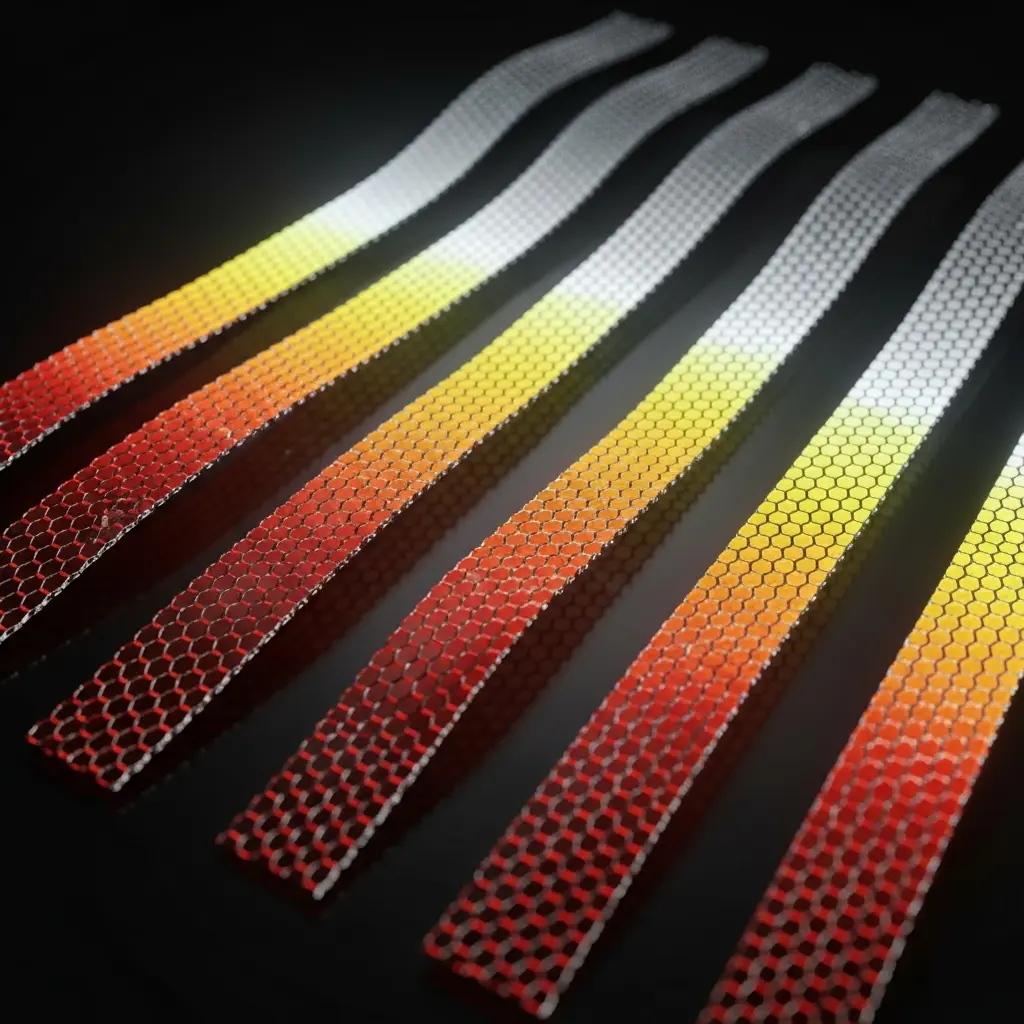
The unique electronic properties of graphene continue to inspire research into novel nanoscale devices, and a team led by David M T Kuo from National Central University, along with colleagues, now demonstrates a pathway to enhanced thermoelectric performance using specifically designed graphene nanoribbon heterostructures. These researchers investigate how combining different types of graphene nanoribbons creates special interface states, which act as building blocks for a ‘topological double quantum dot’. This innovative design allows for greater control over electron flow, and crucially, exhibits significantly improved efficiency in converting thermal energy into electrical power, particularly in conditions where charge carriers are scarce, representing a potential breakthrough for energy harvesting technologies. The team’s work establishes a clear link between the fundamental topological properties of these nanostructures and their ability to generate substantial nonlinear thermoelectric effects, paving the way for more efficient and robust nanoscale power sources.
R2-type unit cells exhibit (NA(B)+1) edge states, while R3-type unit cells also exhibit (NA(B)+1) edge states, with subscripts denoting edge state chirality. The Stark effect lifts degeneracy, enabling spectral separation between edge and interface states. Using a real-space bulk boundary perturbation approach, researchers demonstrate that opposite-chirality states hybridize through junction-site perturbations, potentially shifting out of the bulk gap. The number and chirality of interface states in symmetric heterojunctions are determined by the difference between the outer and central segment edge states, NIF,β = |NO,B(A) −NC,A(B)|, where β labels chirality, resulting in B- or A-chirality depending on relative edge state quantities. Calculated transmission spectra reveal that these heterojunctions host a topological double quantum state.
Graphene and Quantum Dot Thermal Properties
Research has extensively explored the thermal and thermoelectric properties of graphene, quantum dots, and related nanoscale systems. Studies have employed molecular dynamics simulations to investigate thermal conductivity and rectification in graphene nanoribbons, while first-principles calculations have detailed heat transport properties in these structures. Investigations into thermoelectric materials have focused on both general advancements and nanoscale applications, including the exploration of nonlinear thermoelectric transport and its potential for high-efficiency devices.
Researchers have also examined the thermoelectric performance of quantum dot junctions, revealing that increased level degeneracy can significantly enhance efficiency. Further studies have explored the impact of topological insulators and heavy adatoms on graphene-based thermoelectric systems, demonstrating the potential for giant thermoelectric effects. Nonlinear effects, including those arising from single-electron transistors and quantum resonators, are also being investigated as means to improve thermoelectric performance and optimize device characteristics. The Kondo effect in single-electron transistors and silicon double quantum dots has also been a subject of intense study.
Interface States Control in Nanoribbon Heterostructures
This research clarifies the emergence and properties of interface states within specifically designed heterostructures composed of armchair nanoribbons, structures lacking conventional translational symmetry. Scientists established a clear relationship between the end states present in individual nanoribbon segments and the topological interface states that appear when these segments are joined together, creating a novel system. They demonstrated that the number and chirality of these interface states are directly determined by the characteristics of the end states in the constituent ribbons, with the application of an electric field proving crucial in distinguishing between these states.
The team further revealed that these heterostructures can function as a topological double quantum dot when interface states originate from the central nanoribbon segment. Through detailed analysis, including the development of an analytical expression for tunneling current, they showed that these double quantum dots exhibit enhanced thermoelectric performance, specifically increased power output in certain charge states, with Coulomb interactions playing a key role in suppressing thermal current.
🗞 Topological Interface States and Nonlinear Thermoelectric Performance in Armchair Graphene Nanoribbon Heterostructures
🧠 ArXiv: https://arxiv.org/abs/2512.21121