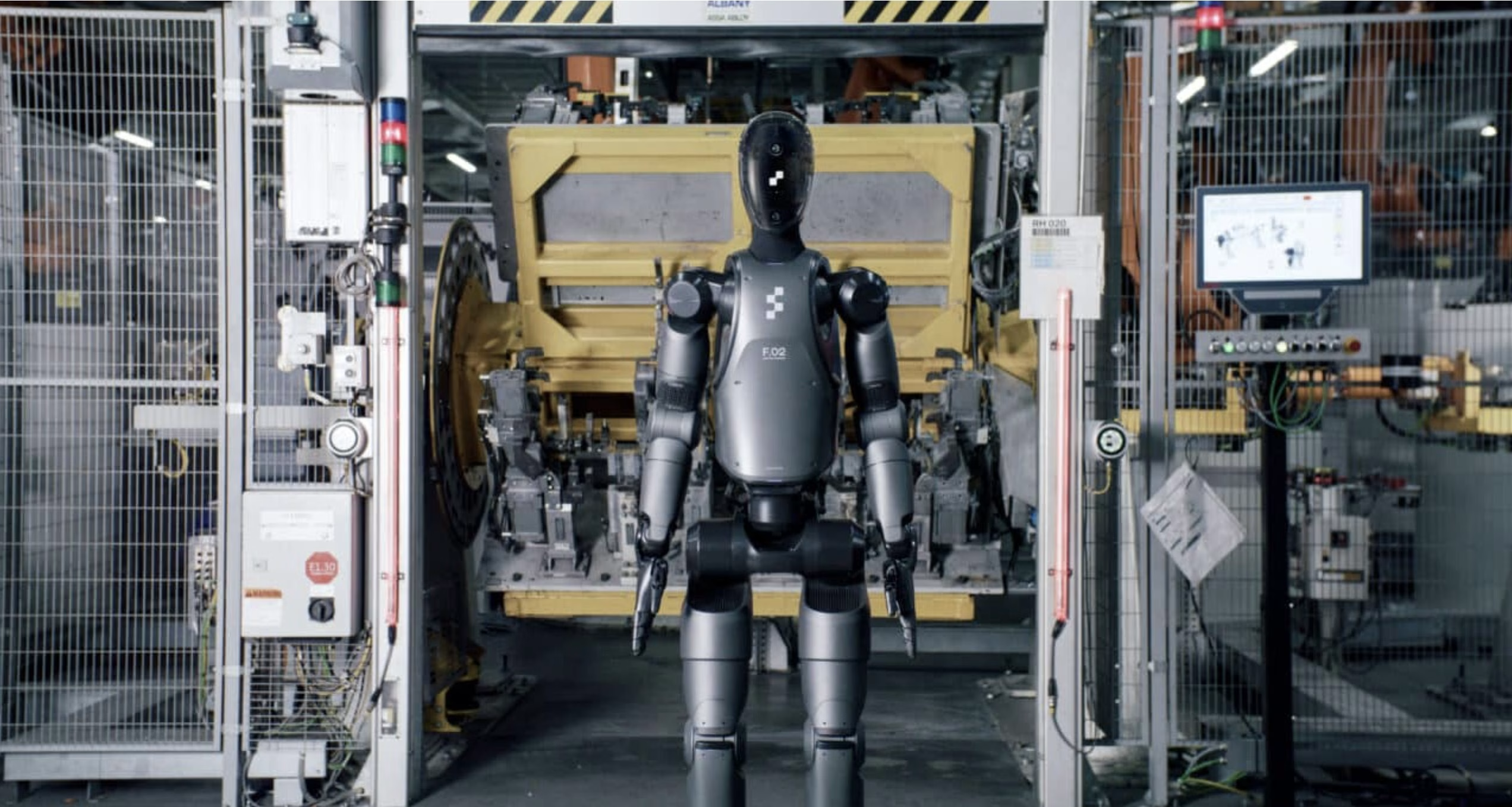
Figure, a Silicon Valley startup, has unveiled its next-generation conversational humanoid robot, Figure 02, which leverages NVIDIA Omniverse and NVIDIA GPUs to perform fully autonomous tasks. The company’s rapid progress in speech, vision, dexterity, and computational power brings it closer to delivering humanoid robots to address labor shortages across various industries. CEO Brett Adcock highlighted the significance of this development, citing advances in AI computing that enable real-time inference for handling complex tasks.
The new robot features a second NVIDIA RTX GPU-based module, providing 3x inference gains compared to its predecessor. Figure aims to commercialize industrial humanoid robots and eventually produce consumer versions. The company has partnered with OpenAI to develop custom AI models trained on NVIDIA H100 GPUs, driving the robots’ conversational AI capabilities. NVIDIA’s Deepu Talla praised Figure’s innovative approach, emphasizing the importance of fusing AI training, simulation, and edge computing to drive innovation in humanoid robotics.
Next-Generation Humanoid Robots: Figure Unveils Autonomous Conversational Robot with Advanced AI Capabilities
Figure, a Silicon Valley-based startup, has recently unveiled its next-generation conversational humanoid robot, Figure 02, which leverages NVIDIA Omniverse and NVIDIA GPUs to enable fully autonomous tasks. This marks a significant milestone in the development of humanoid robots, as Figure 02 boasts advanced AI capabilities, including speech, vision, dexterity, and computational power.
The new robot is designed to address labor shortages in various industries, with plans to commercialize industrial humanoid robots and produce consumer versions. To achieve this goal, Figure has accelerated its development timeline using NVIDIA Isaac Sim, a reference application built on the NVIDIA Omniverse platform. This allows for the design, training, and testing of AI-based robots using synthetic data, as well as the training of generative AI models on NVIDIA GPUs.
The company’s rapid progress is attributed to advances in speech, vision, dexterity, and computational power, bringing it closer to delivering humanoid robots that can address labor shortages. Figure 02 features a second NVIDIA RTX GPU-based module, which provides 3x inference gains for handling fully autonomous real-world AI tasks compared with the robot’s first iteration.
Advanced AI Capabilities: Synthetic Data and Generative Models
Figure 02’s advanced AI capabilities are made possible by its partnership with OpenAI to develop custom AI models trained on NVIDIA H100 GPUs. These models drive the robots’ conversational AI capabilities, enabling them to perform complex tasks autonomously. The use of synthetic data generated in Isaac Sim also enables Figure 02 to perform high-precision pick-and-place tasks required for smart manufacturing applications.
The robot’s new human-scale hands, six RGB cameras, and perception AI models trained with synthetic data generated in Isaac Sim allow it to handle real-world tasks with precision and accuracy. This is a significant step forward in the development of humanoid robots, as it enables them to perform tasks that were previously impossible for robots to accomplish.
NVIDIA Robotics Stack: Enabling Innovation in Humanoid Robotics
Figure’s partnership with NVIDIA has been instrumental in its rapid progress. The company has tapped into the NVIDIA robotics stack, from edge to cloud, to drive innovation in humanoid robotics. This includes early access to the latest tools and computing technologies for humanoid robot development, such as the NVIDIA Humanoid Robot Developer Program.
The program provides Figure with access to the latest releases of NVIDIA Isaac Sim, Isaac Lab, NIM microservices (RoboCasa and MimicGen), OSMO, Jetson Thor, and Project GR00T general-purpose humanoid foundation models. This enables the company to develop autonomous humanoid robots that can perform complex tasks in various industries.
Commercialization and Future Plans
Figure’s plans to commercialize industrial humanoid robots and produce consumer versions mark a significant shift in the robotics industry. The company’s rapid progress is attributed to its partnership with NVIDIA and OpenAI, as well as its innovative approach to developing autonomous humanoid robots.
With $675 million in funding from leading technology companies, including NVIDIA, Figure is well-positioned to drive innovation in humanoid robotics. Its membership in the NVIDIA Inception program for cutting-edge startups further underscores its commitment to pushing the boundaries of what is possible with humanoid robots. As the company continues to advance its technology, it is likely that we will see significant advancements in the field of humanoid robotics in the near future.
External Link: Click Here For More