

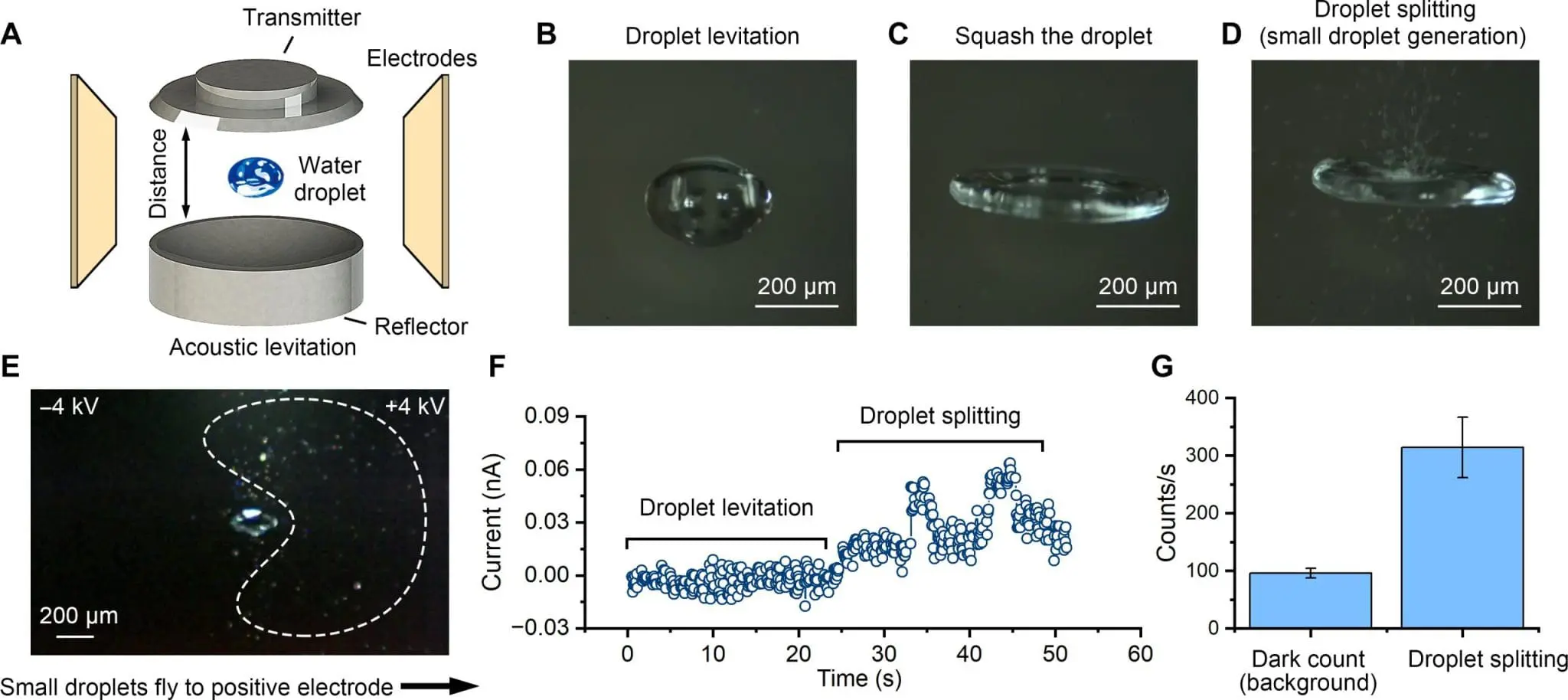
Stanford University researchers propose that microlightning between water droplets from crashing waves or waterfalls could have created organic molecules necessary for life on Earth. This challenges the Miller-Urey hypothesis, which suggested lightning strikes as the origin. Their study in Science Advances shows that water sprays into a gas mixture produce these molecules, including uracil, through tiny electrical discharges.
Microlightning in Water Droplets May Have Sparked Life on Earth
Microlightning, a phenomenon occurring between oppositely charged water droplets, may have played a crucial role in the origin of life on Earth. Unlike traditional lightning strikes, which are infrequent and less likely to sustain chemical reactions over vast oceans, microlightning offers a more plausible mechanism for generating organic molecules essential for life.
Researchers introduced water droplets into a gas mixture simulating Earth’s early atmosphere, containing nitrogen, methane, carbon dioxide, and ammonia in their experimental setup. This environment facilitated the formation of key organic compounds, including uracil, glycine, and hydrogen cyanide, through microlightning-induced chemical reactions. These molecules are critical precursors for nucleic acids and proteins, underscoring the potential role of microlightning in fostering the building blocks of life.
The study challenges previous assumptions about the feasibility of prebiotic synthesis under ancient Earth conditions. By demonstrating that frequent natural events, such as crashing waves or waterfalls, could have generated microlightning, the research explains how continuous chemical reactions might have occurred during early planetary history.
Further exploration into the behavior of microdroplets reveals their capacity to drive significant chemical transformations. This insight advances our understanding of prebiotic chemistry and highlights the unexpected complexity inherent in seemingly simple natural processes, offering new perspectives on the conditions that may have led to life’s emergence.
Richard Zares Research on Water Reactivity
Microlightning, involving energy discharges between oppositely charged water droplets, presents a novel mechanism for prebiotic synthesis. Unlike traditional lightning strikes, which are sporadic and less likely to sustain chemical reactions over large oceanic surfaces, microlightning offers a more consistent source of energy for generating organic molecules essential for life.
In their experimental setup, researchers introduced water droplets into a gas mixture simulating Earth’s early atmosphere. This environment facilitated the formation of key organic compounds, including uracil, glycine, and hydrogen cyanide, through micro lightning-induced chemical reactions. These molecules are critical precursors for nucleic acids and proteins, underscoring the potential role of microlightning in fostering the building blocks of life.
The study challenges previous assumptions about the feasibility of prebiotic synthesis under ancient Earth conditions. The research explains how continuous chemical reactions might have occurred during early planetary history by demonstrating that frequent natural events, such as crashing waves or waterfalls, could have generated microlighting.
Further exploration into the behavior of microdroplets reveals their capacity to drive significant chemical transformations. This insight advances our understanding of prebiotic chemistry. It highlights the unexpected complexity inherent in seemingly simple natural processes, offering new perspectives on the conditions that may have led to life’s emergence.
More information
External Link: Click Here For More


