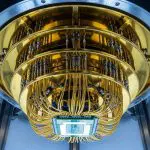
South Korea plans to launch quantum computer-based cloud services and test flights for urban air mobility (UAM) in 2024. The government, under Deputy Prime Minister and Minister of Economy and Finance Choi Sang-mok, aims to open a domestically developed 20-qubit quantum computer cloud service to the private sector.
The goal is to achieve 50 qubits of quantum computer technology by 2026 and scale up to 1,000 qubits by 2032. The government also plans to commercialize UAM by 2025, with fully autonomous vehicles targeted for commercialization by 2027, according to an article by Chosun.
Quantum Computing and Cloud Services in South Korea
South Korea is set to launch cloud services that leverage quantum computers in the latter half of this year. Quantum computers, which utilize the principles of quantum mechanics, are seen as revolutionary tools that could enhance our understanding of natural phenomena that were previously beyond human comprehension. The potential of quantum computers is vast, prompting countries around the globe to invest heavily in the development of quantum computing technology.
On February 14, the South Korean government announced its plan to open a domestically developed 20-qubit quantum computer cloud service to the private sector. Quantum computers are ultra-fast computers that perform complex computations using quantum phenomena, which classical mechanics cannot explain. The government’s goal is to achieve 50 qubits of quantum computer technology by 2026 and to scale up to 1,000 qubits by 2032, as reported by Chosun.
Urban Air Mobility Test Flights
In addition to quantum computing, South Korea is also making strides in urban air mobility (UAM). The government plans to commence test flights for UAM in the capital region in August, as part of its efforts to commercialize the technology. To facilitate this, the government will begin actual verification tests in urban areas and prepare customized regulatory exemptions for these verifications in metropolitan areas.
The government’s plans include conducting tests in various locations such as the Ara Waterway from August this year to March next year, the Han River from April to May next year, and the Tancheon from May to June next year. The government is also working on securing the necessary frequencies for the tests. The ultimate goal is to commercialize fully autonomous vehicles by 2027, with plans to establish safety standards this year and advance the insurance system.
Automation and Unmanned Technology
In line with its push for advanced technology, the South Korean government plans to open the country’s first fully automated port in Busan next month. This port will utilize unmanned container transport technology, marking another significant step in the country’s pursuit of automation and unmanned technology.
Strategic Industries and Technological Advancement
The South Korean government has prepared support measures to secure a significant position in strategic industries such as semiconductors, secondary batteries, displays, and shipbuilding. The government plans to build the world’s largest semiconductor mega-cluster by constructing industrial infrastructure and intensively supporting the development of next-generation process technologies.
In addition, the government is considering expanding the scope of national strategic semiconductor technologies under the Act on Restriction on Special Cases Concerning Taxation from the current 22. To secure a significant lead in advanced technologies, the government will operate an ‘Advanced Semiconductor Academy’ in cooperation with the Netherlands and actively engage in research and development.