

On April 17, 2025, researchers Ryo Sakai, Hiromichi Matsuyama, Wai-Hong Tam, and Yu Yamashiro published a study titled Transferring linearly fixed QAOA angles: performance and real device results, exploring a simplified approach to the Quantum Approximate Optimization Algorithm (QAOA). Their method reduces the parameter space to four dimensions and was tested on IBM’s Eagle processor, demonstrating its effectiveness on current NISQ devices.
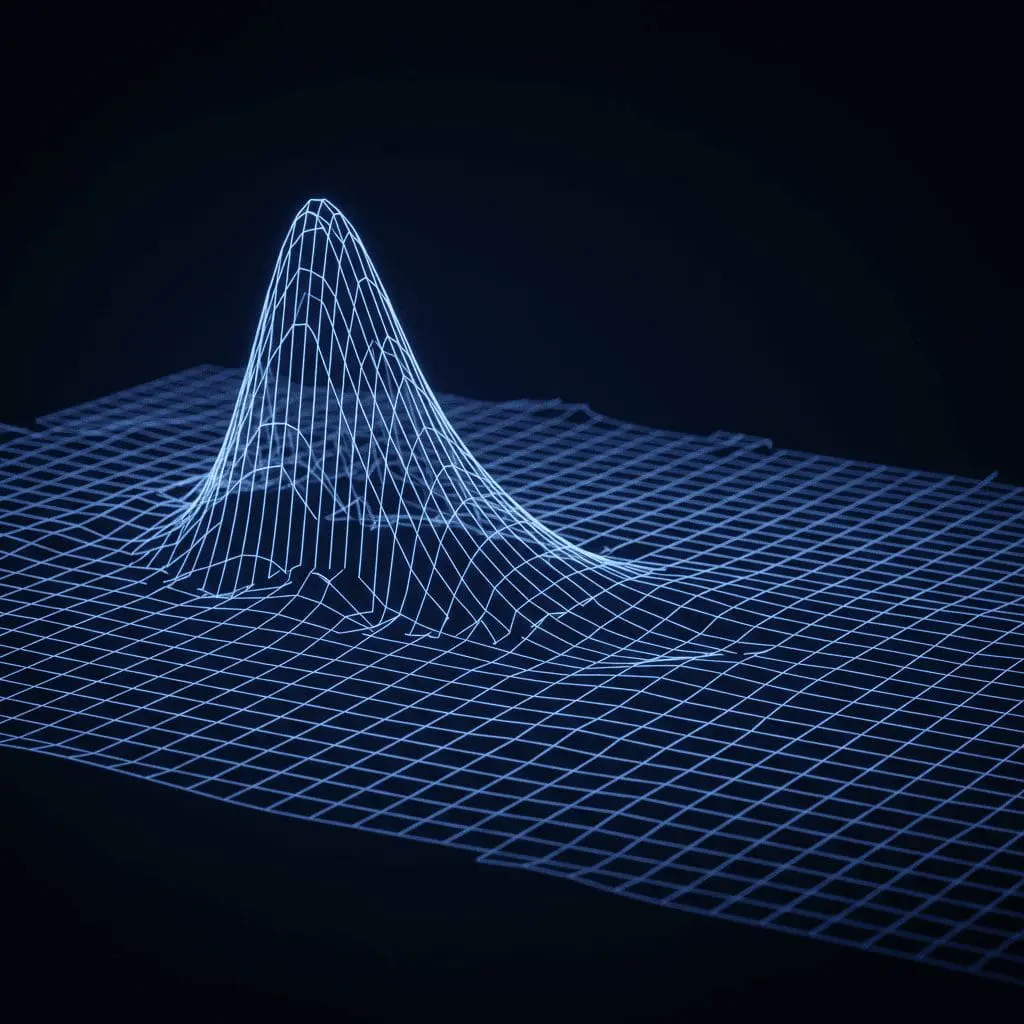
The research introduces a simplified QAOA approach combining linear parameterization with transferring, reducing parameters to four dimensions regardless of layers. Inspired by annealing schedules, it outperforms methods like INTERP and FOURIER, which require layer-by-layer optimization. Experiments on classical simulations and IBM’s Eagle processor validate the approach for NISQ devices. Cost landscapes in reduced spaces show consistent patterns across Ising model instances. Parameter transferability depends on energy scale, with normalization improving results. The method eliminates instance-specific optimization, reducing costs by orders of magnitude for deeper circuits.
In the evolving landscape of quantum computing, researchers are increasingly focused on developing algorithms capable of outperforming classical methods, particularly in solving complex optimization problems. Among these, the Quantum Approximate Optimization Algorithm (QAOA) stands as a notable hybrid approach that combines classical and quantum computing techniques.
QAOA is designed to addresscombinatorial optimization problemswith greater
QAOA is designed to address combinatorial optimization problems with greater efficiency than traditional algorithms. These problems are prevalent across various fields, including logistics and cryptography, where finding the optimal solution among numerous possibilities is crucial yet computationally intensive using classical methods. By leveraging quantum mechanics, QAOA aims to provide solutions that are both efficient and scalable.
Significant advancements have been made in refining QAOA to enhance its efficiency and applicability. Notably, Suzuki et al. introduced Qulacs, a quantum circuit simulator that facilitates the testing and improvement of algorithms like QAOA without requiring physical quantum hardware. This development has proven invaluable for researchers in optimizing QAOA’s performance.
Additionally, Lee and colleagues have explored initialization strategies and iterative methods to further streamline QAOA’s setup and improve its ability to find near-optimal solutions quickly. These efforts underscore the ongoing commitment to enhancing QAOA’s practicality and effectiveness.
The potential of QAOA extends into real-world applications, with researchers demonstrating its benefits in various domains. Montanez-Barrera and Michielsen highlighted a scaling advantage in solving combinatorial problems, suggesting that QAOA could offer significant benefits in practical scenarios such as smart charging systems for electric vehicles. This application showcases QAOA’s potential to optimize energy distribution efficiently.
Furthermore, Priestley and Wallden demonstrated the application of
Furthermore, Priestley and Wallden demonstrated the application of fixed-angle QAOA to lattice problems, which are critical in cryptography. This work illustrates QAOA’s versatility in addressing specific optimization challenges across different fields.
The advancements in QAOA represent a promising direction in quantum computing, offering enhanced efficiency and broader applicability. As researchers continue to refine this algorithm, it holds the potential to revolutionize how we approach complex optimization tasks, providing solutions that classical methods may struggle to achieve efficiently. These developments underscore the growing capabilities of quantum computing in addressing real-world problems with practical significance.
🗞 Transferring linearly fixed QAOA angles: performance and real device results
🧠 DOI: https://doi.org/10.48550/arXiv.2504.12632


