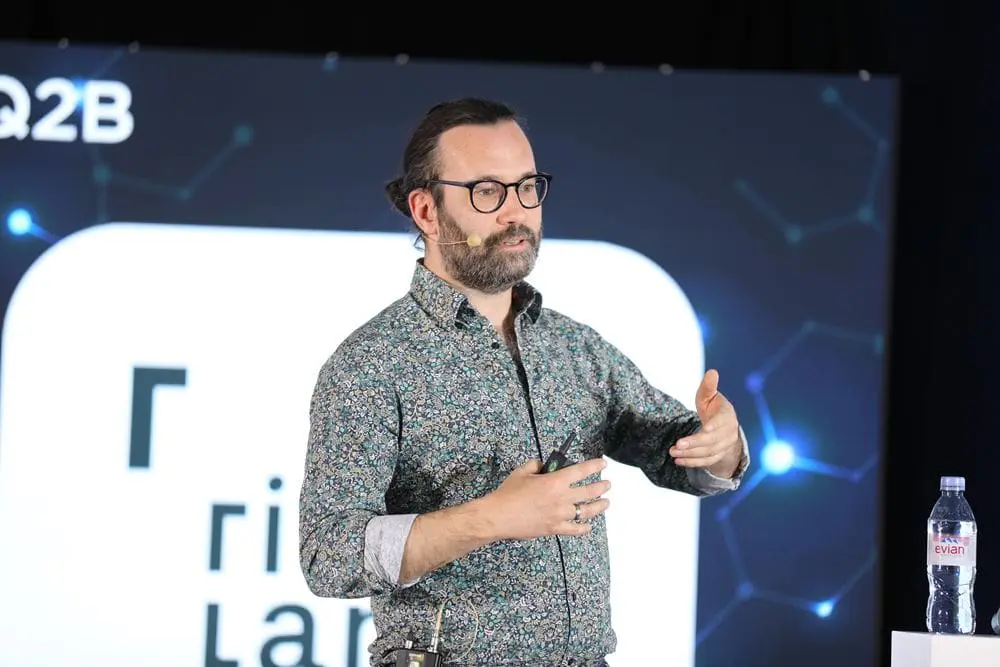
Earl Campbell, Vice President of Quantum Science, has been recognized as a Professor of Quantum Computing at The University of Sheffield. With nearly two decades of expertise in designing fault-tolerant quantum computing architectures, Campbell is a leading figure in quantum error correction. His work has advanced the field through contributions to quantum error correction and fault-tolerant logic, resulting in over 80 publications, including a notable review in Nature.
Campbell’s efforts have been crucial in paving the way for scalable, fault-tolerant quantum computing, inspiring both his team and the broader quantum community. As a pioneer in his field, Campbell’s achievements are a testament to his dedication and leadership, earning him this prestigious recognition at The University of Sheffield.
Introduction to Quantum Error Correction
The field of quantum computing has been rapidly advancing in recent years, with significant attention being paid to the development of fault-tolerant architectures. One key area of research in this domain is quantum error correction, which aims to mitigate the effects of errors that can occur during quantum computations. Earl Campbell, a renowned expert in this field, has recently been recognized as Professor of Quantum Computing at The University of Sheffield, acknowledging his nearly two decades of groundbreaking work in designing fault-tolerant quantum computing architectures.
Campbell’s contributions to the field of quantum error correction have been instrumental in shaping the direction of research in this area. His work has focused on advancing quantum error correction and fault-tolerant logic, with a particular emphasis on developing scalable architectures that can be used to build reliable quantum computers. Through his research, Campbell has authored over 80 publications, including a landmark review in Nature, which has helped to establish him as a leading authority in the field. The recognition of his work by the academic community is a testament to the importance of his contributions to the development of fault-tolerant quantum computing.
The development of fault-tolerant quantum computing architectures is crucial for the advancement of quantum computing, as it will enable the creation of reliable and scalable quantum computers that can be used to solve complex problems in fields such as chemistry, materials science, and optimization. Quantum error correction is a critical component of this effort, as it provides a means of mitigating the effects of errors that can occur during quantum computations. By developing robust methods for quantum error correction, researchers like Campbell are helping to pave the way for the widespread adoption of quantum computing technologies.
The recognition of Campbell’s work by The University of Sheffield is also a reflection of the growing importance of quantum computing in academia and industry. As research in this field continues to advance, it is likely that we will see increased collaboration between academic institutions and industry partners, as well as the development of new technologies and applications that leverage the power of quantum computing. By acknowledging the contributions of researchers like Campbell, we can help to promote a deeper understanding of the importance of quantum error correction and fault-tolerant quantum computing, and inspire future generations of researchers to pursue careers in this exciting and rapidly evolving field.
Quantum Error Correction: Principles and Challenges
Quantum error correction is a critical component of fault-tolerant quantum computing, as it provides a means of mitigating the effects of errors that can occur during quantum computations. The principles of quantum error correction are based on the idea of encoding quantum information in a way that allows errors to be detected and corrected. This is typically achieved through the use of redundant encoding schemes, such as quantum error-correcting codes, which can detect and correct errors by exploiting the correlations between different parts of the encoded quantum state.
One of the key challenges in developing robust methods for quantum error correction is the need to balance the trade-off between the resources required to implement the correction scheme and the level of protection that it provides against errors. In general, more robust correction schemes require more resources, such as qubits and quantum gates, which can increase the complexity and cost of the quantum computer. However, if the correction scheme is too weak, it may not provide sufficient protection against errors, which can lead to a loss of coherence and a degradation of the overall performance of the quantum computer.
Researchers like Campbell have made significant contributions to the development of robust methods for quantum error correction, including the design of fault-tolerant quantum computing architectures that can be used to implement these schemes. By developing more efficient and effective correction schemes, researchers can help to reduce the resources required to implement them, making it possible to build more scalable and reliable quantum computers. The development of new technologies, such as topological quantum error correction and concatenated coding schemes, has also helped to advance the field, providing new tools and techniques for mitigating the effects of errors in quantum computations.
The study of quantum error correction is an active area of research, with many open questions and challenges remaining to be addressed. For example, the development of more efficient decoding algorithms and the optimization of correction schemes for specific types of quantum errors are areas that require further investigation. Additionally, the integration of quantum error correction with other techniques, such as quantum control and calibration, will be essential for the development of reliable and scalable quantum computers.
Fault-Tolerant Quantum Computing Architectures
The design of fault-tolerant quantum computing architectures is a critical component of the development of reliable and scalable quantum computers. These architectures must be able to mitigate the effects of errors that can occur during quantum computations, while also providing a framework for the implementation of robust methods for quantum error correction. Researchers like Campbell have made significant contributions to the design of fault-tolerant quantum computing architectures, including the development of scalable architectures that can be used to implement robust correction schemes.
One of the key challenges in designing fault-tolerant quantum computing architectures is the need to balance the trade-off between the resources required to implement the architecture and the level of protection that it provides against errors. In general, more robust architectures require more resources, such as qubits and quantum gates, which can increase the complexity and cost of the quantum computer. However, if the architecture is too weak, it may not provide sufficient protection against errors, which can lead to a loss of coherence and a degradation of the overall performance of the quantum computer.
The development of fault-tolerant quantum computing architectures has been advanced through the use of new technologies, such as superconducting qubits and ion traps, which have enabled the creation of more robust and scalable quantum computers. Additionally, the development of new software tools and programming languages, such as Q# and Qiskit, has helped to simplify the process of designing and implementing fault-tolerant quantum computing architectures.
The study of fault-tolerant quantum computing architectures is an active area of research, with many open questions and challenges remaining to be addressed. For example, the development of more efficient methods for simulating the behavior of large-scale quantum systems and the optimization of architecture design for specific types of quantum computations are areas that require further investigation. Additionally, the integration of fault-tolerant quantum computing architectures with other techniques, such as quantum error correction and quantum control, will be essential for the development of reliable and scalable quantum computers.
External Link: Click Here For More