As the search for life beyond Earth continues to captivate the scientific community, a new generation of researchers is pushing the boundaries of human knowledge, driven by the quest to understand the origins and prevalence of life in the universe.
The appointment of Dr. Anastasia Yanchilina as the first Frank Drake Postdoctoral Fellow at the SETI Institute marks a significant milestone in this endeavor, underscoring the growing importance of interdisciplinary research in astrobiology, planetary science, and the detection of biosignatures.
With her pioneering work on distinguishing genuine biosignatures from false positives across space and time, Yanchilina embodies the spirit of exploration and discovery that defines the Frank Drake Fellowship. This prestigious program fosters innovative contributions across astronomy, astrophysics, environmental science, and cognitive science.
As the scientific community converges to tackle the complex question of whether life exists beyond Earth, the SETI Institute’s mission to lead humanity’s quest for understanding the universe’s secrets has never been more relevant, highlighting the need for continued advancements in data analytics, machine learning, and signal detection technologies to unravel the mysteries of the cosmos.
Life Beyond Planet Earth
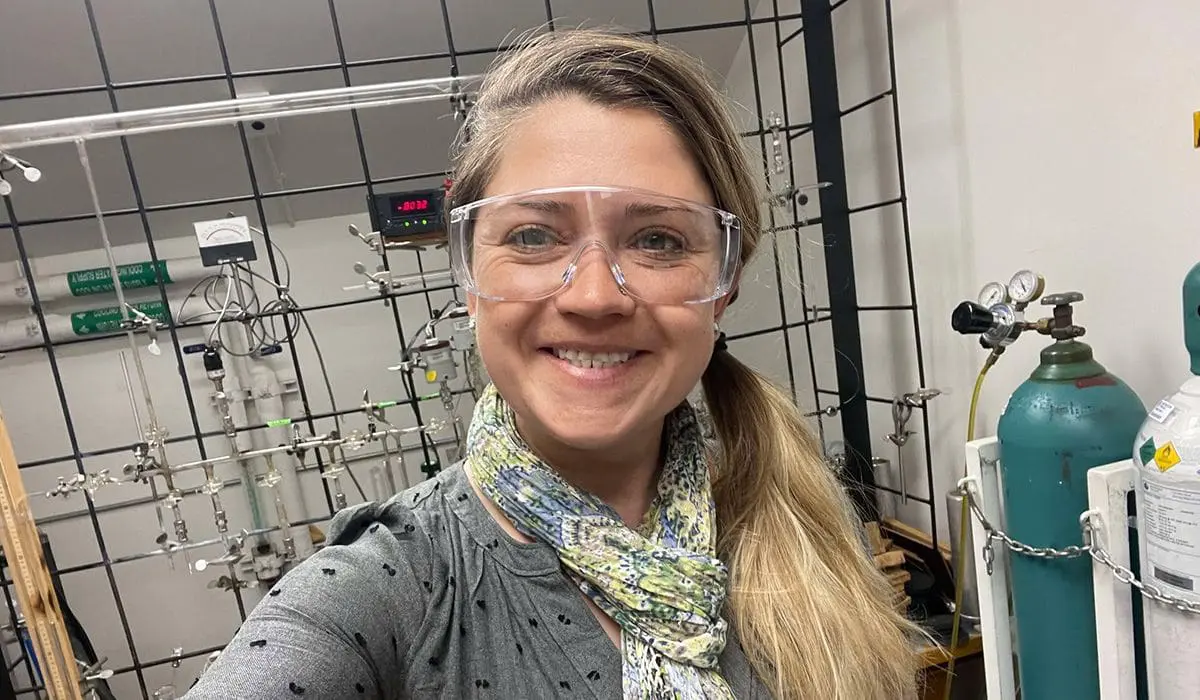
The quest to discover life beyond our planet has captivated human imagination for centuries. With the advancement of technology and scientific understanding, this pursuit has evolved into a rigorous field of research known as astrobiology. At the forefront of this endeavor is the SETI Institute, a non-profit organization dedicated to exploring the origins and prevalence of life in the universe. Recently, the institute named its first Frank Drake Postdoctoral Fellow, Dr. Anastasia Yanchilina, who will be at the helm of groundbreaking research to distinguish biosignatures from false positives across space and time.
The Frank Drake Postdoctoral Fellowship is a prestigious award that embodies the spirit of exploration and discovery championed by its namesake. This fellowship offers early-career scientists an unparalleled opportunity to contribute meaningfully to the diverse fields encompassed by the Drake Equation, including astronomy, astrobiology, environmental science, geoscience, life science, planetary science, and cognitive science.
Dr. Yanchilina’s research focuses on refining biosignature detection techniques through a combination of experimental and analytical approaches. Her work involves conducting lab experiments to generate mineral analogs that mimic features observed near hydrothermal vents, which could potentially form in extraterrestrial oceans such as those on Enceladus and Europa. This innovative approach is crucial for understanding what signs of life to look for on other planets, particularly in ocean worlds within our solar system.
Ocean worlds, such as Enceladus and Europa, present intriguing possibilities for hosting life. These moons are believed to have subsurface oceans, potentially providing habitable environments. Dr. Yanchilina’s research into the mineral samples that could form in these environments will provide valuable insights into what biosignatures might look like on other planets. This knowledge is essential for future missions aimed at exploring these worlds, such as the Europa Clipper mission.
The Frank Drake Postdoctoral Fellowship is designed to foster new intellectual frameworks for the search for life. By supporting early-career scientists in their pursuit of groundbreaking research, the fellowship aims to push the boundaries of current knowledge. The annual selection process ensures a continuous influx of fresh perspectives and ideas, contributing to the dynamic nature of astrobiology research.
External Link: Click Here For More