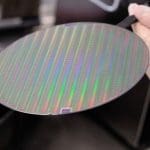
SEALSQ Corp. and Quobly today announced a collaboration to integrate secure semiconductor architectures with scalable quantum systems. This partnership connects SEALSQ’s expertise in post-quantum security technologies—including secure elements, TPM chips, and hardware-anchored Root-of-Trust—with Quobly’s scalable, silicon-based quantum computing platform utilizing CMOS-compatible silicon spin qubits. The companies will assess the co-evolution of advanced security hardware and quantum processing architectures as quantum computing moves toward industrial deployment, aiming to natively integrate Root-of-Trust and post-quantum cryptography into large-scale, fault-tolerant quantum systems. This collaboration positions both companies for leadership in the emerging field of quantum-secure hardware.
Collaboration for Secure Quantum Systems
SEALSQ and Quobly are collaborating to integrate secure semiconductor architectures with scalable quantum systems. This partnership aims to explore how advanced security hardware and quantum processing can co-evolve as quantum computing nears industrial deployment. Specifically, they intend to be the first to explore hardware Root-of-Trust and post-quantum cryptography natively within large-scale, fault-tolerant quantum systems. This collaboration leverages SEALSQ’s post-quantum cryptography and Quobly’s silicon spin qubit platform.
This collaboration offers strategic benefits to both companies, positioning them as leaders in quantum-secure hardware. SEALSQ gains early access to Quobly’s advanced silicon qubit platform to tailor its secure elements and Root-of-Trust solutions for future quantum computers. Both companies anticipate accelerated relevance in high-stakes markets like defense, intelligence, finance, and pharmaceuticals, which increasingly demand both powerful and provably secure quantum systems.
Quobly is developing fully silicon-based quantum processors compatible with standard CMOS manufacturing, including silicon spin qubits, cryogenic control electronics, and scalable interconnects. SEALSQ is a leader in post-quantum semiconductors, secure elements, and hardware-anchored Root-of-Trust technologies, utilizing algorithms like CRYSTALS-Kyber and Dilithium. This combined expertise aims to lay the foundations for sovereign quantum systems, particularly strengthening Europe’s path toward quantum independence and industrialization.
Quobly’s Scalable Quantum Computing Platform
Quobly is developing a scalable quantum computing platform based on silicon-based quantum processors. Their technology utilizes CMOS-compatible silicon spin qubits fabricated on standard wafers, aiming for industrial, fault-tolerant quantum computing. Key components include cryogenic control electronics, high-fidelity qubit arrays, and scalable interconnects for large multi-qubit systems. Founded in 2022, Quobly leverages over 15 years of research from CEA-Leti and CNRS, and recently secured €21 million to advance its Q100T program.
This collaboration between Quobly and SEALSQ focuses on integrating secure semiconductor architectures with Quobly’s scalable quantum systems. SEALSQ brings expertise in post-quantum security technologies, including quantum-resistant secure elements and Root-of-Trust frameworks. The goal is to natively embed quantum-resistant security into large-scale quantum systems, addressing the vulnerabilities of traditional cryptography as quantum computing advances.
SEALSQ and Quobly aim to position themselves as leaders in quantum-secure hardware, benefiting from early access to advanced technologies and expanded market reach, particularly in the U.S. defense and security sectors. This partnership seeks to create sovereign quantum systems for Europe, emphasizing control, trust, and industrialization of quantum technology. Quobly’s focus is on building scalable processors with industrial-grade semiconductor manufacturing.
At Quobly, our focus is on building scalable quantum processors using industrial-grade semiconductor technology. Exploring complementarities with post-quantum security is a natural step as quantum computing moves toward real-world applications.
Maud Vinet
SEALSQ’s Post-Quantum Security Technologies
SEALSQ and Quobly are collaborating to integrate post-quantum security technologies with scalable quantum computing systems. This partnership aims to explore how advanced security hardware and quantum processing can co-evolve, with the goal of creating natively integrated Root-of-Trust and post-quantum cryptography within large-scale quantum systems. SEALSQ brings expertise in post-quantum cryptography, secure elements, and TPMs, while Quobly contributes its silicon spin qubit platform compatible with industrial CMOS manufacturing.
Quobly’s technology focuses on building scalable quantum processors using standard semiconductor processes, including CMOS-compatible silicon spin qubits, cryogenic control electronics, and high-fidelity qubit arrays. SEALSQ provides quantum-resistant security modules like secure elements and TPMs, along with PQC algorithms—specifically CRYSTALS-Kyber and Dilithium—optimized for embedded devices. This collaboration positions both companies to address the growing demand for quantum systems that are both powerful and provably secure, targeting defense, intelligence, and financial sectors.
The partnership intends to accelerate growth in the U.S. market and establish leadership in quantum-secure hardware. SEALSQ’s technologies, including Root-of-Trust frameworks and quantum-safe communication stacks, will be integrated with Quobly’s scalable platform to lay the foundations for sovereign quantum systems. This work is intended to provide future-proof protection for sensitive data across industries like medical, automotive, and industrial automation, safeguarding critical systems against evolving quantum threats.
Strategic Benefits and Market Expansion
This collaboration between SEALSQ and Quobly aims to position both companies for strategic benefits and market expansion, particularly within high-stakes sectors. SEALSQ gains early access to Quobly’s advanced silicon qubit platform, enabling tailoring of its post-quantum secure elements and Root-of-Trust solutions for future quantum computers. This partnership is designed to accelerate relevance in defense, intelligence, financial, and pharmaceutical markets increasingly demanding both powerful and provably secure quantum systems.
The alliance supports expansion into the U.S. market, where trusted hardware, post-quantum security, and high-performance computing are becoming increasingly strategic. Quobly will strengthen its position in security-focused sectors like defense and critical infrastructure. SEALSQ and Quobly are combining strengths – SEALSQ’s post-quantum cryptography with Quobly’s scalable silicon spin qubit platform – to lay the foundation for sovereign quantum systems, particularly within Europe.
Quobly develops fully silicon-based quantum processors compatible with standard CMOS manufacturing, leveraging existing semiconductor ecosystems for scalability. SEALSQ is a leader in post-quantum semiconductors, secure elements, and Root-of-Trust technologies. Combining these capabilities allows for embedding quantum-resistant security into future large-scale quantum systems from the earliest design stages, ensuring protection against emerging quantum threats across multiple industries.