

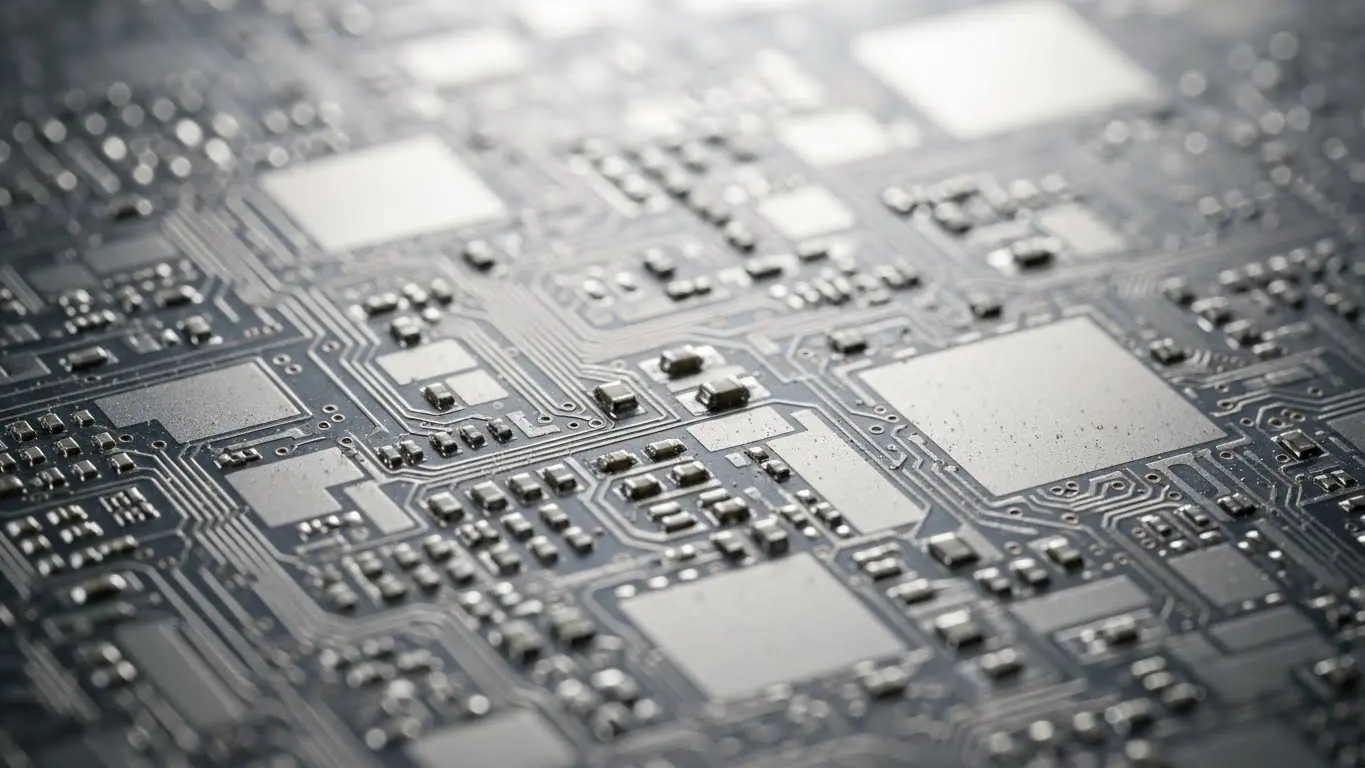
SEALSQ Corp, a developer of semiconductors and post-quantum technology, has outlined a strategic plan for 2026-2030 focused on advancing quantum computing through semiconductor manufacturing. The company is pursuing a path rooted in silicon and CMOS-compatible processes, diverging from helium-cooled superconducting systems, to create scalable and industrially viable quantum systems. This approach utilizes silicon spin qubits and hybrid quantum–classical architectures, integrating quantum components with classical control logic on a single silicon platform. SEALSQ emphasizes that industrialization, specifically manufacturability, yield, and supply-chain resilience, will be the decisive factor in the future of quantum computing.
Two Paths of Quantum Computing Development
SEALSQ identifies two distinct paths in quantum computing development. One relies on helium-cooled superconducting systems, achieving scientific breakthroughs but remaining costly, energy-intensive, and difficult to scale beyond research settings. These systems function primarily as scientific instruments. The other path, pursued by SEALSQ, centers on silicon and CMOS-compatible manufacturing processes—leveraging existing semiconductor infrastructure for scalable and industrially viable quantum systems.
This silicon-based approach focuses on silicon spin qubits and hybrid quantum-classical architectures. It aims for high integration density, cost reduction, and reliability by aligning with established semiconductor design, fabrication, and testing methods. SEALSQ emphasizes that industrialization – manufacturability, yield, and supply-chain resilience – is the decisive factor, not solely physics, for the future of quantum computing.
Critically, semiconductor-compatible quantum technologies align with governmental priorities around economic sovereignty, security, and supply-chain control. This enables deployment in regulated environments where laboratory-centric systems face limitations. SEALSQ believes embedding security directly into silicon is a strategic differentiator as regulatory models evolve toward enforceable controls, positioning them at the intersection of quantum innovation and post-quantum security.
SEALSQ’s Semiconductor-Based Quantum Strategy
SEALSQ is pursuing a quantum computing strategy rooted in the semiconductor ecosystem, utilizing silicon and CMOS-compatible processes. This approach contrasts with helium-cooled superconducting systems, which, despite scientific breakthroughs, are costly, energy-intensive, and difficult to scale for widespread use. SEALSQ believes industrialization—specifically manufacturability, yield, and supply-chain resilience—is the decisive factor for quantum computing’s future, and semiconductor technologies inherently possess these strengths.
The company emphasizes that silicon-based quantum systems offer a path toward high integration density, cost reduction, and long-term scalability. Importantly, these systems can be audited, certified, and governed within existing regulatory frameworks—a crucial advantage for deployment in regulated and mission-critical environments. SEALSQ highlights alignment with priorities like economic sovereignty, security, and supply-chain control, positioning their technology for use in areas where laboratory-centric quantum systems are limited.
SEALSQ’s strategy connects quantum innovation with semiconductor industrialization and post-quantum security. This holistic approach aims to create scalable, governable quantum technologies ready to integrate into future digital infrastructure. The company is focused on embedding security, digital identity, and cryptography directly into silicon, anticipating the evolution of regulatory models toward enforceable controls, and ensuring future-proof protection against emerging quantum threats.
The decisive factor for the future of quantum computing is not physics alone, it is industrialization. History shows that high-performance computing scales when it aligns with manufacturability, yield, reliability, security, and supply-chain resilience. Semiconductor-based quantum technologies inherit these strengths from day one.
Carlos Moreira CEO of SEALSQ
Post-Quantum Security and Semiconductor Solutions
SEALSQ Corp is focused on advancing quantum computing through semiconductor solutions, specifically utilizing silicon and CMOS-compatible manufacturing processes. The company highlights a divergence in quantum computing paths: helium-cooled superconducting systems for research versus semiconductor-based systems for industrial applications. This approach aims to leverage existing semiconductor infrastructure—design tools, fabrication plants, and supply chains—to create scalable, reliable, and cost-effective quantum systems, unlike the limitations of large, costly, and energy-intensive helium-cooled platforms.
SEALSQ emphasizes that the future of quantum computing hinges on “industrialization,” meaning manufacturability, yield, and supply-chain resilience. Semiconductor-compatible quantum technologies inherently offer these strengths, allowing for auditability, certification, and governance within existing regulatory frameworks. This alignment with economic sovereignty, security, and supply-chain control is crucial for deployment in regulated environments—critical infrastructure and other sensitive areas where laboratory-based quantum systems struggle to meet requirements.
The functionality of silicon spin qubits fundamentally relies on manipulating the quantum spin of individual electrons confined within precisely engineered semiconductor quantum dots. Unlike superconducting qubits, which use macroscopic circuits, spin qubits exploit the electron’s intrinsic angular momentum, allowing for extremely fast gate operations at relatively low temperatures. This method leverages established silicon wafer lithography, utilizing techniques like electron-beam lithography to define nanoscale isolation barriers that trap and control the qubits.
The implementation of a hybrid quantum-classical architecture is crucial for realizing scalable computation. This design mandates integrating the quantum processing units (QPUs) alongside the classical control electronics—such as cryogenic readout circuits and FPGA controllers—all onto the same chip. By co-locating these components, the system minimizes interconnect parasitics, simplifies the wiring complexity, and allows for real-time classical feedback necessary for advanced quantum error correction codes.
A key engineering challenge in scaling silicon-based systems is managing decoherence and crosstalk. Decoherence, the loss of quantum information, is highly sensitive to environmental noise, such as stray magnetic fields or phonon excitations. To mitigate this, advanced techniques involve isotopic purification of the silicon substrate, particularly eliminating naturally occurring isotopes like silicon-29, which contain nuclear spins that can act as localized noise sources and degrade qubit coherence time.
A key focus for SEALSQ is post-quantum security, developing semiconductors incorporating quantum-resistant cryptography. Traditional methods like RSA and Elliptic Curve Cryptography are increasingly vulnerable as quantum computers advance. SEALSQ’s solutions aim to protect sensitive data across various industries—including healthcare, defense, and automotive—by embedding security, digital identity, and lifecycle management directly into silicon, safeguarding systems against future quantum threats.


