

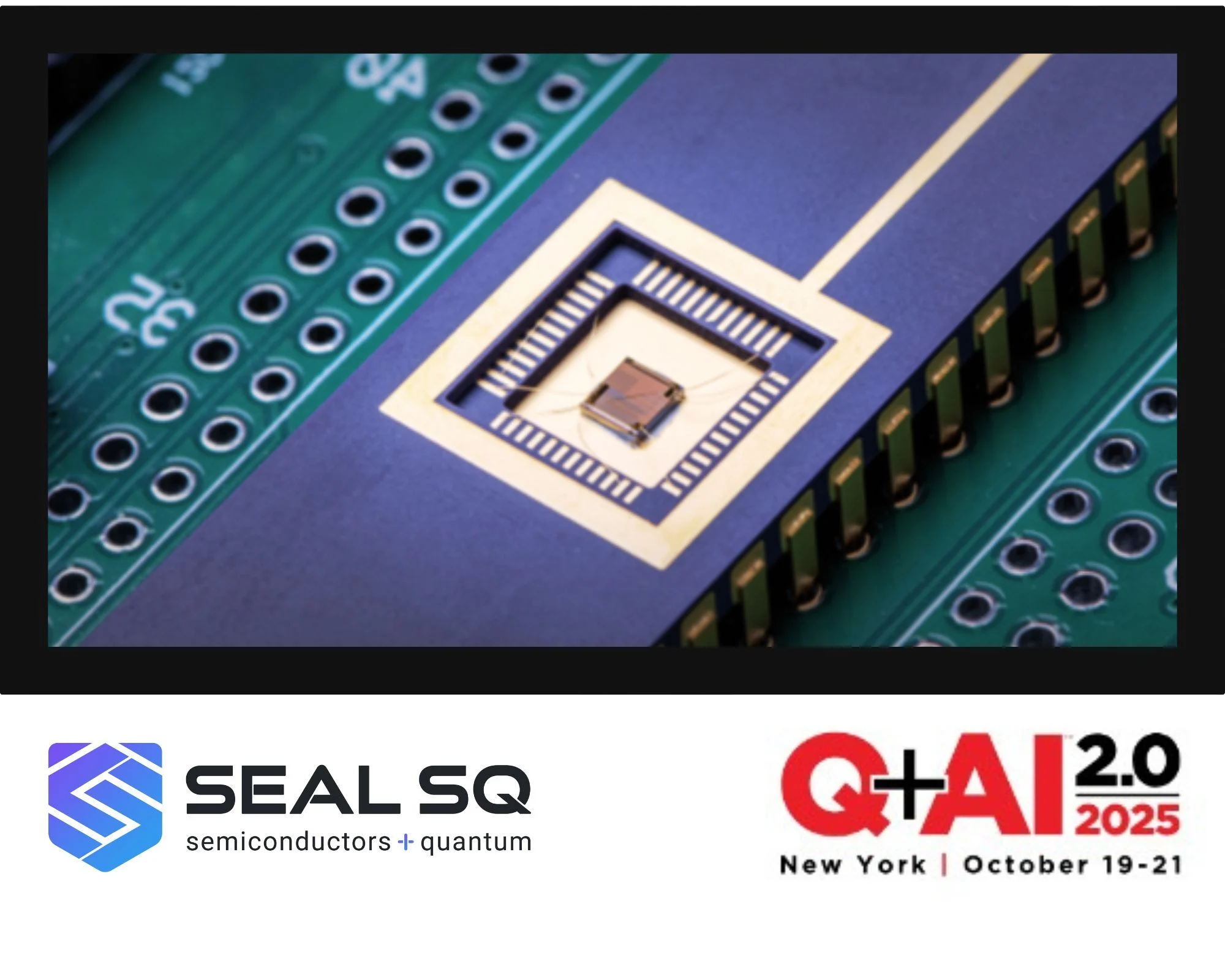
SEALSQ Corp unveils the Quantum Shield QS7001, the first secure chip embedding NIST-standardized Post-Quantum Cryptography (PQC) algorithms directly at the hardware level, launching in mid-November 2025. Praised by clients, industry peers, partners, and academics, this breakthrough addresses the urgent need for quantum-resistant security across defense, healthcare, and critical infrastructure. The chip aims to protect systems against “Harvest now, Decrypt Later” threats, aligning with global mandates for PQC adoption by 2030. With over 1.75 billion devices secured worldwide, SEALSQ combines certified hardware, trusted services, and global expertise to set a new standard in post-quantum security.
Hardware-Level Quantum Security: The Quantum Shield QS7001
SEALSQ Corp officially unveiled the Quantum Shield QS7001, a secure chip embedding NIST-standardized Post-Quantum Cryptography (PQC) algorithms directly into hardware, according to the company’s announcement. This innovative chip addresses the growing threat quantum computing poses to current public-key cryptography systems widely used across critical infrastructure. Clients, Industry Peers, Partners and Academics have praised this initiative, recognizing the importance of proactive quantum-safe security measures. The QS7001 aims to provide a native hardware foundation for systems needing to withstand future attacks and mitigate “Harvest now, Decrypt Later” threats.
The Quantum Shield QS7001 implements the PQC standards finalized by NIST in August 2024, specifically utilizing Kyber, Dilithium, and SPHINCS+. This hardware-level integration is significant because it moves beyond software-based PQC implementations, offering enhanced security and performance. SEALSQ is among a select group of fewer than ten companies globally to achieve the highest levels of international security certification, including Common Criteria EAL5+ and FIPS 140-3. Building on this, the company delivers end-to-end trusted services through a network of secure personalization centers in Switzerland, France, Spain, and planned facilities in India and the US.
The launch of the QS7001 comes as regulatory bodies worldwide mandate PQC adoption. CNSA 2.0 and Executive Orders from the White House require compliance by 2030, while the EU and its allies are planning mandatory transitions between 2026 and 2030 to protect vital sectors like finance, healthcare, and IoT. According to the company, SEALSQ’s proven track record of securing more than 1.75 billion devices, combined with its certified hardware and global presence, positions it as a leader in post-quantum security solutions. Carlos Moreira from SEALSQ will present a keynote address, “AI Meets Quantum: Building Unbreakable Post-Quantum Security,” at the IQT Quantum+AI 2025 Conference in New York City, coinciding with the chip’s official launch in mid-November 2025.
“With over 1.75 billion devices protected globally, SEALSQ is proud to be among the few companies worldwide capable of delivering the highest levels of security. This time, we are arriving first, unveiling an industry first in quantum-resilient solutions. I am especially proud of our team, including the recently acquired IC’Alps, whose dedication and expertise made the Quantum Shield QS7001 possible. By embedding post-quantum cryptography directly in hardware, this chip aims to set a new paradigm of trust and protection, securing sovereign infrastructure, healthcare, energy systems, and connected devices against the coming quantum threat.”
Carlos Moreira, SEALSQ
Industry Leaders Applaud SEALSQ’s Quantum-Resilient Innovation
Clients, Industry Peers, Partners and Academics have widely praised SEALSQ’s proactive approach to post-quantum cryptography, recognizing the Quantum Shield QS7001 as a pivotal step toward securing future digital infrastructure. The company announced significant positive feedback following the unveiling, with many highlighting the chip’s potential to address the escalating threat posed by quantum computing to existing cryptographic systems. This widespread acclaim underscores a growing industry consensus regarding the urgency of transitioning to quantum-resistant security solutions before widespread quantum capabilities emerge.
Building on this momentum, SEALSQ reports that several key industry leaders are already exploring integration of the Quantum Shield QS7001 into their product roadmaps. The company emphasized that this early adoption interest stems from the chip’s unique combination of hardware-level security and adherence to NIST PQC standards, specifically Kyber, Dilithium, and SPHINCS+. Furthermore, SEALSQ’s established reputation, having achieved Common Criteria EAL5+ and FIPS 140-3 certifications, provides a level of trust and reliability crucial for organizations handling sensitive data. Carlos Moreira from SEALSQ noted the importance of these certifications in facilitating rapid deployment and customer confidence.
The significance of the Quantum Shield QS7001 extends beyond immediate security enhancements, according to industry analysis. With mandates like CNSA 2.0 and Executive Orders pushing for PQC adoption by 2030, and similar initiatives emerging in the EU, organizations face increasing regulatory pressure to future-proof their systems. SEALSQ’s proactive development of a hardware-based solution positions the company as a key enabler for these transitions, offering a path to compliance and mitigating the risk of costly disruptions. Clients, Industry Peers, Partners and Academics recognize that the “harvest now, decrypt later” threat is real, and SEALSQ is delivering a tangible solution to address it.
The Quantum Shield QS7001 represents a critical step toward securing digital infrastructure against the evolving threat of quantum computing, a concern echoed by clients, industry peers, partners and academics. This development could enable organizations to proactively address upcoming CNSA 2.0 and EU mandates for Post-Quantum Cryptography adoption by 2030.
For industries reliant on robust data protection, including defense, healthcare, and finance, this chip offers a tangible path toward compliance and sustained security. As Carlos Moreira from SEALSQ noted at the IQT Quantum+AI 2025 Conference, building unbreakable post-quantum security is no longer a distant goal, but a present capability. The implications extend beyond quantum computing to safeguard critical systems and maintain trust in an increasingly connected world.


