In the quantum world, particles can exist in multiple states at once, a phenomenon known as superposition. However, this strange behavior is not observed in everyday life, and physicists have been trying to understand why. A team of international scientists, funded by the Foundational Questions Institute (FQxI), has proposed a new way to test alternative models to standard quantum theory that could explain this discrepancy.
According to Catalina Curceanu, an experimental nuclear and quantum physicist at the National Institute for Nuclear Physics in Italy, these models predict effects such as spontaneous radiation, which could be detected in experiments. The team’s work, reported in Physical Review Letters, focuses on calculating the features of this radiation in the X-ray domain. Key researchers involved include Curceanu, Lajos Diósi at Eötvös Loránd University in Hungary, and Nobel Laureate physicist Roger Penrose at Oxford University in the UK. The team’s findings could have significant implications for our understanding of quantum mechanics and reality itself.
Quantum Mechanics and the Measurement Problem
The principles of quantum mechanics have long fascinated scientists and philosophers alike. One of the most intriguing aspects of this theory is the concept of superposition, where a particle can exist in multiple states simultaneously. However, this phenomenon seems to be limited to the microscopic world, as it is not observed in everyday life. The reason for this discrepancy lies in the measurement problem, which questions how and when the act of measurement itself causes the collapse of the superposition.
In recent years, researchers have proposed various quantum collapse models to explain this phenomenon. These models predict that the collapse of the wave function is not solely due to external measurements but can occur spontaneously, even in the absence of an observer. Two main types of collapse models have been developed: Continuous Spontaneous Localization (CSL) models and gravity-related collapse models.
Evidence of Collapse
Researchers have been searching for signs of spontaneous radiation, which would be a hallmark of quantum collapse models. In particular, they have focused on high-energy gamma radiation, but so far, no evidence has been found. This lack of evidence has allowed physicists to constrain and rule out various versions of the collapse models.
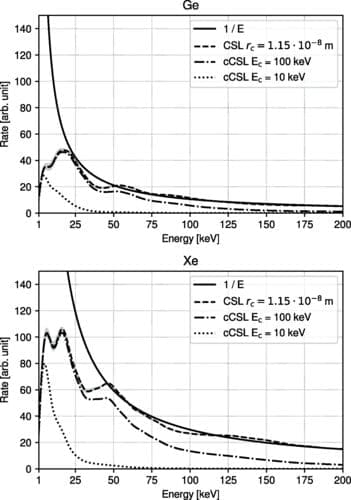
In their latest work, a team of researchers calculated the features of spontaneous electromagnetic radiation that should be emitted from atomic systems at lower energies, in the X-ray domain. They found significant differences with previous expectations for the simplest models. Surprisingly, the spontaneous radiation rate was found to strongly depend on the atomic species under investigation, and for the first time, it was also found to depend on the specific collapse model.
Implications of Quantum Collapse Models
The implications of quantum collapse models are far-reaching and could have significant consequences for our understanding of reality. If these models are correct, they would predict effects that are not present in standard quantum mechanics, such as spontaneous radiation. This means that experiments could one day find evidence that these models are correct.
The work of Curceanu and her colleagues is a crucial step towards better constraining the collapse models and potentially uncovering the underlying causes of wave function collapse. Their experiment, performed at the LNGS-INFN underground laboratory in Italy, aims to search for X-rays emitted by atomic systems and explore the predicted relationship between spontaneous radiation and atomic structure.
Funding and Support
The Foundational Questions Institute (FQxI) has played a crucial role in supporting this research through their Consciousness in the Physical World program. FQxI is a philanthropically-funded think tank and funding body that supports blue skies research in the physical sciences, enabling scientists to explore innovative ideas that may not be supported by conventional funding sources.
In conclusion, the study of quantum mechanics and the measurement problem continues to fascinate and intrigue scientists. The development of quantum collapse models offers a promising avenue for understanding this phenomenon, and ongoing research aims to uncover the underlying causes of wave function collapse. The implications of these findings could have significant consequences for our understanding of reality itself.
External Link: Click Here For More