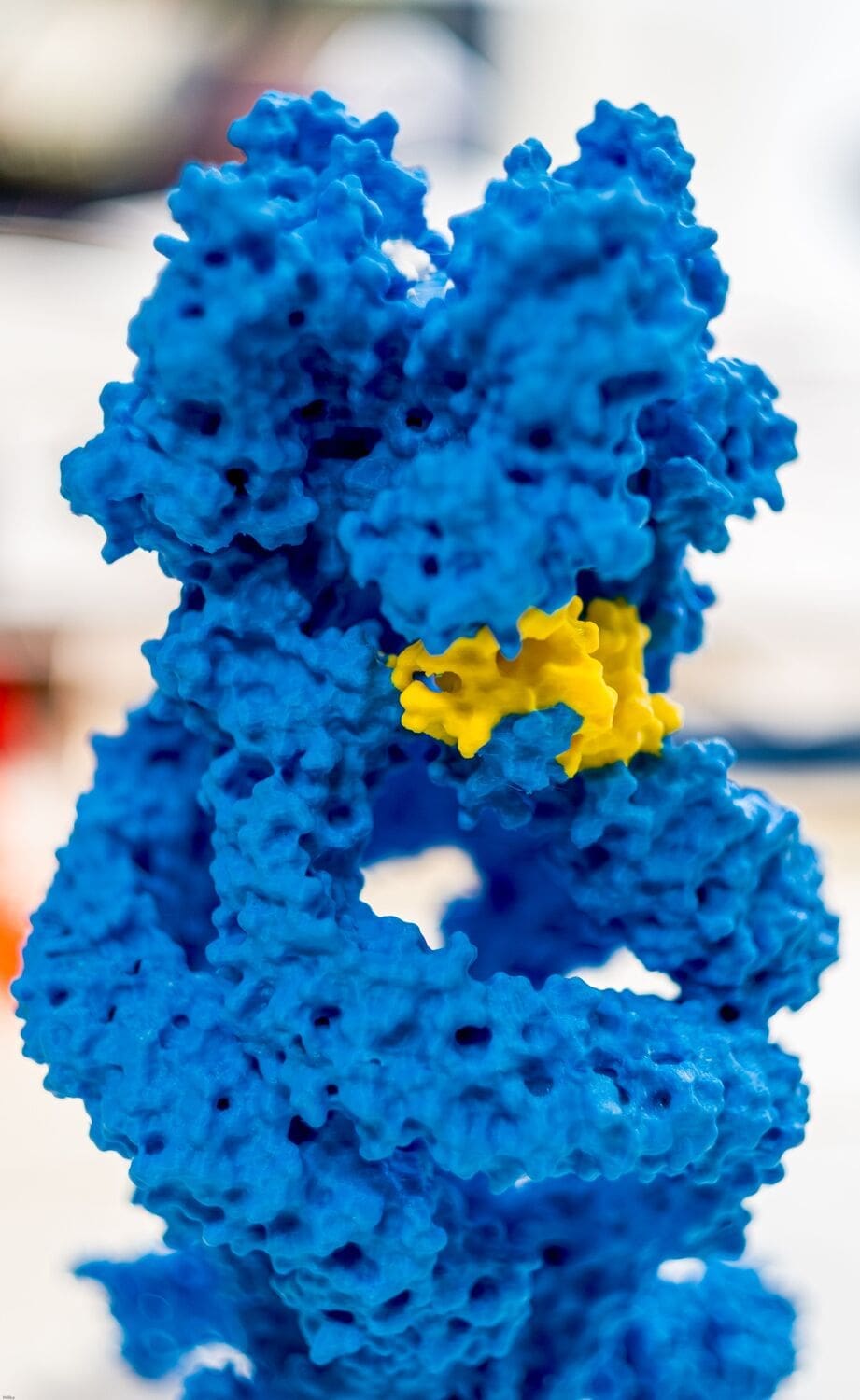
A research team from Georg-August-University Göttingen’s Cluster of Excellence Multiscale Bioimaging (MBExC) has identified a molecular spring in ion channels that plays a critical role in the sense of hearing. Their findings, published in Nature Neuroscience, reveal that this gating spring is located in the hinge region of an ion channel in fruit flies, challenging previous assumptions about its location in the spiral structure.
The discovery provides new insights into how mechanical signals are transduced at the molecular level and may have broader implications for understanding ion channel function across species, including humans.
Molecular Mechanism Behind Hearing
Hearing begins with the mechanical deformation of elastic molecular structures in sensory hair cells, which triggers the opening of ion channels. These channels are critical for converting sound-Induced mechanical signals into electrical impulses that the brain interprets as sound. The process relies on a gating spring mechanism, where a flexible molecular structure acts as a spring to open and close the channel gates.
Researchers have sought to identify the exact molecular components responsible for this gating spring function for decades. A team from the Cluster of Excellence Multiscale Bioimaging (MBExC) at Georg-August University Göttingen has made a significant discovery by identifying a flexible hinge within an ion channel as the gating spring. This hinge, rather than the previously hypothesized spiral structure, is responsible for mechanically opening the channel gates when stretched.
The research, published in *Nature Neuroscience*, demonstrates that doubling the hinge’s flexibility reduces the stiffness of the gating spring, confirming its role in mechanosensation. This finding challenges previous assumptions and provides new insights into how ion channels respond to mechanical stimuli. The discovery not only advances our understanding of auditory transduction but also has broader implications for the study of ion channel function across various biological systems.
The identification of the hinge as the gating spring highlights the importance of elastic molecular structures in sensory processes. This work underscores the intricate molecular mechanisms underlying hearing and offers a foundation for future research into related sensory functions and potential therapeutic applications.
Experimental Validation of Hinge Structure
The experimental validation of the hinge structure as the gating spring involved testing its mechanical properties under various conditions. Researchers hypothesized that the flexibility of the hinge directly influences the gating mechanism. By doubling the hinge’s flexibility, they observed a proportional reduction in the stiffness of the gating spring, confirming its role in mechanosensation.
This finding challenges previous assumptions that spiral structures were responsible for gating spring function. Instead, the hinge’s mechanical properties were shown to be critical for opening and closing channel gates in response to sound-Induced mechanical signals. This work advances our understanding of auditory processes and has potential implications for research into related sensory functions and therapeutic applications.
Contribution to Understanding Sensory Processes
The discovery of gating springs in fruit fly ears has revealed a critical mechanism underlying auditory transduction. Researchers identified a flexible hinge within an ion channel as the gating spring, challenging previous assumptions about the role of spiral structures. This hinge mechanically opens and closes the channel gates when stretched, enabling the conversion of sound-Induced mechanical signals into electrical impulses.
The study demonstrated that doubling the hinge’s flexibility reduces the stiffness of the gating spring, confirming its role in mechanosensation. This finding provides new insights into how ion channels respond to mechanical stimuli and highlights the importance of elastic molecular structures in sensory processes. The discovery advances our understanding of auditory transduction and has implications for studying ion channel function across various biological systems.
Identifying the hinge as the gating spring underscores the intricate molecular mechanisms underlying hearing. This work offers a foundation for future research into related sensory functions and potential therapeutic applications, emphasizing the need to explore elastic molecular structures in diverse contexts.
More information
External Link: Click Here For More