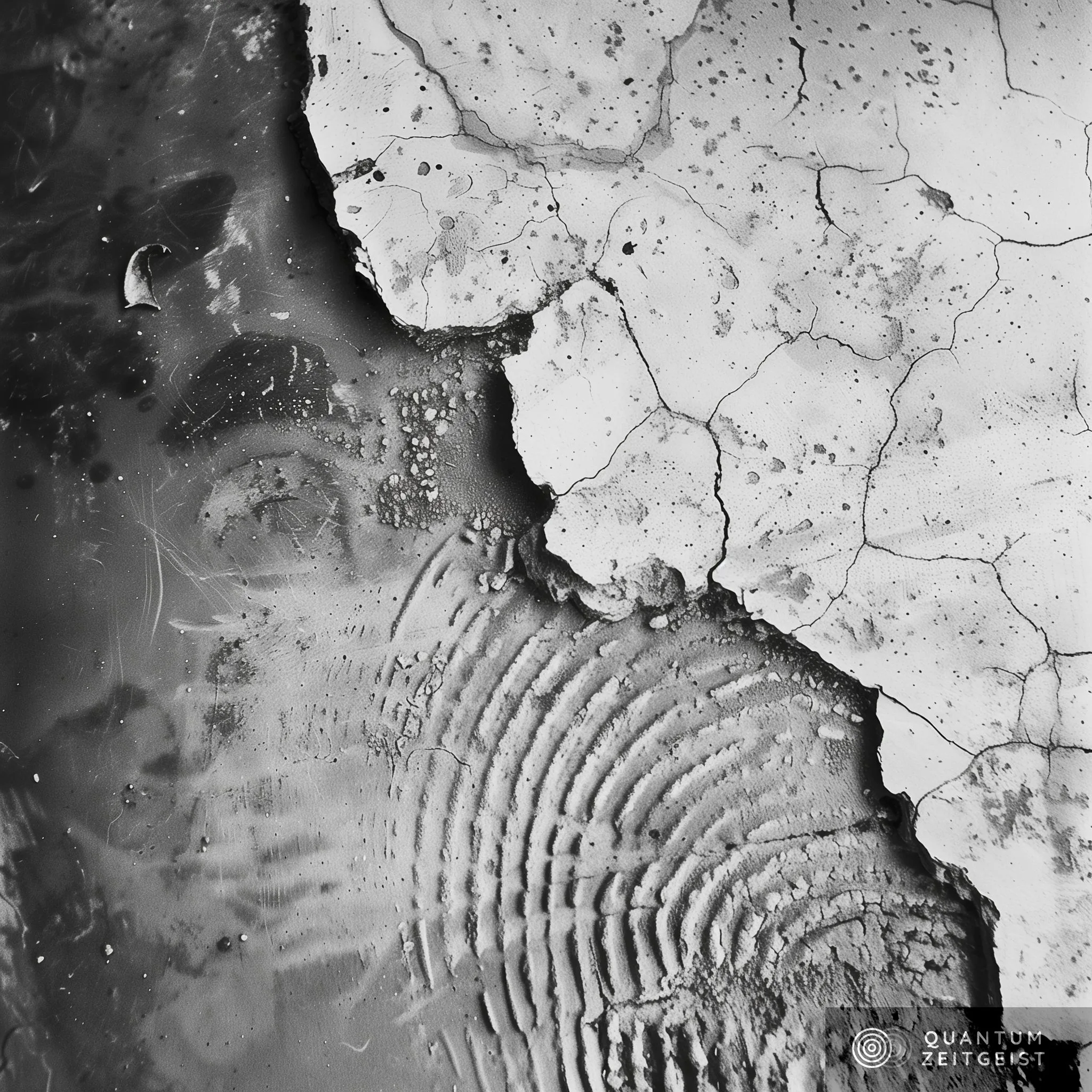
Scientists have developed a new artificial intelligence method to create unique “fingerprints” for materials, allowing them to better understand how they change over time when stressed and relaxed. The technique combines X-ray photon correlation spectroscopy (XPCS) with an unsupervised machine learning algorithm, which teaches itself to recognize patterns in the scattered X-rays. This approach enables researchers to identify trends and repeating patterns that were previously inaccessible.
The study, led by Argonne National Laboratory’s James “Jay” Horwath, used a neural network to analyze X-ray scattering data and create fingerprints for different materials. These fingerprints can be thought of as a material’s “genome,” containing essential information about the sample. The researchers created a map of these fingerprints, clustering similar characteristics together to better understand how materials are structured and evolve over time.
The AI-NERD model, developed by Horwath and his team, has significant implications for understanding material dynamics, particularly with the upcoming upgrade to the Advanced Photon Source (APS) at Argonne National Laboratory. The improved facility will generate 500 times brighter X-ray beams, making AI essential for sorting through the resulting data.
Unveiling Material “Fingerprints” with Artificial Intelligence
Materials, like living beings, undergo changes over time and exhibit distinct behaviors when stressed or relaxed. To better understand these dynamics, scientists have developed a novel technique that combines X-ray photon correlation spectroscopy (XPCS), artificial intelligence (AI), and machine learning. This approach creates unique “fingerprints” for different materials, which can be analyzed by a neural network to reveal new information previously inaccessible.
The Power of AI in Pattern Recognition
The AI algorithm, known as Artificial Intelligence for Non-Equilibrium Relaxation Dynamics (AI-NERD), is designed to recognize patterns hidden within X-ray scattering data. This unsupervised machine learning algorithm teaches itself to identify repeating patterns in the arrangements of X-rays scattered by a colloid, a group of particles suspended in solution. The AI’s ability to digest complex patterns makes it an expert in pattern recognition.
Creating Material “Fingerprints” with Autoencoders
To condense the vast amount of data into manageable “fingerprints,” researchers employ a technique called an autoencoder. This type of neural network transforms the original image data into a latent representation, which includes only the most essential information about the sample. The decoder algorithm is then used to reconstruct the full image from the latent representation. By creating these fingerprints, scientists can better understand the material’s structure and evolution over time.
Mapping Material “Fingerprints” with AI
The ultimate goal of the researchers was to create a map of the material’s fingerprints, clustering together fingerprints with similar characteristics into neighborhoods. By analyzing the features of these fingerprint neighborhoods, the team gained insights into how materials are structured and how they evolve when stressed or relaxed. The AI’s general pattern recognition capabilities make it an efficient tool for categorizing X-ray images and sorting them into the map.
The Future of Materials Research with AI
The upgraded Advanced Photon Source (APS) will soon come online, generating 500 times brighter X-ray beams than its predecessor. To process this vast amount of data, researchers will rely on the power of AI to sort through it. The collaboration between the theory group at CNM and the computational group in Argonne’s X-ray Science division demonstrates the potential of molecular simulations and synthetically generated data for training AI workflows like AI-NERD.
The Broader Impact of AI-Driven Materials Research
The development of AI-driven materials research has far-reaching implications. As researchers continue to push the boundaries of what is possible with AI, they will unlock new insights into material properties and behaviors. This knowledge will enable the creation of novel materials with unique characteristics, driving innovation in fields such as energy, healthcare, and technology.
External Link: Click Here For More