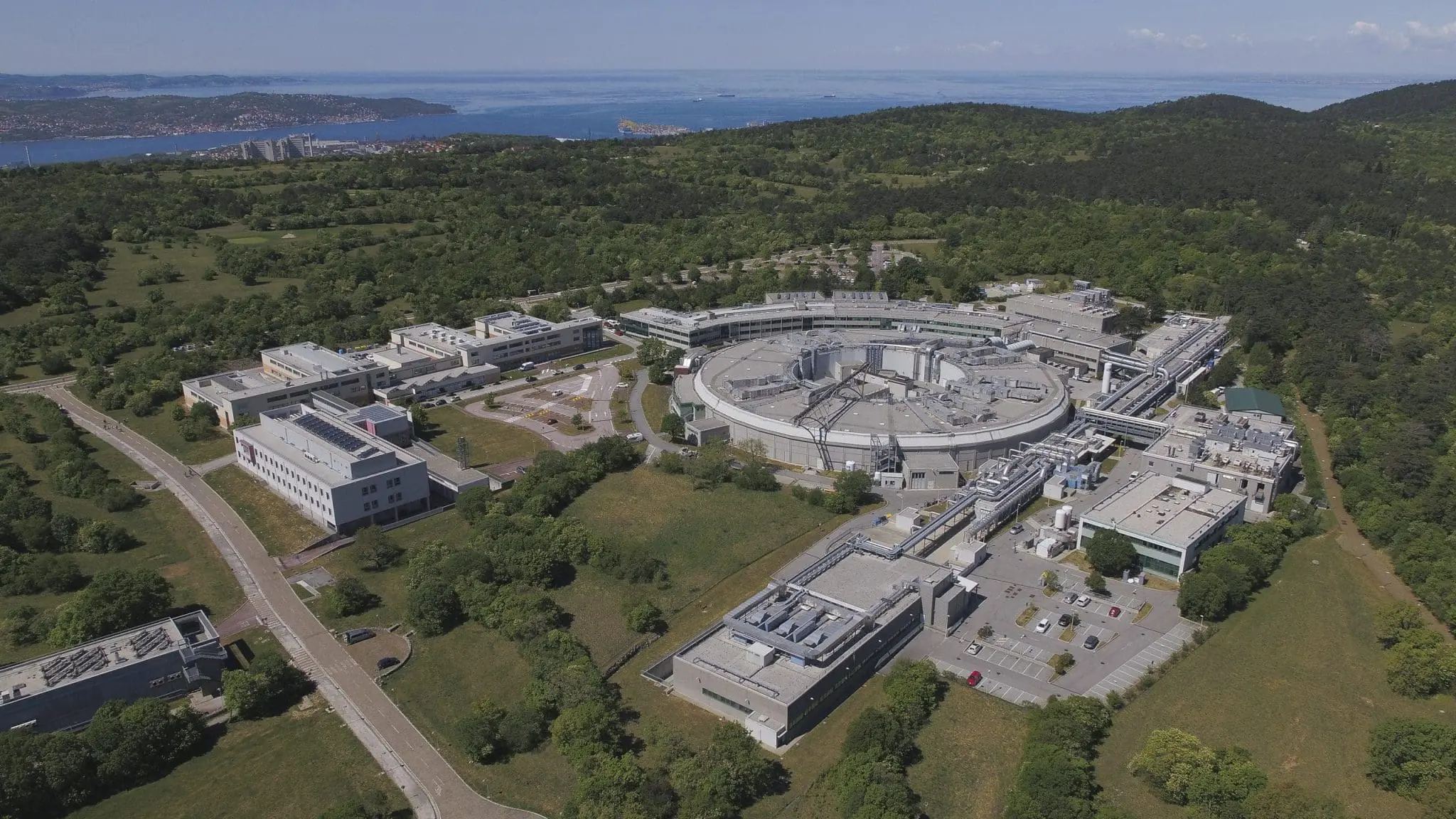
Researchers at the University of Freiburg, led by Dr. Lukas Bruder, have successfully controlled quantum states in helium atoms using the FERMI free electron laser in Trieste, Italy. This breakthrough was achieved by generating highly intense extreme ultraviolet light pulses and utilizing a new laser pulse-shaping technique.
The team’s findings, published in the journal Nature, were made possible through collaboration with scientists from various institutions, including the Max Planck Institute for Physics of Complex Systems and the University of Oldenburg. Dr. Bruder’s work has significant implications for the field of quantum physics, enabling direct control over transient quantum states.
Introduction to Quantum State Control
The manipulation of quantum states is a crucial aspect of quantum physics, with potential applications in various fields such as chemistry, materials science, and optics. Recently, a team of scientists led by Dr. Lukas Bruder from the University of Freiburg has made significant progress in controlling special quantum states in helium atoms using the FERMI free electron laser. This achievement marks an important milestone in the field of quantum physics, enabling researchers to produce and directly control hybrid electron-photon quantum states in a new energy range.
The experiment involved generating highly intense extreme ultraviolet light pulses using the FERMI free electron laser, which allowed the researchers to create and manipulate hybrid electron-photon states, also known as “dressed states.” These states occur when an atom is exposed to a strong light field, causing the energy levels of the electrons to shift. The researchers used a new laser pulse-shaping technique to control the properties of the laser pulses, enabling them to disperse or contract depending on the scenario. This level of control is essential for manipulating the quantum states of the helium atoms.
The use of the FERMI free electron laser was crucial in this experiment, as it provides a unique combination of high intensity and short pulse duration. The extreme ultraviolet radiation generated by the laser has a wavelength of less than 100 nanometers, which is necessary to manipulate the electron states in helium atoms. The researchers also employed a “seed laser pulse” to precondition the emission of the free electron laser, allowing them to control the properties of the laser pulses with high precision.
The significance of this achievement lies in its potential to open up new avenues of research in quantum physics. By enabling direct control over transient quantum states, the technique developed by Bruder’s team could lead to more efficient and selective experiments using free electron lasers. Additionally, it may provide new insights into fundamental quantum systems that are not accessible with visible light, potentially allowing for the development of methods to study or even control chemical reactions with atomic precision.
Quantum States and Laser Intensities
The creation of hybrid electron-photon states requires intense laser fields, typically in the range of ten to a hundred trillion watts per square centimeter. At these intensities, the energy levels of the electrons in an atom shift, giving rise to new quantum states. The researchers used laser pulses with durations of only a few trillionths of a second to achieve these high intensities, which is necessary to produce and control the hybrid quantum states.
The properties of the laser pulses play a critical role in determining the characteristics of the hybrid electron-photon states. By adjusting the time lag of the different color components of the laser radiation, the researchers were able to control the dispersion or contraction of the laser pulses. This level of control is essential for manipulating the quantum states of the helium atoms, as it allows the researchers to tailor the properties of the laser pulses to specific experimental requirements.
The use of extreme ultraviolet radiation is also crucial in this context, as it provides a means of manipulating the electron states in helium atoms. The wavelength of the radiation is less than 100 nanometers, which is necessary to access the relevant energy levels in the atom. The FERMI free electron laser is one of the few facilities capable of generating such high-intensity, short-pulse radiation, making it an ideal tool for this type of research.
Theoretical models of quantum state control also play a critical role in understanding the behavior of hybrid electron-photon states. By developing and refining these models, researchers can gain a deeper understanding of the underlying physics and make predictions about the behavior of these systems under different experimental conditions. This interplay between theory and experiment is essential for advancing our understanding of quantum physics and developing new technologies based on these principles.
Experimental Techniques and Facilities
The experiment conducted by Bruder’s team relied on a combination of advanced experimental techniques and facilities. The FERMI free electron laser provided the high-intensity, short-pulse radiation necessary to create and manipulate the hybrid electron-photon states. The researchers also employed a range of diagnostic tools to characterize the properties of the laser pulses and the resulting quantum states.
The use of a “seed laser pulse” to precondition the emission of the free electron laser was a critical aspect of the experiment. This technique allows the researchers to control the properties of the laser pulses with high precision, which is essential for manipulating the quantum states of the helium atoms. The seed laser pulse is used to initiate the emission of the free electron laser, and by adjusting its properties, the researchers can tailor the characteristics of the resulting radiation.
The FERMI free electron laser is a unique facility that provides a combination of high intensity and short pulse duration. The laser operates in the extreme ultraviolet region of the spectrum, which is necessary to access the relevant energy levels in the helium atoms. The facility is also equipped with a range of diagnostic tools, including spectrometers and detectors, which allow researchers to characterize the properties of the laser pulses and the resulting quantum states.
The collaboration between researchers from different institutions was also essential for the success of this experiment. The team included scientists from the University of Freiburg, the Max Planck Institute for Physics of Complex Systems, and other institutions, each bringing their expertise and knowledge to the project. This collaborative approach is critical in modern scientific research, as it allows researchers to pool their resources and expertise to tackle complex problems.
Potential Applications and Future Directions
The ability to control quantum states with high precision has significant potential applications in various fields, including chemistry, materials science, and optics. By enabling direct control over transient quantum states, the technique developed by Bruder’s team could lead to more efficient and selective experiments using free electron lasers. Additionally, it may provide new insights into fundamental quantum systems that are not accessible with visible light, potentially allowing for the development of methods to study or even control chemical reactions with atomic precision.
One potential application of this research is in the field of chemistry, where the ability to control chemical reactions at the atomic level could lead to significant advances. By using high-intensity laser pulses to manipulate the quantum states of reactant molecules, researchers may be able to influence the outcome of chemical reactions, potentially leading to more efficient and selective synthesis methods.
Another potential application is in the field of materials science, where the ability to control the properties of materials at the atomic level could lead to significant advances. By using high-intensity laser pulses to manipulate the quantum states of electrons in materials, researchers may be able to create new materials with unique properties, such as superconductors or nanomaterials.
The development of new experimental techniques and facilities will also be critical for advancing this field of research. The FERMI free electron laser is a unique facility that provides a combination of high intensity and short pulse duration, but other facilities, such as the European X-Ray Free-Electron Laser (EuXFEL), are also being developed to provide similar capabilities. These new facilities will enable researchers to conduct experiments that were previously impossible, potentially leading to significant advances in our understanding of quantum physics.
External Link: Click Here For More