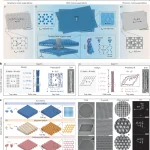

Researchers are demonstrating that fundamental mathematical operations, traditionally performed by complex computational systems, can be realised using light and interferometers. Christopher R. Schwarze, Anthony D. Manni, David S. Simon, and Alexander V. Sergienko, all from Boston University and Stonehill College, achieve this by manipulating the phase of light within specially designed interferometers. Their work reveals a method for performing calculations not by encoding information within a fixed state, but by enacting operations as transitions between states, effectively allowing linear optical devices to perform nonlinear functions like division and powers. This approach, which relies on precise phase modulation and power measurement, represents a significant step towards developing novel optical computing architectures that move beyond the limitations of conventional electronics.
Phase Amplification for Enhanced Optical Sensitivity
This research presents a comprehensive exploration of linear optical phase amplification and its potential applications in optical computing. The central innovation lies in a method for amplifying phase shifts within an optical system, enhancing sensitivity for tasks like interferometry and signal processing by making small phase differences more detectable. This amplification cleverly mimics non-linearity without requiring bulky, slow, or inefficient non-linear materials, offering a significant advantage for scalability. Scientists developed and experimentally demonstrated Grover-Michelson and Grover-Sagnac interferometers, variations on standard interferometric setups optimized for enhanced sensitivity.
They also utilized phase-sensitive unbiased multiports for precise phase control and tunable directional couplers to split and combine optical signals, forming the building blocks of more complex circuits. The research explores integrating these techniques with technologies like electro-optic materials and microresonators to create versatile and powerful optical computing systems. This work positions phase amplification within the broader context of optical computing, highlighting its potential for neuromorphic computing, which aims to create optical analogs of neurons and synapses for faster, more energy-efficient AI. The ability to emulate activation functions is particularly important in this area.
Researchers also explored reservoir computing, utilizing complex optical networks for computation without explicit programming, and the creation of optical equivalents of electronic logic gates and arithmetic circuits. The team envisions applications in high-performance computing, accelerating specific tasks by leveraging the speed and parallelism of optical systems, and the development of scalable systems. However, optical computing faces challenges including optical signal loss, fabrication complexity, seamless integration of optical and electronic components, and precise control and addressing of individual optical elements. This research is significant because it addresses a key limitation of linear optics by emulating non-linearity through phase amplification, offering a path to scalability. The successful experimental demonstration of key concepts and devices validates the theoretical approach, and the work clearly articulates the potential applications of this research in various areas of optical computing and AI. This represents a significant step forward in building faster, more energy-efficient, and scalable optical computers.
Phase Modulation Enables Nonlinear Optical Computation
Scientists engineered a novel approach to optical computation using modified linear interferometers and weak phase modulations of classical coherent light. This allows for the performance of primitive tasks without relying on fixed optical states, instead enacting operations through transitions between states. By harnessing the unique phase parametrization inherent in interferometers, they produce nonlinear operations like division and powers from entirely linear components. These operations are approximate, but accuracy increases as input perturbations decrease, with both inputs and outputs defined as changes in phase relative to a fixed bias point, ultimately read out as changes in power.
Experiments reveal that the team successfully implemented a perturbative phase optical computing scheme for both individual and cascaded scalar operations. They adopted a specific phase parametrization for clarity, acknowledging that other, potentially more accurate parametrizations may exist. The research highlights how re-parametrizing input phases alters the tracing of paths within the system’s state space, changing how the device responds to physical modifications without altering the underlying state space itself. Both devices span the same space defined by reflection and transmission probabilities, but their differing phase parametrizations result in regions of varying phase sensitivity and produce fringes of different shapes. This demonstrates a new method for manipulating optical phase to perform computations, opening possibilities for novel optical processing architectures. Detailed analysis, comparing polynomial expansions, revealed that the approximation closely matches the leading order terms of the true function, exhibiting higher accuracy than traditional first-order approximations, particularly over a larger dynamic range. Experiments demonstrated that this approach induces lower error over a much larger range than a quadratic approximation, effectively bending with the hyperbola as input values vary.
Phase Transitions Enable Linear Optical Computation
This research demonstrates a novel approach to optical computation, achieving basic mathematical operations using changes in phase within linear interferometers. Rather than encoding information within fixed optical states, the team successfully performs computations by transitioning between states, leveraging the inherent phase relationships within the interferometer. This allows for the realization of nonlinear operations, including division and powers, using entirely linear components. The method involves reading out computed outputs as changes in phase, directly encoded in the optical signal. The team’s work establishes a new paradigm where the focus shifts from individual points in the optical state space to the relationships and deformations within that space.
By re-parametrizing the input phases, they show that the structure of these neighborhoods changes, enabling computation. While the current implementation relies on a specific phase parametrization, the authors acknowledge that undiscovered parametrizations may offer improved accuracy and range. Future work could explore these alternative parametrizations and investigate the potential for scaling this approach to more complex computations, offering a pathway towards novel optical processing architectures.
👉 More information
🗞 Scalar computational primitives with perturbative phase interferometry
🧠 ArXiv: https://arxiv.org/abs/2510.25006