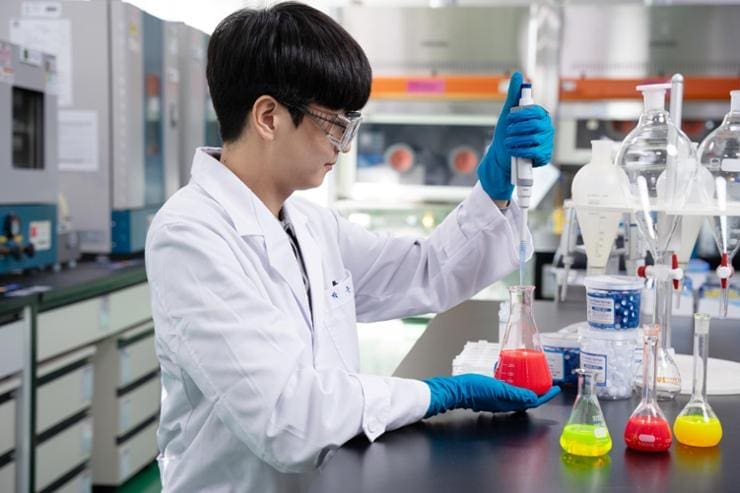
Samsung Display has achieved a significant breakthrough in recycling quantum dot ink, a crucial component in producing QD-OLED displays. This innovation is expected to result in an annual cost savings of at least $7.2 million.
The company has successfully reclaimed and reprocessed 80 percent of the wasted ink, previously discarded during manufacturing. Samsung Display formed a task force last December to improve the efficiency of quantum dot ink and developed recycling facilities in August.
The recycled ink undergoes an advanced synthesis process to enhance its purity and optical properties, matching the quality of the original ink. Vice President Kim Seong-bong said this technology will significantly reduce costs and contribute to resource recycling. This development is a testament to Samsung Display’s commitment to enhancing its competitiveness in QD-OLED manufacturing, further solidifying its position as a leader in the industry.
Recycling Quantum Dot Ink: A Breakthrough for Samsung Display
Samsung Display has achieved a significant milestone in the industry by successfully recycling quantum dot (QD) ink, paving the way for an annual cost savings of at least 10 billion won ($7.2 million). This breakthrough is expected to substantially impact the manufacturing process of QD-OLED displays.
The production of QD light-emitting layers, a crucial component of QD-OLED displays, involves inkjet printing that densely sprays red and green QD ink through micro-size nozzles. However, this process results in approximately 20 percent of the total QD ink being wasted and discarded. Samsung Display’s innovative approach to recycling QD ink has enabled the company to reclaim and reprocess 80 percent of the wasted ink, significantly reducing waste and costs.
The development of QD ink recycling facilities was a result of a task force formed by Samsung Display in December last year. The company successfully developed the facilities in August, which undergo an advanced synthesis process to enhance purity and optical properties. The recycled ink has been shown to achieve the same performance as the original ink in quality tests, ensuring that the display’s quality is not compromised.
The significance of this breakthrough cannot be overstated. With Samsung Display’s QD-OLED receiving rave reviews, the demand for QD ink is increasing. By developing a technology that recycles QD ink within their domain, the company will be able to save costs significantly and contribute to recycling resources. This innovation is expected to enhance Samsung Display’s competitiveness in manufacturing QD-OLED further, by improving equipment performance and process capabilities to increase productivity and yield.
The Challenges of Quantum Dot Ink Production
The production of quantum dot ink is a complex process that involves several challenges. One of the significant hurdles is the wastage of QD ink during the manufacturing process. The inkjet printing process used to produce QD light-emitting layers results in approximately 20 percent of the total QD ink being wasted and discarded. This not only increases costs but also poses environmental concerns.
Another challenge is ensuring the purity and optical properties of the QD ink. The advanced synthesis process developed by Samsung Display is crucial in enhancing the quality of the recycled ink, making it suitable for use in mass production lines. The company’s ability to achieve the same performance as the original ink in quality tests is a testament to its innovative approach.
The development of QD ink recycling facilities also requires significant investment and resources. Samsung Display’s task force, formed last December, worked tirelessly to develop the facilities, which were successfully completed in August. This demonstrates the company’s commitment to innovation and sustainability.
The Significance of Quantum Dot Ink Recycling
The successful recycling of quantum dot ink by Samsung Display has far-reaching implications for the industry. The annual cost savings of at least 10 billion won ($7.2 million) is a significant achievement, especially considering the increasing demand for QD-OLED displays.
Moreover, this innovation contributes to recycling resources and reducing waste. The environmental impact of the electronics industry cannot be ignored, and Samsung Display’s breakthrough sets a precedent for other companies to follow suit. By developing sustainable manufacturing processes, companies can reduce their carbon footprint and contribute to a more environmentally friendly future.
The significance of this achievement also lies in its potential to enhance Samsung Display’s competitiveness in the market. By improving equipment performance and process capabilities, the company can increase productivity and yield, making it a leader in the industry.
The Future of Quantum Dot Ink Recycling
Samsung Display’s breakthrough in recycling quantum dot ink is expected to pave the way for further innovations in sustainable manufacturing processes. As the demand for QD-OLED displays continues to grow, companies will need to develop more efficient and environmentally friendly production methods.
The development of QD ink recycling facilities also opens up new opportunities for research and development. Samsung Display’s advanced synthesis process can be refined and improved, leading to even higher quality recycled ink. Furthermore, the company’s commitment to innovation and sustainability sets a precedent for other companies to invest in similar initiatives.
In conclusion, Samsung Display’s successful recycling of quantum dot ink is a significant achievement that has far-reaching implications for the industry. The company’s innovative approach to sustainable manufacturing processes sets a new standard for others to follow, contributing to a more environmentally friendly future.
External Link: Click Here For More